
Hellish Rebuke 5e: An Eye for an Eye
Sometimes in real life, someone does something to us that unleashes a fury of anger and resentment that feels almost supernatural. It’s a bit over the top, but what can we do? It happens!
Of course, we don’t use fire and brimstone to get back at someone in reality. However, if you’re playing Dungeons and Dragons, you can use the Hellish Rebuke 5e spell to do just that.
Disclaimer: I’m not encouraging any sort of real-life violence. I’m just explaining the power you have with this formidable spell. Hellish Rebuke 5e is one of countless DnD spells, and honestly, I think it doesn’t get enough credit. Let’s get to know this intense spell that every adventurer should be thankful for (or scared of).

What Is Hellish Rebuke 5e?
Hellish Rebuke is a spell that was actually introduced in the fourth edition of Dungeons and Dragons. It’s a first-level evocation and reaction spell, which means it summons or manipulates magic energy to create something or cause an effect. According to the Player’s Handbook (page 250), Hellish Rebuke 5e stats and rules are as follows:
- Casting Time: 1 reaction, which you take in response to being damaged by a creature within 60 feet of you that you can see
- Range: 60 feet
- Component: V, S
- Duration: Instantaneous
“You point your finger, and the creature that damaged you is momentarily surrounded by hellish flames. The creature must make a Dexterity saving throw. It takes 2d10 damage on a failed save or half as much damage on a successful one.
At Higher Levels. When you cast this spell using a spell slot of 2nd level or higher, the damage increases by 1d10 for each slot level above 1st.”
Hellish Rebuke 5e Characteristics
Before your head starts spinning with energy, let’s break down the characteristics of Hellish Rebuke 5e.
First-Level Spell
First-level spells are prevalent assets at the beginning of a D&D RPG campaign. Therefore, Hellish Rebuke 5e is available right at character creation, and can be one of the cornerstone spells for your character’s magical journey.
Evocation and Reaction Spell
An evocation spell is one that calls upon magical energy to create an effect. They’re energy-based spells that you can use to create or cause something.
A reaction spell is one that someone casts in response to a particular trigger, such as being damaged by an enemy. These two types of spells combine to make the Hellish Rebuke 5e spell a powerful reaction that can cause substantial damage.





How Does Hellish Rebuke 5e Work?
Hellish Rebuke 5e is triggered when someone damages you. You can use your “reaction” action for that turn to unleash a fiery explosion of energy at the attacker. The spell deals 2d10 fire damage, plus an extra 1d10 for every slot level above the first. In other words, if you cast it at a higher level, Hellish Rebuke can deal some serious damage.
Also, being a "Reaction," casting Hellish Rebuke does not take up your Bonus Action for the round.
What I love about this spell is that it’s a great way to get revenge. When someone messes with you, Hellish Rebuke lets you take them down quickly and easily. It’s a great way to send the message of “don’t mess with me,” and give your attacker a taste back of what they’ve done.
Hellish Rebuke makes everyone think twice about their actions in combat: an eye for an eye, as they say.
Who Can Cast Hellish Rebuke?
Imagine if everyone could cast Hellish Rebuke. The adventure would become a lot more chaotic. Thankfully (or unfortunately), it’s only available to certain classes.
If you need some DnD character ideas, Hellish Rebuke 5e is accessible to all Warlocks, regardless of their Patron. Oathbreaker Paladins can also access it at third level. A Bard can cast the spell if they have the Magical Secrets feature.
Hellish Rebuke 5e is also available to tieflings who choose the Bloodline of Asmodeus. It becomes a second-level spell with the Infernal Legacy trait, dealing 3d10 fire damage. Tieflings can only cast their version of Hellish Rebuke 5e once per long rest though, even if it doesn’t burn a spell slot.
When and Where Should You Cast Hellish Rebuke 5e?
If you think the spell can’t get any better, think again. I personally believe that there’s no bad time to cast this chaotic spell. At least, I believe there’s no bad time. But, of course, there are optimal times and places to give your enemies a proper hellfire-infused rebuke.
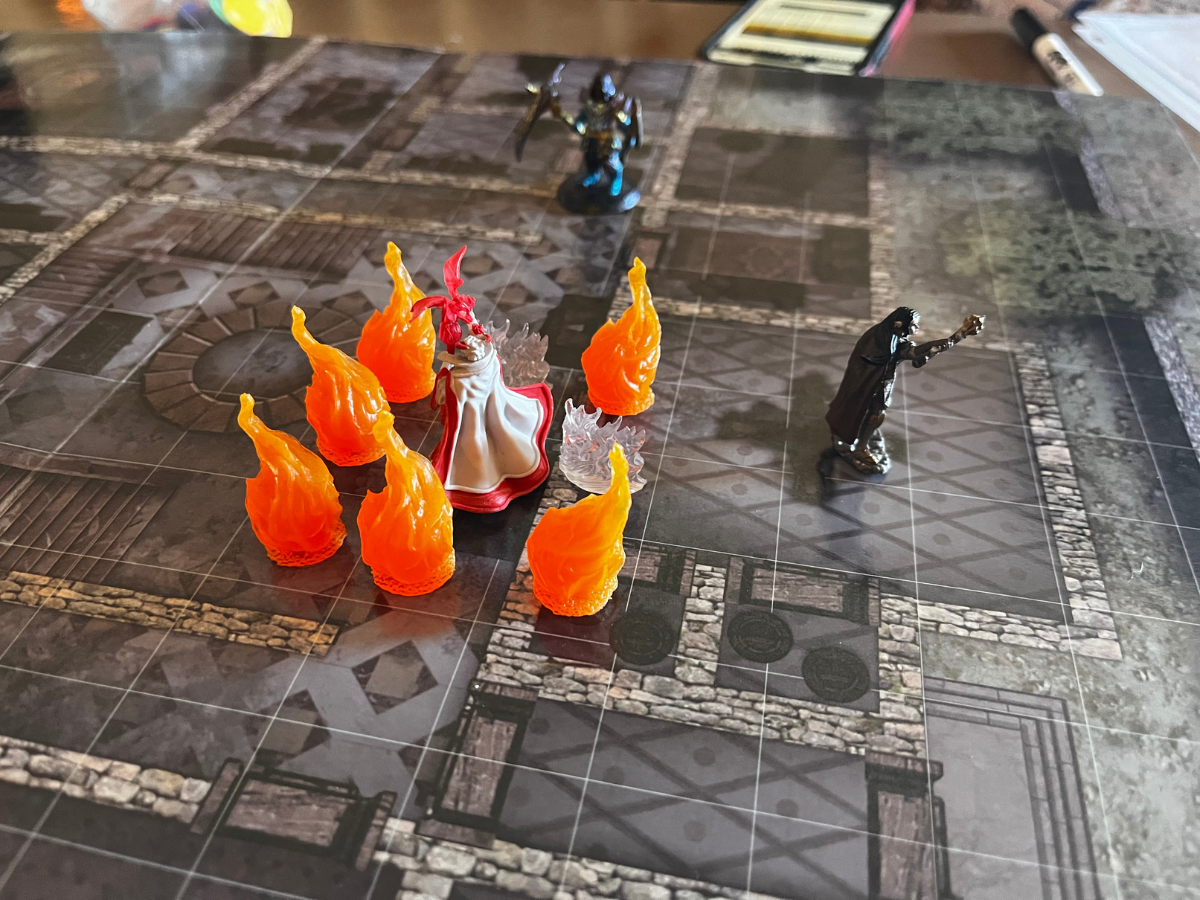
First of all, you have to be damaged to cast the spell. It’s reaction-based, so there must be a trigger, or something must happen to you to react to it. For example, a creature damages you in your turn, casting a spell that requires a reaction point. You can use that reaction to cast Hellish Rebuke 5e in return. The spell ranges from 60 feet, so you have a great chance of hitting the creature who hit you! I love that, similar to Spiritual Weapon 5e, this spell allows me to attack enemies from a distance.
I cast Hellish Rebuke 5e whenever I find myself in the following situations:
Front-Liner
When you’re a front-liner, you inevitably receive damage near enemies. Generally, being a front-liner is bad for a spellcaster, but you can cause immense extra damage in a battle when using Hellish Rebuke 5e. Again, the range is 60 feet, so you have plenty of chances to make it a worthwhile spell.
Basically, think of yourself as a shield for your team, that has spikes. Whenever anyone attacks the shield (you), they take damage in return. With that thought in mind, you want everyone to attack you as often as possible – at least until you run out of spell slots.
Manipulate Saving Throws
I also cast Hellish Rebuke 5e with the help of another party member. For example, I can force an enemy to make a saving throw for the spell, and my party member can cast Silvery Barbs 5e if they succeed. Sure enough, the enemy will then often fail their save and take extra damage. The cantrip Mind Sliver 5e can also make the spell more effective by lowering the target’s next saving throw, so try to use it whenever possible.

Hellish Rebuke 5e Tips
Hellish Rebuke is really a simple spell, but we all know that D&D can be complex, so here are some tips to get the most out of the spell:
- Bypass fire resistance: if you’ve played D&D 5e for very long, you know there’s a lot of fire resistance in the game. Immunities can still prevent Hellish Rebuke 5e from happening, so use the Elemental Adept feat to gain an advantage.
- Think twice when an enemy attacks from behind a wall: Hellish Rebuke 5e is less effective when attacking targets who have cover. Cast another spell if you can, or just wait for the next turn.
- Pair it up with other spells: Hellish Rebuke 5e is powerful alone, but you can make it even scarier using other spells. For example, Armor of Agathys, a first-level Warlock spell, deals cold damage to anyone who strikes you while the effect is active. If you get attacked, your enemy takes cold damage then gets hit by your Hellish Rebuke, as well.
- Choose Pact of the Blade: if you’re a Warlock, choosing the Pact of Blade allows you to unleash the flames of hell. Well, the spell is powerful regardless of your Patron, but it becomes a game-changer in melee range.
- Be a Hexblade Warlock: besides Pact of the Blade, Hellish Rebuke 5e can also be a great pick for Hexblades. Hexblades are more likely to stay close to enemies, which results in more attacks against you, and more chances to use Hellish Rebuke.
- Play with caution when silenced: if your main strategy is to draw in enemy attacks so that you can unleash Hellish Rebuke, be careful of Silence 5e effects. While Silenced, you won’t be able to cast spells, so you’ll either need countermeasures prepared, or you’ll need to make a quick retreat from the front lines of battle.
- Trick the enemy: this tip is mostly flavor, but you can trick an enemy into thinking that the spell will be coming from another direction by pointing a finger away from them. The Player’s Handbook says, “You point a finger,” but not specifically “toward the creature,” so you can throw the enemy off balance. Give them a show because you can!
- Communicate with your party and DM: always talk to your group and dungeon master about what spells are necessary during your adventures. If you want to just cast Hellish Rebuke without restraint, go for it. But if you want to really play as a team, communicate with other players to see how you can best plan spell slots to fill gaps in your party’s overall strategy.
- Plan before casting: finally, I suggest taking a moment to consider the overall battle before casting Hellish Rebuke 5e. Try to time your spell for maximum effect, or think if there may be a better spell available for the situation. It can be entertaining to spam-cast Hellish Rebuke, but it pays to plan – especially during difficult battles.
Own Your Revenge With Hellish Rebuke 5e
Let’s take a break from strict D&D rules, shall we? Remember that the game also has a roleplay aspect, and you can customize your revenge when it comes to the Hellish Rebuke 5e spell. You know that descriptions make role-playing even more fun, so come up with creative ways to describe the spell.
What the Spell Does for You
When someone hurts you in real life, how do you feel? Do you feel like combusting in rage? Ask the same questions when you’re in the D&D world, and use Hellish Rebuke to make your revenge fit with your character’s personality.
When thinking about the spell, imagine if your character is seeking vengeance or maybe just believes in an eye for an eye. It’s your story, so make the spell fit in with it.
What the Spell Does and Looks Like
When you hear the word “hell,” you might picture many things. There can be an eruption of flames, a blast of fire, or a ball of fire coming to your enemy. But even if “hell” is in the name of the spell, you don’t have to limit yourself. Use colors and ideas that fit with the character, the environment, and your story. Think about the scene you want and make sure that it looks cool.
Your party (and enemies) will be there to witness the spell, so make the spell’s aesthetics unique.
Change the Spell Damage Type
When running a D&D campaign, Hellish Rebuke 5e can be more than “fire damage.” It depends on your dungeon master’s ruling, but you could consider asking them if they’d consider allowing your Hellish Rebuke spell to deal a different type of damage, to better fit your character’s aesthetic, or personality.
If they’re game for it, perhaps you could even alter the spell to cause some kind of chaotic effect, rather than just straight up damage.

Level Up With an Awesome Dice Tower
Ok, this is a little off topic, but at the end of the day, tabletop RPGs are for having fun, right? If you're going to spend the time optimizing your character's strategies in combat, why not also maximize your game table aesthetics? Dice roll fine without a device to do it for you. But, having a dice tower can certainly add a lot to the feel of your game. Imagine rolling dice down this magical tower's steps. Between every dice roll, you have a prop that brings your D&D game to life that much more.
Check it out! Change up the color or find some of the other great dice tower options available. They make great DnD gifts for yourself or others.
Is Hellish Rebuke 5e Good?
Out of all the spells in the Player’s Handbook, Hellish Rebuke 5e is one spell that makes me say “Hell yes!” There’s no doubt that other spells can be even more powerful, but this one is definitely good. Especially for low-level Warlock spells, the Hellish Rebuke 5e is absolutely a must-have. I keep it ready for use at basically all times.
The spell’s range is an upside, along with scaling damage as you level up and use higher level spell slots. Also, even if your target makes a successful saving throw, the spell still deals some damage to them.
Warlocks and front-line characters are obviously easy targets for enemies, so Hellish Rebuke 5e can be an excellent way to avenge yourself. Generally, you can use it as an ace up your sleeve, as it’s a great spell that packs a punch. I’m sure you’ll use it more often than other spells once you get a taste for how fun it can be (like I did).
Rebuke Your Way to a Great Adventure
Again, I’m not encouraging violence, but in Dungeons and Dragons, Hellish Rebuke 5e is about giving your enemies a fitting punishment. With its long-range and scaling damage, you can finally feel like the badass spell caster that you are.
So, go out and find your adventure. And if the enemy gets too close for comfort, prepare to rebuke them with a show of fire and brimstone. And read on for how Hellish Rebuke effects work in the Eternity TTRPG Game System.
If you need DnD Quest Ideas, having an enemy that casts Hellish Rebuke is also honestly a great way to begin a series of adventures.
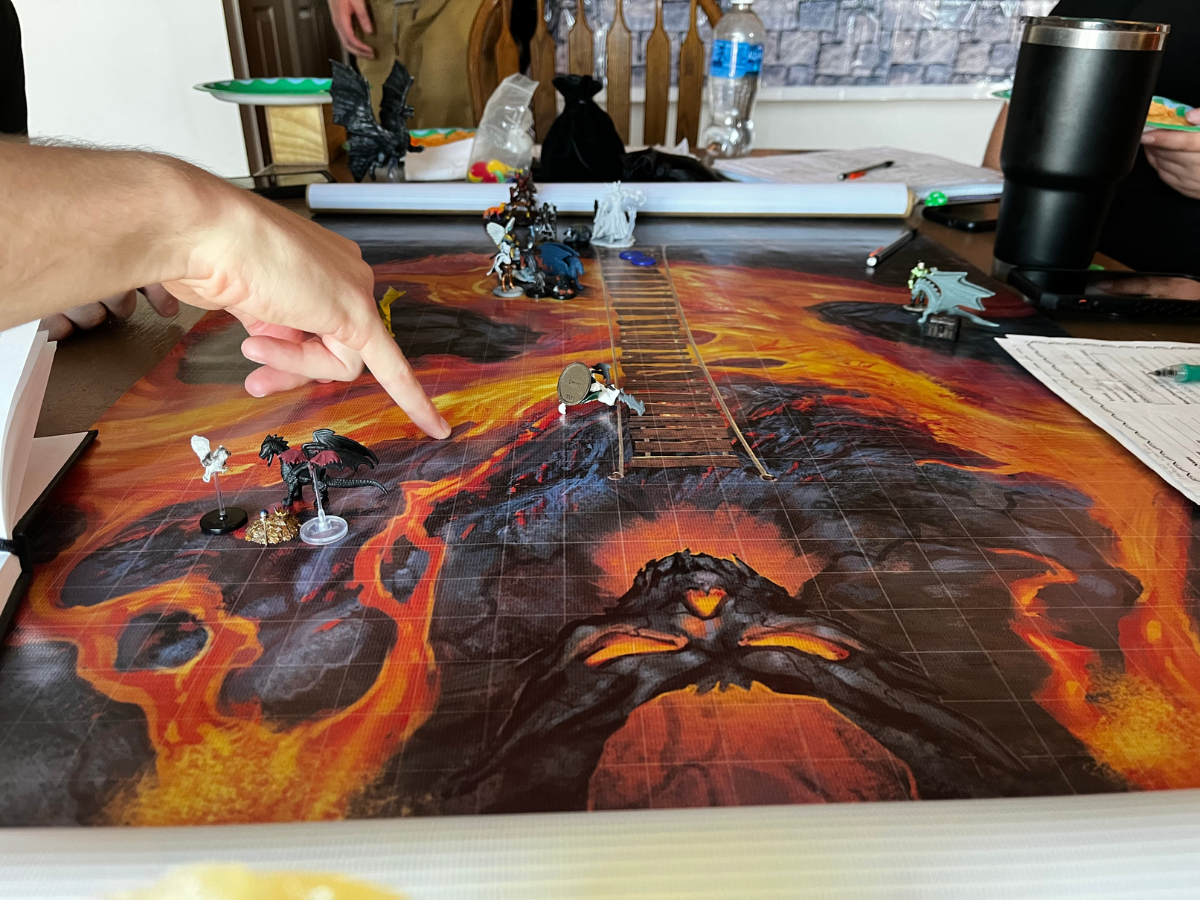
Hellish Rebuke in D&D 5e vs. Eternity TTRPG
In D&D 5e, Hellish Rebuke is a spell that effectively acts as a ranged, magical counterattack when you take damage. It’s useful whether you’re playing a caster or a front-line melee character (who has access to the spell, obviously).
In the Eternity TTRPG Game System, there is no exact equivalent of the Hellish Rebuke 5e spell, though there are many effects that fit into the same or similar categories.
It’s also worth noting that in D&D, Hellish Rebuke 5e takes up a spell slot to cast. This means that any targets capable of casting Hellish Rebuke have a limited number of times they may cast the spell. Meanwhile, in Eternity TTRPG, counterattack effects do not have a limit to the number of times they may be used. So, characters capable of counterattacking may be very dangerous.
What Classes in Eternity TTRPG Have a Hellish Rebuke Effect?
Cryomancer (Core Rulebook) and Witch Hunter (Classes Expansion) are the only classes that receive Silence as a core class spell. However, Alchemist, Dread Priest, and Druid all have specialization/ critical options that allow them to obtain Silence.

Assassin – Core Class Ability
First Strike: this Ability can only be used both 1) the first time you attack an enemy, and 2) the first time you are attacked by an enemy. Instant Action, roll d20. If you roll 18-20, deal 1damage. Battle Recharge after both uses.
- (Life-Ender) You also gain +7Strike Bonus, +6Resilience, +6Dodge, and +6Will for 1turn.
- (Infiltrator) You can move to the target of this Ability once during the rest of the Battle, as an Instant Action, up to your Speed value in Range away.
- (Expert) You also gain +3Initiative.

Berserker – Core Class Ability
Vengeance: this Ability can only be used when you drop to 0HP. Instant Action. Take an attack Action against the target who dropped you to 0HP. After your Action, you still drop to 0HP. When you use or Critical this Ability, you can’t use any more Wisdom this turn. 1Day Recharge.
- (Decimation) Your attack is made against up to 3 enemies in Weapon Range. *Double-Hit with this Critical only allows one of the attacks to cause additional effect.
- (Recklessness) Even if your attack misses, up to 3 enemies in 4Range, +4Strike Bonus vs. Resilience, knocks back all affected targets up to your Speed value -2, in any direction. This Critical effect cannot Double-Hit or give a Block.
- (Dauntless Fury) If your attack hits, +3Strike Bonus vs. Resilience, Daze for 2turns. The Daze effect from this Critical continues even after you drop to 0HP. This Critical effect cannot Double-Hit or give a Block.

Fallen Paladin – Critical Option
Blood Spiller (Magic): after you cast this Spell on yourself, every time you attack an enemy, roll d20. If you roll 18-20, deal 1damage. You can only deal damage with this Spell once per turn. You can instead choose to continually maintain this Spell for 3Inspiration.
- (Shield of Corruption) Also roll to deal damage with “Blood Spiller” every time an enemy attacks you. This Critical also allows you to deal damage with “Blood Spiller” twice per turn. You can instead choose to continually maintain this Critical for 6Inspiration (and 0Wisdom).

Royal Guard – Core Class Ability
Counter-Slam: this Ability can only be used if you are wielding a shield. After you use this Ability on yourself, every time you are attacked by an adjacent enemy, roll d20. If you roll 18-20, +7Strike Bonus vs. Resilience, Daze for 1turn. You can only Daze with this Ability once per turn. “Counter-Slam” cannot Double-Hit or give a Block. You can instead choose to continually maintain this Ability for 1Inspiration.
(Dazed): the effect from “Counter-Slam” is temporarily interrupted while you are Dazed.
- (Executor) If you roll 18-20, it also deals 1damage to the target. You can only deal damage with this Critical once per turn. You can instead choose to continually maintain this Critical for 4Inspiration (and 0Wisdom).
- (Life-Sworn) Roll 15-20. You can instead choose to continually maintain this Critical for 2Inspiration (and 0Wisdom).
- (Ancient Blade) Instant Action. You also gain +9Resilience, +9Dodge, and +9Will for 1turn. When you use this Critical, you can’t use any more Wisdom this turn.

Sage – Core Class Spell
Crimson Curse (Magic): up to 3 enemies in 4Range, +7Faith vs. Will. If this Spell hits, whenever an affected target deals damage, roll d20. If you roll 18-20, they also take 1damage. “Crimson Curse” cannot Double-Hit or give a Block. You can instead choose to continually maintain this Spell for 3Intelligence.
(Dazed): the effect from “Crimson Curse” is temporarily interrupted while you are Dazed.
- (Darkness and Light) Roll 16-20. You can instead choose to continually maintain this Critical for 5Intelligence (and 0Wisdom).
- (Secrets of the Ancient Tomes) For one enemy who’s hit, instead roll 13-20 to hit. For all other enemies affected by this Spell, still roll 18-20 to hit. You can instead choose to continually maintain this Critical for 5Intelligence (and 0Wisdom).
- (Powers of the Eternals) Whenever an affected target is healed, roll d20. If you roll 18-20, they heal an additional +1HP. This Critical cannot trigger itself. This Critical allows the affected target to heal 2HP above their normal max HP. Healing from this effect also Fatigues the target, giving -1Resilience, -1Dodge, and -1Will for 1Day Duration (can stack without limit). You can instead choose to continually maintain this Critical for 2Inspiration (plus the base 3Intelligence, and 0Wisdom).

Vanguard – Core Class Ability
Retribution: after you use this Ability on yourself, every time an enemy in Weapon Range attacks you, roll d20. If you roll 16-20, you Instantly counterattack that same target with a non- Critical attack or Ability of your choice, after their attack is finished.
You may also use “Quick Switch” just before your attack with Retribution, if you so choose. You can only attack an enemy with this Ability once per turn. You can instead choose to continually maintain this Ability for 3Inspiration.
(Dazed): the effect from “Retribution” is temporarily interrupted while you are Dazed.
- (Tip of the Spear) Roll 11-20. You can instead choose to continually maintain this Critical for 5Intelligence (and 0Wisdom).
- (Shock Troop) Whenever you attack with “Retribution,” you also gain +12Resilience, +12Dodge, and +12Will for 1turn. You can instead choose to continually maintain this Critical for 5Inspiration (and 0Wisdom).
- (Ranger) You also gain +3Initiative. You can instead choose to continually maintain this Critical for 5Inspiration (and 0Wisdom).

Strategies for using Counterattack Effects
As with D&D 5e, having counterattack spells and abilities in Eternity TTRPG can either be used to dissuade people from attacking you, or can be used after placing yourself in the battle’s most dangerous locations, to maximize your damage output.
In Eternity TTRPG, some attacks are rolled against the enemy’s defenses, while other attacks are considered to be “piercing,” and have a flat hit chance, no matter what.
Basically, characters with high Strike Bonus or Faith (physical or magical hit chance stats) should rely more on spells and abilities that utilize those stats, such as the Vanguard Retribution ability. Meanwhile, more defensive characters (tanks) should rely on counterattacks with piercing effects, such as the Fallen Paladin Blood Spiller spell.
Dissuade Attackers
If you build a character with very high hit chance and very low defenses, you do not want to be in the thick of battle where you may be attacked very often. Having a counterattack spell or ability for this kind of character can be very valuable, as the first enemy to attack you may just get obliterated in return.
If you can essentially make enemies fearful of attacking you, then you help to place more enemy attacks on (hopefully) your party’s tank.
With this strategy, you don’t really want to even use your counterattack spell or ability at all, as it requires you receiving an attack, first. However, having it there to dissuade attackers is extremely valuable.
Deal Damage Even as a Tank
The only way to really maximize your damage with counterattacks in Eternity TTRPG is either to have high hit chance and a dedicated healer who keeps you up during the battle, or to use pierce attacks.
If you build a tank character with a piercing counterattack spell or ability, then run directly into enemy lines, you’ll both draw a lot of attention to yourself (thereby protecting allies), and you’ll maximize your chances to deal damage with your counterattack.
Generally, tanks have terrible hit chances, so dealing damage isn’t really their thing. However, if you have a flat hit chance pierce attack, and you’re attacked a lot, then you maximize your chances to counter. Though this strategy will never deal substantial damage to single targets, its wonderful for crushing large groups of enemies.
Maximize Single Target Damage
Finally, if you have a dedicated healer in your party, it’s possible to use counterattacks as a way to really pour on big damage to a single target. Basically, you max out your character’s hit chances, knowing that you’ll be very vulnerable in battle. Then, you run directly at the single enemy, drawing their attention.
Because of your high hit chance, when you attack the enemy, you’ll deal damage. Similarly, when they attack you, you’ll also deal damage.
If you’re fighting very difficult enemies, you basically have to go in knowing that you’re walking a tightrope. High-difficulty enemies can deal multiple damage per attack, so purposefully putting yourself in the way of harm is risky. However, if you have someone to heal you, you’ll no doubt be able to deal substantial damage back to your adversary.
Countering Counterattacks
In any good tactical combat game, every counter has its counter. Here are a number of possible ways to deal with Hellish Rebuke-type effects if you’re on the receiving end of things. Or, if you simply want to think two steps ahead, here are some of the ways that characters you counterattack might respond:
Remove the Counterattack Effect
Many classes have a version of “Dispel,” which can be used to remove beneficial status effects from enemies. Characters that do not have their own class-based dispel effect may use dispel scrolls to achieve the same effect. Since most Hellish Rebuke, counterattack type effects in Eternity TTRPG are “maintained” effects, they can be dispelled.
It’s also worth noting that if a counterattack effect is dispelled, it can usually just be reactivated right away. However, if the effect is a critical and it keeps getting dispelled, it’s a good way to run out of wisdom, and be at a huge disadvantage for the battle.
Greater Dispel (Magic): 4Range, Faith vs. Resilience, removes all stacks of one ongoing Magic, maintained effect, or status effect from the target (excluding summons), at your choice. Or alternatively, 4Range, +5Faith vs. Resilience, deals 1damage to a summoned unit. This spell is cast on any target you’d like, but the roll is made against the character who cast the spell or used the ability you are attempting to remove, unless the target is a summon.
(Double-Hit): removes all stacks of 2 ongoing Magic or maintained effects (excluding summons). Or alternatively, if cast at a summon, deals an additional 1damage to the summoned unit.
Mass Dispel Scroll (10 Uses): up to 3 targets in 4Range, -7Strike Bonus vs. Resilience or up to 3 targets in 4Range, -7Faith vs. Resilience, removes all stacks of one ongoing Magic, maintained effect, or Status effect from each affected target (excluding summons). Or alternatively, up to 3 summons in 4Range, -2Strike Bonus vs. Resilience or up to 3 summons in 4Range, -2Faith vs. Resilience, deals 1damage. This Item is cast on any target you’d like, but the roll is made against the Character who cast the Spell or used the Ability you are attempting to remove, unless the target is a summon. This Item cannot Double-Hit or give a Block.
Don’t Attack Enemies Who Have Hellish Rebuke
Another obvious way to deal with enemies who use Hellish Rebuke-type effects is just to prioritize attacking other targets before finally dealing with them. Of course, enemies who counterattack may not want anyone to attack them, so ignoring them may actually play into their strategy.
However, the worst-case scenario when facing an enemy with Hellish-Rebuke-type effects is to get blasted with counterattack damage over and over again. If that target doesn’t have a personal healer, maybe you can kill them before they get in many high-damage counters. If the target does have a healer though, you may really want to deal with that healer before moving forward.
Try The Eternity TTRPG Game System
D&D has become synonymous with tabletop RPGs (TTRPG) for so long that sometimes people forget there are other options available. As with any genre of game, there’s the best-known games and lesser-known games.
The Eternity TTRPG Game System is a tabletop RPG similar to D&D, but with some big differences. The game allows for multiple game masters, provides more tools for immersive world-building, and features highly-tactical (yet easy-to-learn) combat.
Pick up an inexpensive PDF copy today at the Eternity TTRPG shop. Or check out more information at the Eternity TTRPG Game System page.
Dice, Dungeons, Games & More - Eternity TTRPG
Share This Article

Author - Jacob Tegtman
Dear reader, I hope you enjoyed this article. Tabletop gaming has been a passion of mine since I was 6 years old. I've played just about every game from Dungeons and Dragons to video games like Final Fantasy. These games have inspired me, made me laugh, made me cry, and brought me endless hours of enjoyment.
I started Eternity TTRPG - and the indie tabletop game that goes along with it (Eternity Shop) - to share my love of gaming with others. I believe that in our technology-driven age, tabletop games help bring a sense of magic and community back into our world.
If you love the site, please share it with others! I have lots of gaming-related material for you to peruse and use in your own gaming sessions. If you have any questions about the site or want to contribute, just send me a message using the "Contact" page, which you can find in the site's footer.