Essential Dungeon Master Tools for Your Next Game
Dungeon master tools make games easier to run, and more fun for you and your players. If you want a top-tier tabletop RPG experience, they’re vital. And who doesn’t want that top level gaming experience?
There are experiences in tabletop RPGs that are almost legendary. When people share their best stories, they either get really loud with excitement, or drop their voices to an almost-whisper, as if the thing is sacred.
Those are the kinds of experiences you want to have with your group. Whatever level of gaming you’ve been hitting so far, it’s time to take it to the next level.
Dungeon A Day
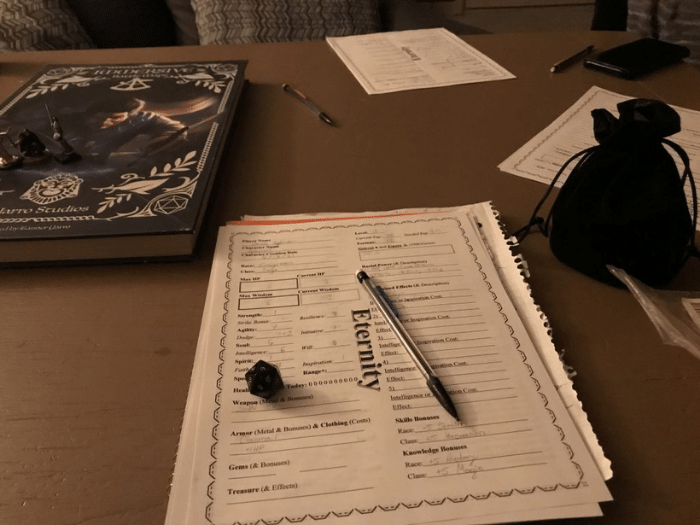
I am excited to share with you that the Eternity TTRPG site is now home to: Dungeon A Day.
Need some fresh ideas to use with your Eternity TTRPG game? Dungeon A Day works with any tabletop RPG system.
Check back each day for a brand new dungeon room. Over time, individual rooms add up, creating a massive, mega-dungeon.
Best Dungeon Master Tools
To make things very easy for you I’m including my top dungeon master tool picks right here, at the top of the article. The rest of the article gives more info on each, should you want to learn more.
1. World Anvil Online DM Tools
Add visuals to your game, and let tech do all the required organization and number crunching so you can stay focused on the story.
2. Battlemaps, Minis, and DnD Music
I tend to think of these three as one “category” of dungeon master tools. They add visual elements and ambience to help make the game feel real.
3. Fun but Optional Extra Dungeon Master Tools
If you already have a lot of your basic Dungeon Master Tools setup established, this section provides extra ideas for you to look into.
A Dungeon Master Tools list wouldn’t be complete unless it included general and miscellaneous items you’ll need for your favorite Tabletop RPG game night.
No matter how many tools you have for your game, DMs who bring the best story to the table always beat every other DM – no competition. Here’s how.
Eternity TTRPG Top Sellers

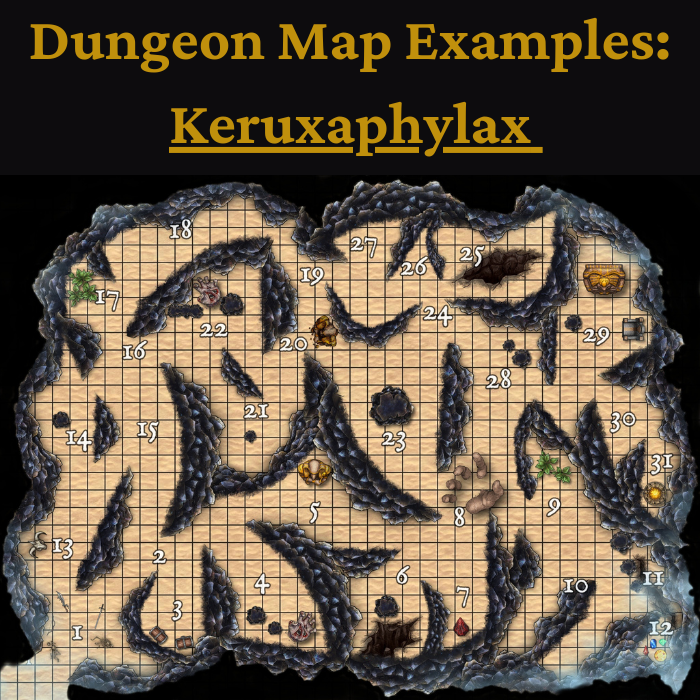
World Anvil
See the World Anvil website.
Digital dungeon master tools are not for everyone. If you’re an old school gamer and you just don’t like phones and computers at your gaming table, skip to the next section. However, if you enjoy tech and you see the value in it, read on.
There are some really incredible tools coming out through tech that make story building much easier, and more engaging. These tools take the advantages inherent in video games (auto-tracking numbers, music, visuals, organization) and bring them to tabletop games.
Up until recently, I didn’t see much value in using phones or computers during gaming sessions. However, now that tools like World Anvil are available, I’ve changed my mind.
One of the most challenging parts of DMing a campaign is tracking everything. There is no perfect system for this, and putting everything online does not automatically remove this problem. However, World Anvil does have templates that organizationally make sense for a host of things you need to track in an expansive campaign, such as:
- Timelines
- Mythologies
- Characters
- Geography
- Myths and Legends
- Custom Spells
- Traditions
- Societies
- Settlements
- Unique Monsters
- Maps
And so on. If you like to create a lot of custom elements in your RPG campaign, you know how many pages in a notebook it takes to track all these things.
Additionally, it can be difficult to remember where you have placed all your campaign notes. It can be easy to lose specific notes among your binder of notes. For instance, one day you might write about a unique magic item, with the next page being about something completely different. The point is that there are inherent difficulties to accurately tracking all notes unless it’s kept on a computer.
Having an online tracker definitely takes the frustrations out of indexing your various campaign elements, and creates easy reference. The World Anvil platform is also set up so that your players can view any of your notes on any topic to which you give them access.
I’ll also mention that exciting and high-quality visuals add to a campaign. I still think theater of the mind is the best “visual” in any tabletop game. But great artwork often helps me and my players get into that visual mode.
Also, I happen to be freakishly good at simple math (addition, subtraction, multiplication) and can solve basic equations like a calculator. However, many people aren’t like that. As such, our gaming group has benefited from the speed of online dice rolls and number calculations. It keeps us in the game rather than in the rules and adding dice. It keeps the gaming experience story-focused.
Big improvement. I definitely recommend.
Even if you don’t go with World Anvil, there are plenty of other online tools available.
Epic World Builder
Similar in some ways to World Anvil, Epic World Builder allows dungeon masters to track their campaign with a wide variety of resources. Though Epic World Builder is a newer platform, the team is hard at work adding new features, innovating the digital campaign planner genre, and otherwise making it easier and more fun than ever to make campaign worlds come to life.
Epic World Builder allows dungeon masters to not only upload maps to the platform, but you can even set "pins" in your maps. These pins are just like what you'd see on Google Maps, and make it very easy for you to track important details by location. When you or your players click on a pin, it'll bring up the info you want for them to see. You can even link that pin to that specific location's individual page, where even more details can be loaded in, along with a custom map for that location.
Imagine your party comes to a new city. They know they have to break into a dungeon buried deep underground, but they don't know where it is. Well, once they do the leg work and find out details, you can reveal the hidden "pin" for them. When they click on that page, they're taken to the underground dungeon's map, along with all of the information you have in store for them.
Bottom line is that Epic World Builder is intuitive for play, and makes tracking complex worlds and notes easier than any system I've ever seen. You can sign up for a free plan, or get their premium features beginning at $5/ mo. Along with all of the other great features the site provides (name generators, random dungeon map generators - which is worth its weight in gold - and more), I think the value for what you pay is absolutely insane.
Battlemaps, Minis, and DnD Music
- Battlemaps: track movement, spell range, etc. Yarro Studios.
- Custom Minis: create your own mini. For me, only HeroForge will do.
- DnD Music: I haven’t yet found a great website for music. My own collection is a mix of many gaming and movie OSTs (original soundtracks).
Music, maps, and minis give people physical (or digital) context upon which to build mental images of the game. Music provides ambience and creates mood, while maps and minis give visual inspiration.
I personally love to use music, maps, and minis in my tabletop games because they increase the sense of realness in the game, and help players get into the flow of the gaming experience.
Player engagement is really everything when it comes to tabletop RPGs. If your players are in a “flow state” during your game, basically everything that you do as a DM at that point achieves gaming perfection. If you want to know how to make a game great, the real secret is verisimilitude and flow state.
So, this brings us back to music, maps, and minis. This category of visual elements and ambience makes games more real and more engaging. Simple.
Battlemaps
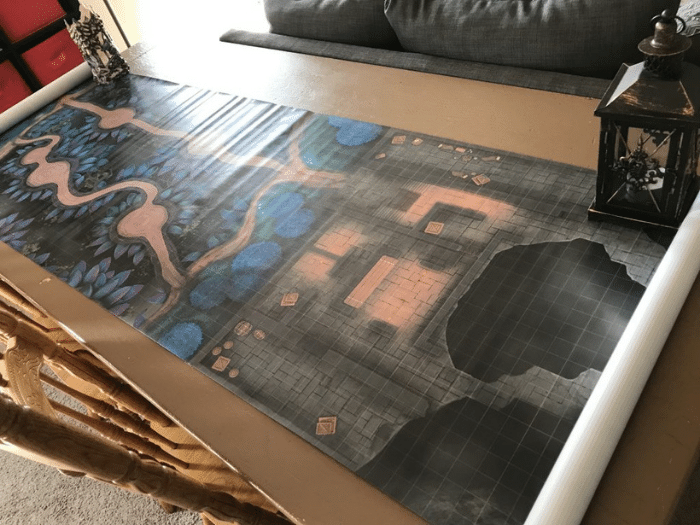
Especially for tabletop RPGs that are very strategy and tactics focused, battlemaps that combine great artwork with a grid of some kind are priceless.
It doesn’t matter if you choose battlemaps that have square grids or hexagonal grids. Either work great. Most battlemaps on the market have 1-inch squares or the same size of hexagons, which are the same size as minis (more on those in the next large section, below).
Yarro Studios has battlemaps for sale in both a large book of maps, and in their “Infinidungeon” roll-out scrolls.
Their book of battlemaps has many pages of high-quality artwork. What I like best is that most pages are mostly unique from each other. I’ve noticed there are definitely some pages I use more often than others with my gaming group, as not all pages are super interesting, or have the same quality art to them. But, the number of what I would consider in the realm of “filler” pages is very minimal.
I also really like Yarro Studios’ Infinidungeon scrolls. These scrolls roll out across a table to reveal an ongoing dungeon. There are six total scrolls (including one that’s blank) each with their own artwork and dungeon design. I’m actually just about to use an Infinidungeon for the first time, in a mega-dungeon I’m putting together with my gaming group. What I love most is that the scroll provides its own “fog of war” for my group to work through, by nature of the scroll’s unravelling design.
The overall diversity of battlemap options and artwork from Yarro Studios is such that this purchase goes on my list of top buys for tabletop RPGs. It’s also top of my recommendations for overall best dungeon master tools. However, there are many online retailers that have excellent maps you can use.

Dungeon Tiles
If you haven’t heard of them yet, dungeon tiles are a great choice for a battlemap substitute. Dungeon tiles come in relatively smaller sections (compared to a full size battlemap) that you can move around and adjust. Tiles can be placed next to others in ways that allow for you to create unique and custom dungeons, as you see fit. They aren’t typically as dynamic or high quality when it comes to artwork, as battlemaps, but they make up for that in their ability to be moved around.
Dungeon tiles are becoming more popular, but to me, still fit within the strictly “dungeon” category of tabletop gaming. Even though there are dungeon tiles for the wildnerness, etc. I still prefer traditional artwork-based battlemaps for diverse scenarios. They’re a bit easier to setup and use, quickly.
As much as I love dungeons, my gaming group doesn’t go into dungeon delves more than once every 4-5 gaming sessions, I’d say. Which means that dungeon tiles and the Infinidungeon scrolls (mentioned above) don’t get a ton of use.
Items like these are still important dungeon master tools for your occasional dungeon delve needs. But unless you’re running a campaign that’s focused around lots of dungeons, you probably won’t be using dungeon tiles extremely often.
As such, I feel that a book of battlemaps is a more important choice for someone initially building up their list of dungeon master tools. Dungeon tiles can probably wait until a bit later, once you’ve already acquired all the basic items.
Minis
Minis are admittedly more of a “group gaming tool” than a specifically dungeon master tool, so you may be wondering why I put them on this list. The reason is that specific minis for NPCs, villains, and boss fights are great ways to customize the campaign.
Before starting any new campaign, if I’m playing a character, I take a look at HeroForge.
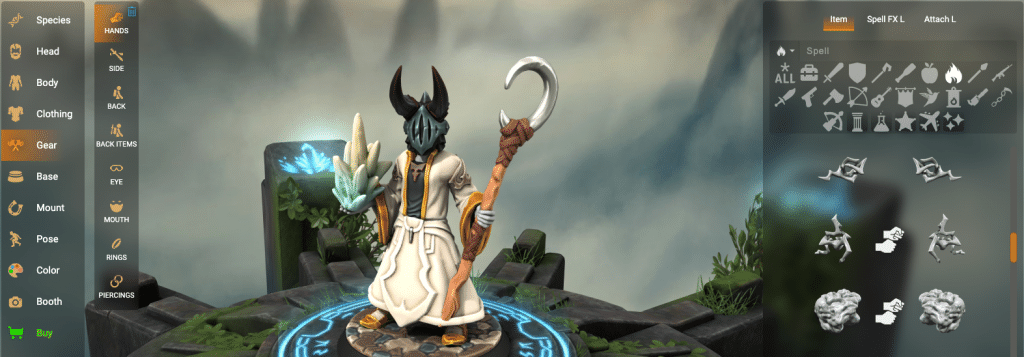
If you aren’t familiary, HeroForge is a website that allows you to custom-create a mini of your choosing. The entire site is a 3D model of the character you’re building.
HeroForge has all kinds of races to choose from, sizes, weapons, armor, spell effects, familiars, and basically everything you could think of for making your character come to life. HeroForge has been a consistently worthwhile purchase for me because I love to make the most out of my campaigns. Buying a new custom mini is, to me, a special treat to commemorate the beginning of each new campaign.
I won’t lie, HeroForge costs more than any simple mini you’ll find at your local gaming store, or online at places like Amazon. It’s a great option if you’re willing to spend $30+, when you factor in shipping.
My personal favorite option is to get my mini printed in steel, so it’s extremely durable – also great for painting. I’ve never had any of my steel HeroForge minis break or become damaged in any way. That’s after about 3 years since purchasing my first custom mini from them, and probably hundreds of games.
I also use custom minis if I’m the DM for the group (which I often am). As I mentioned above, if I create plans for a major NPC or villain to appear somewhere in the campaign, I get a custom mini created of them. Nothing shows your players that a character is important like a specifically-purchased (or created) mini to represent them.

DnD Music
Unfortunately, I have yet to find a website I really like that compiles all the kinds of music I really like for running a tabletop game. There are, however, numerous sites that do have good DnD music.
Since I don’t personally use any particular DnD music website though, I’ll simply give you a list of some of my favorite and most-used OSTs for providing ambience to a gaming session:
- All Final Fantasy Games (Nobuo Uematsu is a genius)
- Elder Scrolls – particularly Oblivion and Skyrim
- Fable
- Gunslinger Girl
- Half Life
- Inception
- Kingdom Hearts
- Majesty: the Fantasy Kingdom Sim
- NieR
- Princess Mononoke
- Psycho-Pass
- Seraph of the End
- Sword Art Online
- The Witcher
- Terror in Resonance
- World of Warcraft
Categorizing DnD Music
Video game soundtracks make for great DnD music. So do some movies. I also particularly like certain anime soundtracks in my games.
When I create my DnD music playlist, I also group songs into categories. Doing so allows me to quickly play songs that match the game’s mood. This way, I don’t have to pre-plan what songs I’ll use during the game:
- Adventure
- Town
- Dungeon
- Battle/ Boss Battle
- The “Extras” Category: Game Intros/ Victory/ Defeat
- Specific Campaign “Themes”
Adventure songs are for overland travel, or slightly neutral in-game events. Towns typically have a more positive or calming vibe. Dungeons are darker, mysterious, or even sinister. Battle songs are upbeat and intense. Boss battles are really intense, dramatic, and even bombastic.
I usually have a song playing (a game intro song) when everyone shows up to play the game. It’s also a good idea to have victory and defeat songs to emphasize fight and other encounter results.
Creating an OST for Your Game
If the adventuring group comes across an important area in the game, I usually make a note of whatever song I end up playing during that time. Then, that song gets “upgraded” to a campaign “theme.” Whenever the party travels back to that same area or comes across a situation reminiscent of the NPC/ villain/ events that took place with that song, originally – I play that same song again.
Song themes allow players to attach to your DnD music selection, and in effect create an OST specific to your game. When players hear the same campaign themes multiple times, they become drawn into the game more and more.
Sometimes it can also be great to have an entire soundtrack for your game, as opposed to piecing together whatever you can find. For a great all-around soundtrack, take a look at the
Insignia: Tactics Soundtrack on Bandcamp.
Fun but Entirely Optional Dungeon Master Tools
If you already have an established collection of dungeon master tools, you may consider some of the following choices as non-essential “extras.”
If you’re like me, and tabletop RPGs are a major passion of yours, these extras are perfect, and a lot of fun to purchase. Try them out for yourself, and see how they makes your games feel that little extra bit special.
DM Screen
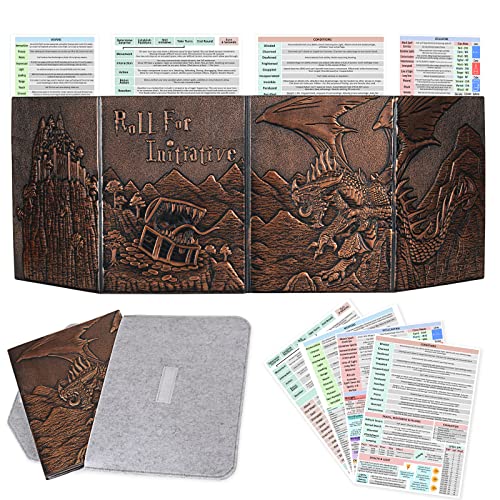
This item is first on this list because the list is alphabetized. It’s not first because I think it’s the most important item. In fact, I’ve never actually seen anyone – any DM – use a DM screen.
Do I think they’re kind of weird? Yes. But they can also be useful. The idea is that DM screens keep some of the game’s most important rules within easy access for the DM.
I suppose they also give an air of mystery and intrigue to the game. Perhaps, even an aura of power to the person whom sits behind the DM screen. After all, who knows what happens behind that screen?
One thing I do like about DM screens is that gaming companies such as DnD have created custom screens for adventures and campaigns they’ve created, such as for the “Curse of Strahd” (vampire campaign).
Dungeon Décor
Not that kind of dungeon décor. Well… maybe it can double for two things.
What I really mean in this category is the general aesthetic upgrades you make to your gaming space. The ambience of lighting, wall art, gaming- and fantasy-related items, and even furniture. This is the “zen” of your gaming space.
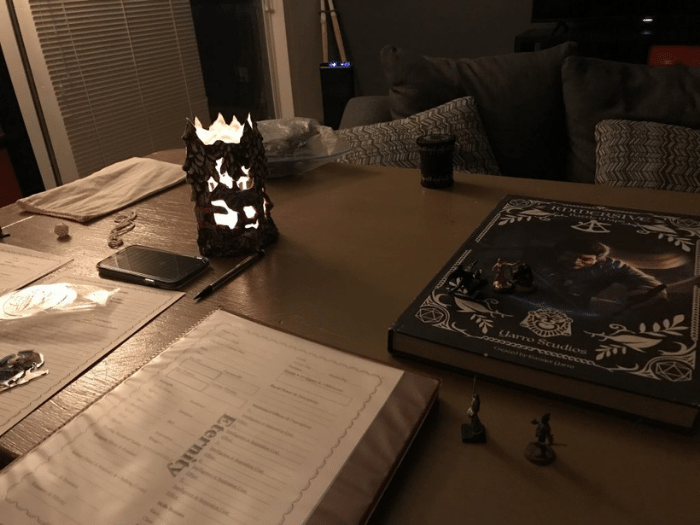
For example, I now have two “lanterns” I set up at my gaming table. Once night hits, I put tealight candle into each, and the ambient orange light adds to the game’s fantasy feel.
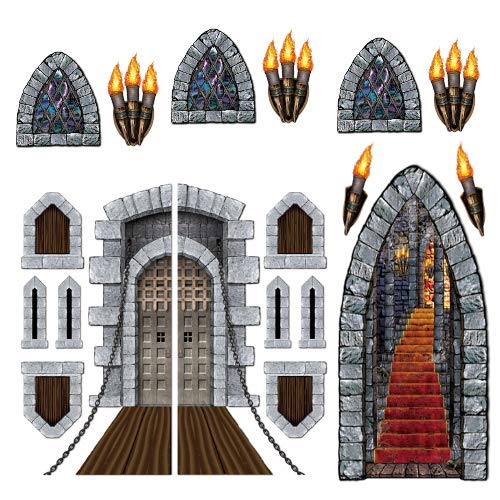
I also recently bought dungeon décor wall stickers, which I’ll stick on my walls for an upcoming mega dungeon. This was actually my girlfriend’s idea, which is why it’s so good. I’m not personally the best at creating a “space” that feels right – if you’re the same, just trust my girlfriend and buy this.
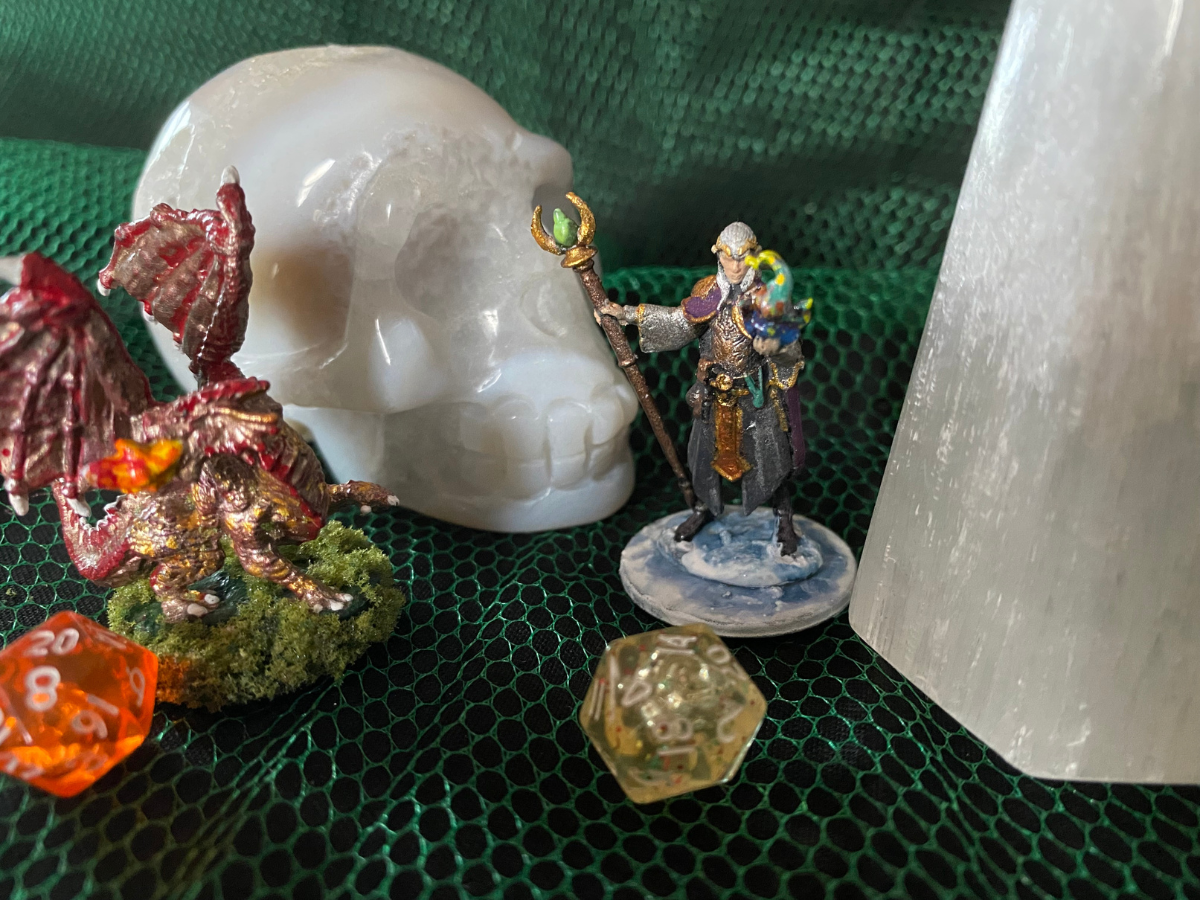
There are also some dragon statues in my living room where we game, and I also really enjoy gemstones and crystals. They happen to fit well for the gaming room fantasy vibe I’ve created. If you’re into gemstones as well, I recommend a few as side pieces.
Finally, when we have extended gaming sessions (every few months or so), I decorate my living room with a few extra items to fit the occasion. In the past, I’ve done spiderwebs in corners and on walls for Halloween-themed adventures. Crock pots with mulled wine is a good choice for any kind of holiday game night.
Honestly, even providing pizza or snacks adds to the gaming environment. Whatever it takes, really, to make people feel more at home and more relaxed for the game, contributes to the game’s overall experience.
Table Topper
As you can tell, I’m a big fan of creating the right feel for my gaming space. I think the way people feel when they come in to game makes a difference in the way a game plays out.
People work hard and deal with a lot of stress in the lives, so the game and gaming space needs to feel like something really relaxing and fun, or people won’t want to keep playing over a long campaign.
Table toppers are a neat idea, and fit in very closely with the idea of great world map and battlemap art. It’s basically just a top that you put on your table that turns the surface into a specifically-gaming surface. They come in mats and wooden toppers. Generic colored backgrounds, and art-filled backgrounds.
This extra touch helps put people into a “I’m playing a game now” vibe, and relax away from their day-to-day lives. It’s definitely helpful.
General TTRPG Tools
If you are a new DM, or new to the TTRPG genre (Tabletop RPGs), this section is for you.
I went back and forth a bit as to whether or not I should include this section, since it’s so basic. However, just in case there’s anyone new to tabletop gaming who reads the article, this section will help you. The foundation for all dungeon master tools is based in the following general TTRPG tools.
Core Rulebooks
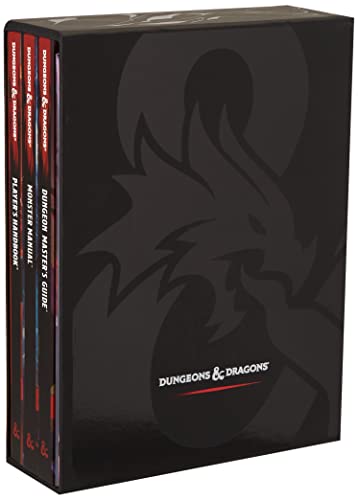
You must have all the core rulebooks for your game in order to play it well. Period. If you're interested in playing a new tabletop game, take a look at the Eternity TTRPG shop page for my own independent game. If you're into DnD, take a look at the link below for the set of three books you'll need to get started, which are the:
- Player's Handbook
- Dungeon Master's Guide
- Monster Manual
DnD Dice
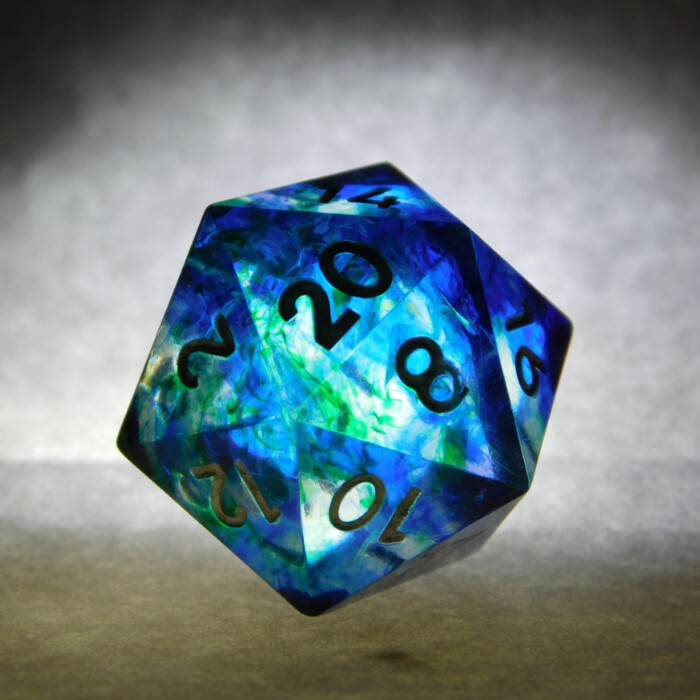
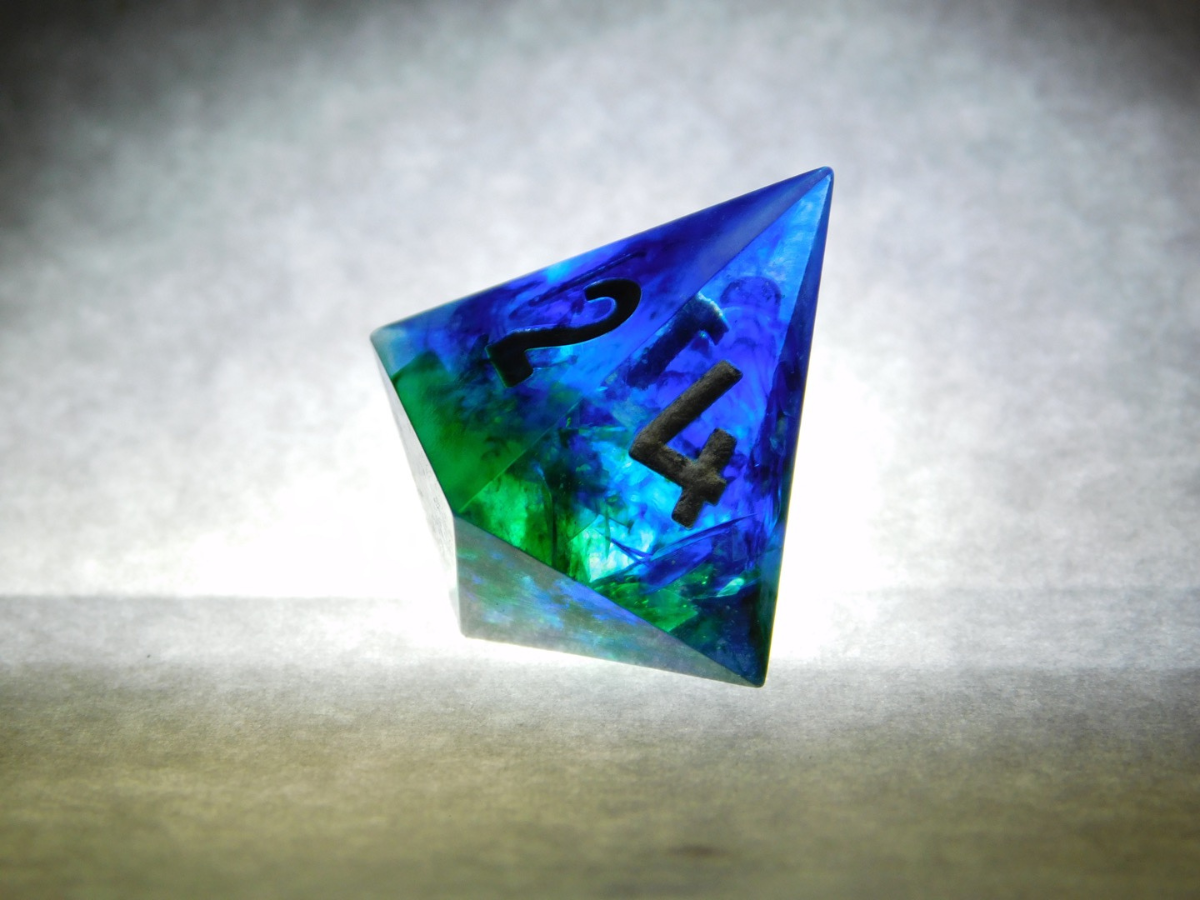
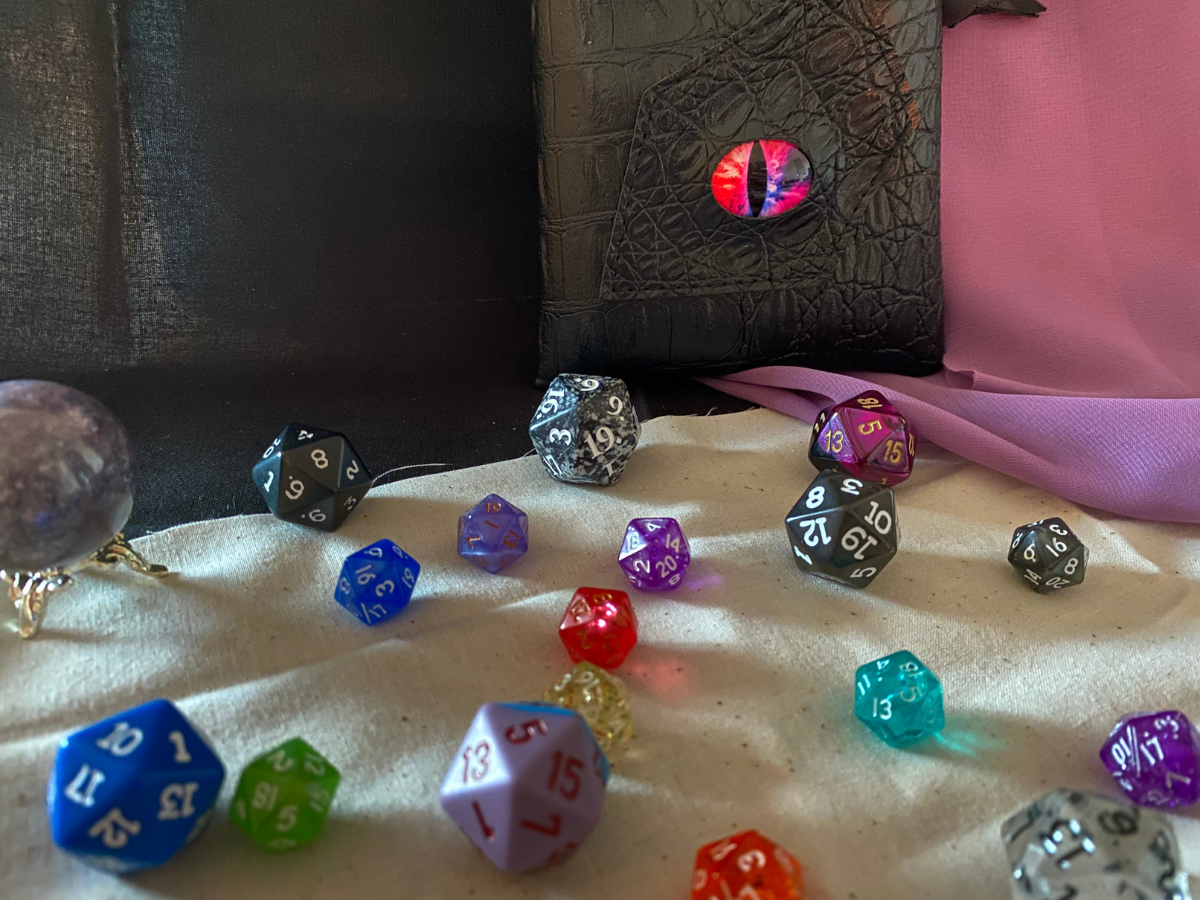
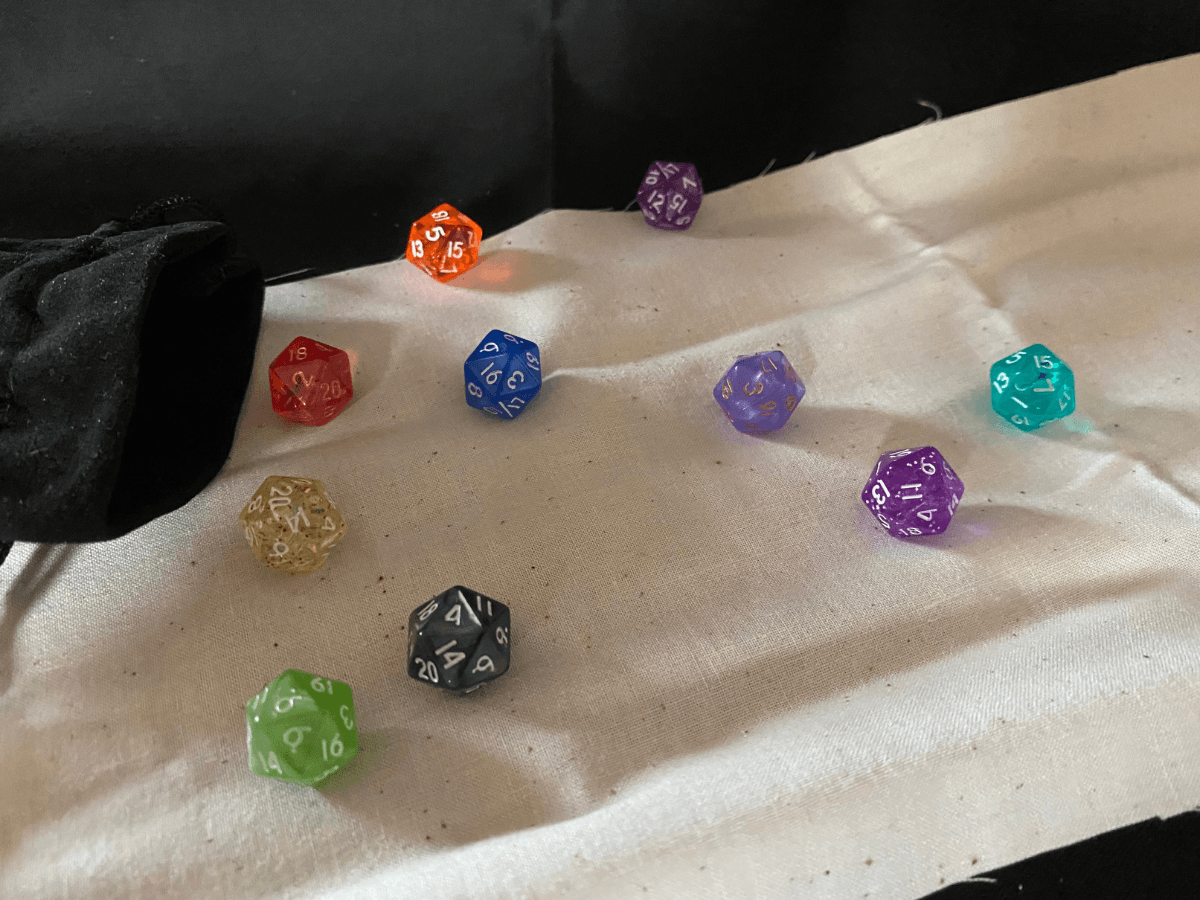
If you’re playing DnD, you must have a full set of dice (d4, d6, d8, d10, d12, and d20 – you probably need multiples of each). Other games require less dice. In any case, any set will do when you’re starting out. There are also options for very amazing, eye-catching sets still within the reasonable price range, that will make you very happy each time it’s your turn to roll. For an in-depth guide, check out my post on Best D&D Dice.
I personally enjoy Dice Envy dice, but there are really a nearly unlimited number of great DnD dice providers.
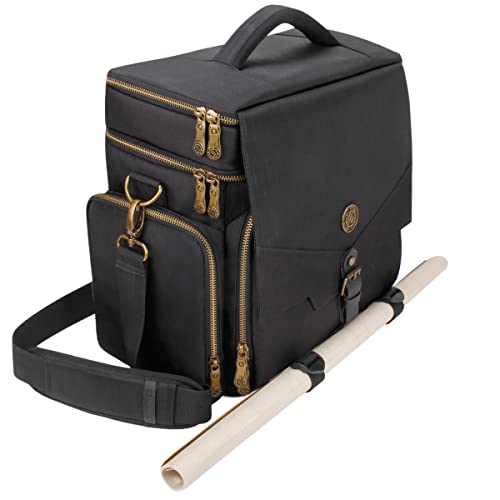
Compartment Case
I have a carrying case like this, and it saves me tons of time when setting up each game. Also, if you’re the DM and you’re carrying around a lot of minis, dice, maps, and notes, you’ll want something like this. If you’re new, skip this and invest instead in all the things you’ll need to fill it. Once you’ve acquired enough cool stuff, a compartment case becomes a must-have for tabletop gaming.

Initiative Tracker
You don’t need this, but once you see it, you’ll want it. A visual initiative tracker display works much better than simply keeping track of initiative on paper. It also helps players know when their turn is coming up. If you play Eternity TTRPG, try out my online initiative tracker instead, as it does all the math for you. Simply have everyone use their phones when you play, and you’re all set.

Spell Cards
If you play DnD, these spell cards save a lot of time. Instead of keeping dozens of pages marked in your core rulebook for spell details, you can keep a handful of spell cards on-hand. No one likes wizards that stop combat for 5 minutes to look up and read specifics of spells – wizards don’t’ even like themselves for what they do. Save yourself and your gaming group a lot of headaches, and invest in these cards. Everyone will love you for it.
Status Markers
This isn’t really worth me providing a link to, as it’s such a simple concept. Use some really low-quality poker chips, or draw status marks on notecards that you cut up to pieces 1-inch square, or so. When a player character or monster gets hit by a status effect, put these markers underneath their character to remind everyone of the effect and duration. Super helpful for in-depth combat situations.
As an additional resource for you, check out my Ultimate DnD Gifts Guide. The guide has almost 50 ideas for DnD related items to make your game better, or that make great presents for those who love DnD. You may find something that will make your game or gaming environment a step better than it is now.
Story Beats Everything
This section could be first in the article. It is, ultimately, the only piece that matters when it comes to TTRPGs. At the end of the day, no matter what dungeon master tools you implement into your game, nothing is more important than a great story. If you've never tried a TTRPG with group game mastering (no single GM), you'll be amazed at the quality of stories that come up. For that, check out the Eternity TTRPG tabletop game.
The scope of this article is really about dungeon master tools, and not storytelling tools, so I’ll keep this section short. I just want to really impress upon you that story is what makes tabletop RPGs better. It’s not the dungeon master tools, themselves.
To help you tell better RPG stories, here’s a few links for you.
- Check out these 20 DnD Quest Ideas that inspire you to be a better DM, and explore more areas of the fantasy genre than you probably ever have before.
- A TPK in DnD doesn’t have to be the end of the story. Also, don’t be afraid to let player characters die. This TPK DnD article helps you navigate the tricky side of death in tabletop RPGs.
- Need a random generator for names, places, plotlines, NPCs, and more? Tt helps to have extra ideas for RPGs on hand, for any adventure.
Remind yourself before creating any story or plotline that you and you group get out what you put in.
Also, remember that the story should first and foremost be about having fun. Ask yourself: what’s the most fun thing we could do on our next adventure? Then, do that. It’s that simple.