Home > DnD Dice

Best D&D Dice Review

Looking for the best D&D dice available on the market? Look no further. I've tested over 35 dice brands to save you time, and I’ve made my selection of the coveted title of "Best D&D Dice." 


My number one recommendation for the best D&D dice is: Dice Envy.


Read below to learn more, on why. I’ve also included reviews on an additional top 20 picks - honorable mentions, and other great brands - for good measure. Finally, if you need a little more help deciding what dice is right for your D&D (or other tabletop) game, this guide contains all sorts of useful information on dice quality, material, precision, and thoughts on matching dice to game themes.


Be sure to scroll through the entire article to see pictures of all the different great dice sets available! D&D dice also make for some of the absolute best DnD Gifts you can find.
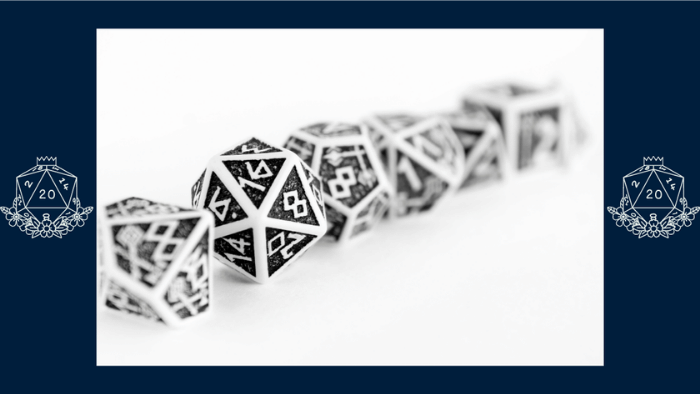

Best DD Dice

Eternity TTRPG Top Sellers


Overall Best D&D Dice: Dice Envy

Dice Envy, hands down, has the best D&D dice available. They also have some of the largest selections of dice available, online. I like Dice Envy because their price is great, their selection is wide, and the dice quality is high. Basically, their dice are actually random (unlike some other brands - let's be honest), and they provide great value for what you spend.


In addition to traditional acrylic and resin dice sets, Dice Envy offers: 


Metal Dice

Becoming more popular, these dice look great and last forever. Their extra weight makes for very satisfying rolls. One thing you should know is that metal dice sometimes do not "roll" very much when you "roll" them. What I mean is that the weight of the metal dice can sometimes make it roll a little on your table, and then almost just skid to a halt.


When it comes to Dice Envy's metal sets, you have to start by taking a look at the Arcane Vein metal dice set - perfect for any wizard you might play.


Wood Dice

Wood dice are quite rare to find on the market. You can certainly find some specialized crafters on Etsy, etc. However, to have a company offer wood dice as part of their lineup is definitely unique. This wood set from Dice Envy is also fashioned to look like a class-specific set for a Ranger.


Gemstone Dice

Dice Envy’s gemstone dice collection isn’t extremely large. However, their gemstone dice are very high quality. I currently play nearly all of my tabletop RPGs using a tiger's eye gemstone dice for my d20. I love gemstones, so the extra cost doesn't bother me. I've also seen this brilliant Obsidian gemstone set from Dice Envy get a lot of interest, over time.


Infinity d4 Dice

If you haven't seen an "infinity d4 dice" before, these aren't your typical d4 pyramid-shapes. Infinity d4 dice, instead, are like a rectangle, almost. Infinity d4 dice are actually great for tracking hit points, or can be used as counters of various sorts, in your game. This set, for example, is very reminiscent of Legend of Zelda heart counters.


Mystery Dice Sets

Not sure what you want when it comes to your D&D dice, or looking to save a little money? No problem. Dice Envy will create a mystery set and send it your way. The best part? The price. You can literally get a 10-piece D&D dice set - every dice type you need to play D&D - for almost 50% off the normal price of other Dice Envy dice sets. These 10-piece sets come in resin or even metal!


Best D&D Dice For Your Next Game

Dice Envy dice score top marks on all my dice criteria. They’re high quality, and have proper weighting on each side for truly randomized rolls. They offer a wide range of styles and have a wide variety of materials that are aesthetically pleasing. Pricing is also very competitive – their acrylic and resin dice are similar to other companies, while their metal dice are about 25% less expensive (very much appreciated).


The company is also very reasonable when it comes to customer service and order/ charge issues. Shipping is fast. Overall, great experience purchasing from them. I highly recommend you take a look if you're in the market for your newest set of best D&D dice!
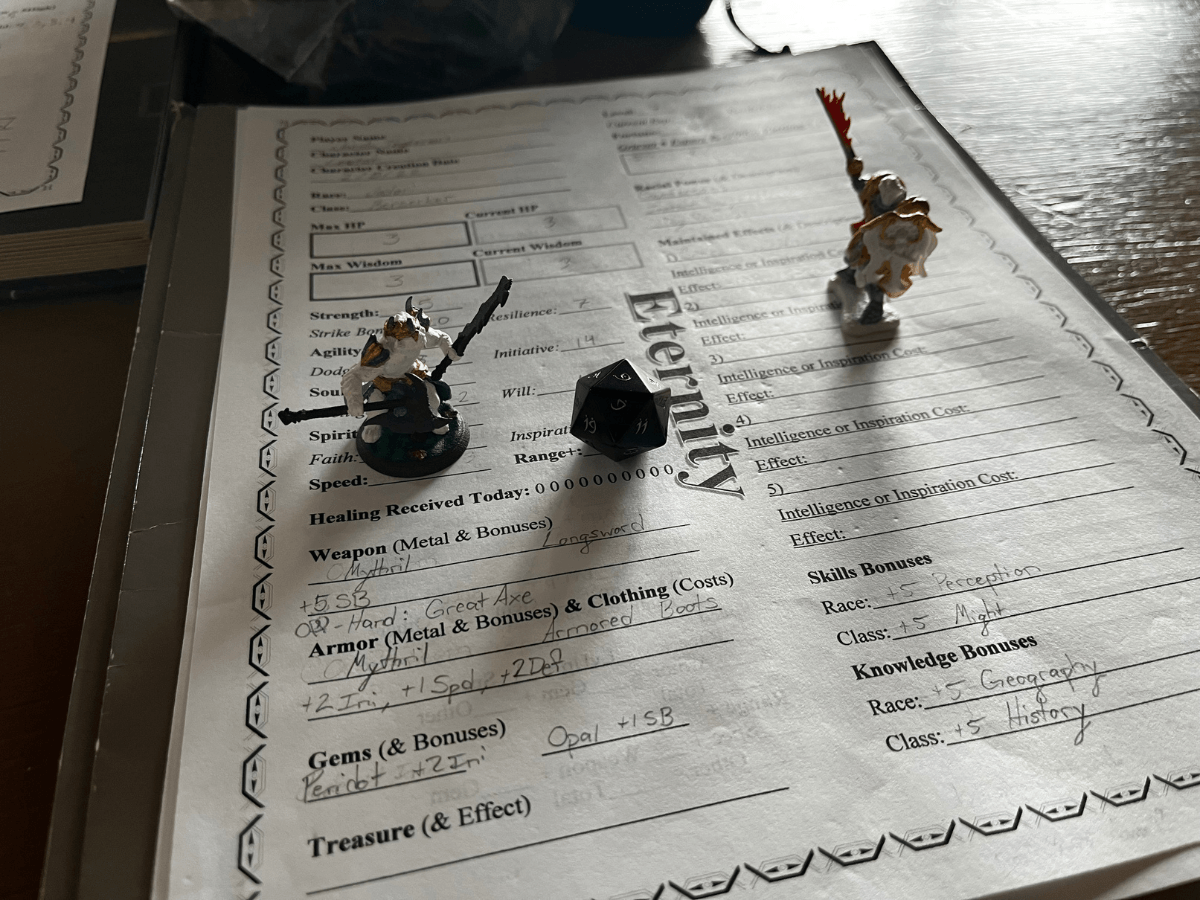
Best D&D Dice Dice Envy

Feast your eyes on my favorite d20 - a tiger's eye gemstone dice that gives me high rolls, and looks great at the gaming table.

Honorable Best D&D Dice Mentions

Though not the absolute best D&D dice, these dice certainly get an honorable mention, and are only barely less recommended than Dice Envy. All of these companies offer great quality dice, with interesting aesthetics, and various material options. Choose any of these companies and you’ll definitely have great D&D dice for your tabletop game.


Also, just remember that there are many Games Like DnD out there, and some of these dice sets may work wonderfully for a TTRPG based in a unique setting, or even an entirely different genre than DnD (like Sci-Fi or horror).


Skullsplitter Dice – D&D Class-Based Dice

One of the best things about Skullsplitter dice is that they offer dice sets by D&D class. You can get dice specifically made for your barbarian, druid, paladin, wizard – really any base class in D&D. As far as we could find, this is the only company that offers high-quality class-based dice. In our book, having dice specifically crafted with a specific D&D class in mind is a big bonus. Of course, not all TTRPGs are a Class Based RPG, but even if playing a classless RPG, it can be fun to have thematic dice to help express your character.


Skullsplitter also has a wide variety of metal dice, along with tons of dice and gaming accessories (dice bags, dice trays, etc.). Additionally, skullsplitter offers quality metal d100’s, which are not easy to find. D100’s aren’t technically “random” since not all “sides” on the dice are evenly weighted, but still. Their d100 is a full ½ lbs. of great gaming fun.

Metallic Dice Games – Metal Dice, Gemstone Dice, Velvet Bags

Metallic Dice Games has a very wide selection of – you guessed it – metal dice. They come in all kinds of colors, styles, and sizes. They even have metallic hollow dice (hollow on the inside). Surprisingly, however, they also offer a lot more. Despite their name, Metal Dice Games offers dice of all kinds of material make. In particular, they have one of the best selections of gemstone dice, including amethyst, lapis lazuli, tigers eye, and more.


Metallic Dice Games also has all kinds of unique dice sizes and styles. For example, you can get mini dice (about the size of a penny), or mega dice (about double the size of normal dice). They also have glow in the dark dice, sharp edge dice (for that extra thrill), and unicorn dice (a unicorn symbol in place of the “20” on a d20). We also liked their selection of dice bags, dice trays, dice cups, and their special velvet bags that come with multiple compartments.


I personally love the mini dice set from Metallic Dice Games (as shown in the picture above). There's just something about mini dice that is really fun. Plus, mini dice like that are actually not always super easy to find!


Haxtec Dice – Industrial Metal Dice, Heat Sensitive Dice

Haxtec dice is one of the few dice companies to offer industrial-looking metal dice. If you’re playing in a steampunk tabletop game, you might want to consider one of these sets as it definitely matches the right vibe. One of the other neat things that Haxtec offers is heat sensitive dice. As the dice rests in your hand (or near any source of heat), the dice actually changes color, mood-ring style. Think of it like going Super Saiyan as your D&D game progresses, during the adventure, as you see your dice color change.


Haxtec’s gemstone dice also have a unique stylized underline for the dice’s numbers, almost like an elvish script. This can make it a little hard to read, at first, so may not be a great choice if you prefer simple dice rolling and viewing. However, all of Haxtec’s other dice are extremely legible. Overall, I like their dice for size, weight, feel, and the general uniqueness of their dice color schemes.


For an idea of Haxtec dice look, feel, and quality, check out this amazing fireball set. This set also comes with its own dice bag, making it a great value purchase.


Norse Foundry Dice – Variety of Metal Materials, Gaming Accessories

Norse Foundry is a well-known name in the world of D&D dice. They’ve been around since 2011 as a very successful company. So, you know when you order their dice that you’ll get a good product. Norse Foundry also prides themselves on the precision of their dice, meaning that all sides of a dice are equally weighted, so dice rolls are truly randomized.


This is one of the few dice companies that offers unique metal dice. They have zinc dice, aluminium dice, copper, brass, and bronze. They also offer many of their metal dice in mini size (pebbles), or mega size (boulders). We also appreciated their soft dice (plush, great as gifts for kids), their dice jails, spellbooks that hold gaming accessories, coins for roleplaying and tracking in-game currency, and high-quality tabletop miniatures.


The Bifrost metal dice set (above) is one of their most popular. Not hard to see why! The set's extremely unique-looking, and sure to draw other players' gaze at the gaming table.
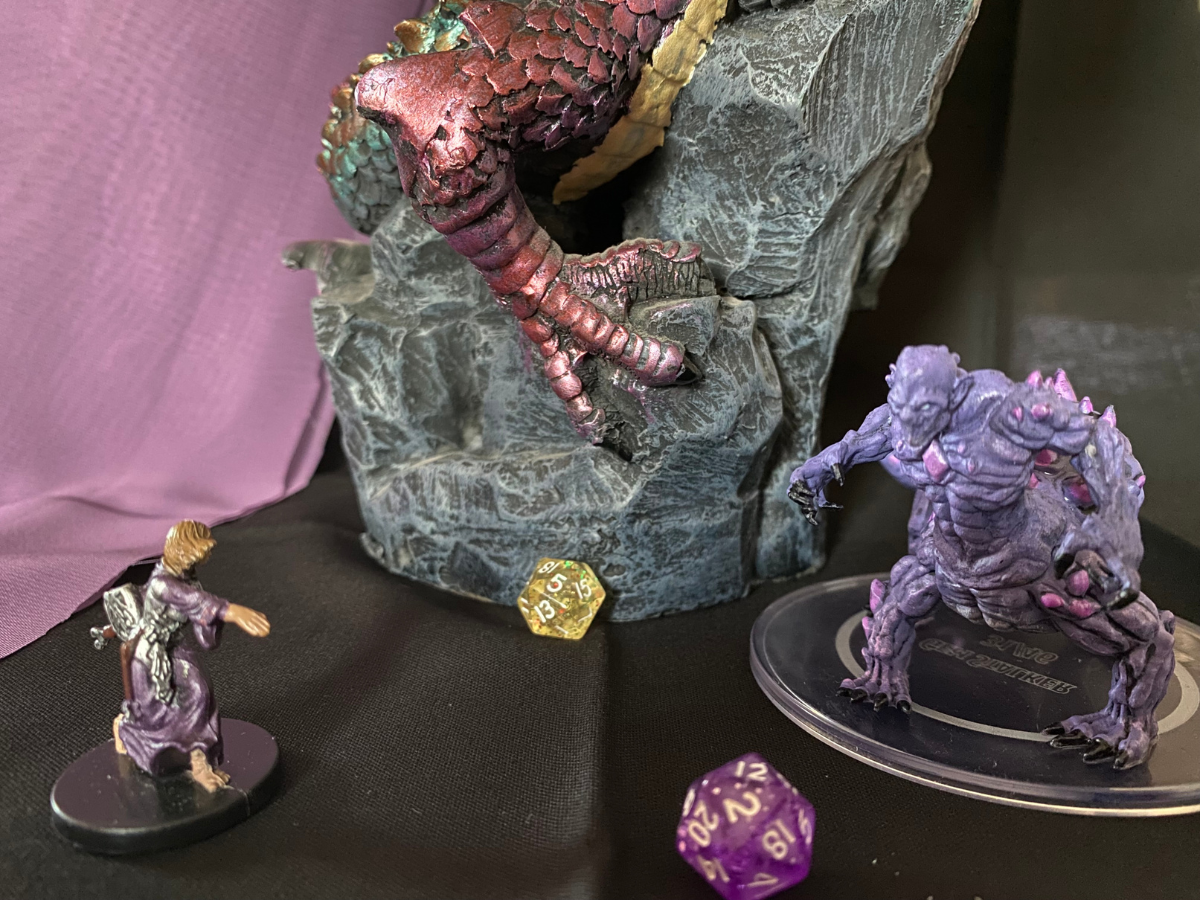
Haxtec Dice

Dice add a lot to any DnD table. They are a staple for any game, along with maps and minis.

DnD Dice – Glass Dice, Thematic Dice, Pound of Dice

I didn’t think you could consider a list of best D&D dice complete without including the actual company called "DnD Dice." The best thing about DnD dice is the variety of unique dice. They’re one of the few companies, for example, to offer glass dice that look really good. I also love their hollow metal dice (which is a style that’s becoming much more popular). Their glitter dice have some unusual styles and graphics attached to the dice, for thematic times of the year, such as St. Patrick’s day or Halloween.


DnD Dice also has dice with inclusions – objects put inside the dice. Of course, anything put inside a dice certainly affects precision of truly randomized rolls. But, speaking simply as a fun factor, why not? DnD Dice also has electronic dice that light up from the inside, a great gemstone dice selection, and the option to custom-make dice with your name on it. DnD Dice is also one of the few companies that still offers pounds of dice and mounds of dice – large quantities, usually slightly defective, but at great dice prices.

Chessex Dice – Classic Best D&D Dice

When you think of the standard in D&D dice, Chessex is basically it. They’re one of the largest, most enduring, and most well-known dice making brands. While Chessex isn’t particularly known for any one kind or style of dice, as many other companies are, I love them for their basic designs and dependability. I particularly love their speckled dice, as one example, because it’s a simple design that looks great.


Chessex also still offers a pound of dice option, has a number of specialty dice (symbols on the dice, instead of numbers), and allows customers to do custom-engraving. Chessex also offers a number of gaming accessorries, including battle mats. When it comes down to it though, we think of Chessex as the classic D&D dice company. One thing to note, however, with Chessex dice, is that they aren’t necessarily known as having the most dependably-randomized rolls. Their design and machining isn’t always perfect. Just something to keep in mind, if you’re really after a highly perfected dice roll.


If you head to any local gaming store, you're likely to find Chessex dice in the highly-recognizable packaging, above. You an also get great deals shopping for Chessex dice, online.


Awesome Dice – Game Specific Dice Sets, D3 Dice

An awesome name for some truly Awesome Dice. What’s best about Awesome Dice is that they’ve created dice sets specifically for a number of tabletop RPGs (TTRPG). For instance, you can find D&D dice, dice for Witcher, Cthulu, Pathfinder, Shadowrun, Vampire the Masquerade, and Werewolf. Each dice set is specifically themed for that tabletop game in terms of color, design, and overall aesthetics. Not all of the sets are created equal in terms of quality – some are certainly better than others. However, if you’re looking for a new set of dice that fits the tabletop game you’re playing, you might look into Awesome Dice’s TTRPG-specific sets.


Awesome Dice also has some gemstone dice, a decent selection of metal dice, one of the market’s only high-quality metal d3 dice (3 sided dice), and a monthly subscription box. Awesome dice does also offer Chessex and Q-Workshop dice through their company as well, though, so it’s not always 100% clear whose dice you’re really buying.
Haomeja Dice – Steampunk, Classic D&D Dice Vibe

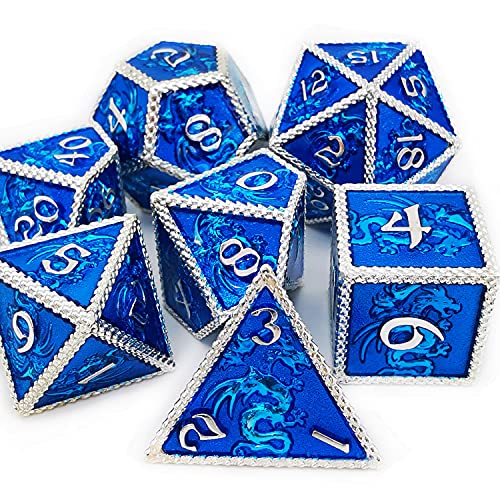
Haomeja – a lesser-known company – really only has four kinds of dice, but they are definitely flashy. They have metal-exterior, resin-interior steampunk-themed dice. Zinc alloy dice that change colors with heat (from holding in your hand, for example). Classic-looking metal dice with a dragon imprint background. And finally, they have hollow metal dice with a dragon imprint background.


Haomeja does not have the widest selection of dice, or even the most unique dice. However, they do seem to be a good fit for that classic D&D dice feel, and for steampunk tabletop gaming. We liked their dice designs and colors a lot, and would certainly recommend looking at their selections.


Personally, I love this ice-blue metal dice set. I think it's a perfect fit for a wizard-type character, or perhaps a barbarian from Northern lands. What can I say? I think it can be a lot of fun to match your dice theme to your character.


Forged Gaming Dice – Unique Dice Textures, Dice Towers, Dice Holders

The most unique thing about Forged Gaming dice is their dice textures. As of the time of this writing, they only sell metal dice. But, their metal dice does come in a number of unique textures. They have banded textures, where strips of metal have been taken off the outside, leaving slight, striped indents. They also have a dragon scale texture, where the outside lines of the dice are solid, along with the inside numbers, but the rest of the dice is like miniature scale mail. We also enjoyed their fractured texture, where the dice has what looks like lines of magma all over the surface.


Forged Gaming’s dice towers (for rolling dice) are also very unique. They have some that fit a budget, while others are made to look like a grim reaper, for example. Their dice holders are also worth looking at. They have a dice jail cell, a stack of spellbooks that hold dice, treasure chests, and mimic treasure chests. 


This particular set has a blood-spattered look (perfect for any battle that results in a DnD TPK), and comes with its own dice carrying case. Very nice touches, and very high quality.

Heimdallr Dice – Crisp Look and Style

Heimdallr Dice has some very high-quality dice options. I would even say higher quality than many other dice companies. Hemdallr dice are all metal, but come in a lot of different color schemes. What I like best about Heimdallr is that the dice look crisp… the colors, numbering, the overall aesthetic of background texture. It’s all very good. The only downside is there’s nothing truly standout about these dice, when compared to the other great companies I've also reviewed.


As with Skullsplitter dice, Heimdallr does have dice sets that are themed according to D&D classes. However, though the dice sets are very high in quality, there aren’t as many dice set options for each D&D class, and there isn’t really anything that makes the dice a “class-based dice,” aside from class-thematic coloring.


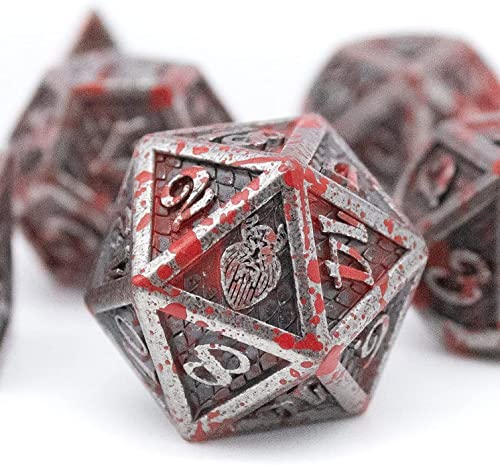
All that being said, at the end of the day, it's almost all about how the dice looks. I mean, take a look at that picture, above. Another blood-spattered dice set (some people love that kind of thing). But I also love the nice touch of the barbarian's face in place of the 20 on that d20.


Wiz Dice – Bulk Dice (Pound of Dice)

When it comes to bulk dice, I recommend Wiz Dice. You can currently only find their dice on Amazon. Their bulk dice comes in a wide variety of sets, including the famous Bag of Holding. Many of their dice sets also come with a dice bag or cup of some kind, that makes managing the large amount of dice you’re about to purchase, more manageable.


Wiz Dice aren’t typically specific in terms of colors or types. Each bag comes with an assortment of dice types (d4, d6, d8, d10, d12, d20 and occasionally others). The dice are typically also a variety of colors. However, Wiz Dice does offer some sets that are slightly higher in value that have uniform color and style.


There's any number of reasons you may want an entire set (or even a full pound) of dice. Basically, if you run a lot of games, people are bound to forget dice, occasionally. As part of your dungeon master tools set, be sure to have extras set aside!


Q-Workshop – Themed Dice Sets

The best thing about Q-Workshop is that their dice are all TTRPG and fantasy themed. Want a glow in the dark dice set? They’ve got it. Want dice inscribed with runes? Got you covered. Here are just some of the many other thematic sets Q-Workshop offers:

  • Celtic
  • Cyberpunk
  • Elvish
  • Halloween
  • Mythical (Metal)
  • Japanese
  • Santa’s Dice
  • Starfinder
  • Viking
  • Witcher


Q-Workshop dice are just fun. They aren’t the flashiest, but they also aren’t the most expensive. Instead, you can find some quality dice with unique patterns, for good prices. Try out this Witcher dice set, for example, and add some dark fantasy feel to your next D&D game!


Paladin Roleplaying Dice – Family-Owned

Paladin Roleplaying Dice originally launched as a Kickstarter. The best part about Paladin Roleplaying is that they’re a small, family-run business. Their dice are precision-balanced, and easy-to-read. They are certainly not the largest company in the market. They don’t have the largest selection, and their dice are not the flashiest. However, they do have some sets of premium metal dice, luxury wooden dice (which is rare), and a small selection of gemstone dice. Supporting them also means supporting small business. So, if that’s important to you, you might consider giving their dice a shot.

Eternity TTRPG Article Shop

Additional D&D Dice You May Want to Check Out

Though not making an honorable mention for the title of best D&D dice, these dice companies do all offer some additional options that are valuable. One of the reasons these companies don’t make the top lists is that they can only be found on Amazon (they aren't big or unique enough, in my estimation, to be able to sustain themselves on their own platform). However, if you have some extra time and you’re looking for something a little less expensive, or you simply don’t need anything fancy when it comes to dice, you might find something worth your time, here.

Bescon Dice

Bescon offers a 13 piece dice set, which is very unique for the industry. The set includes a d3, d4, d6, d8, d10, d10 (percentile), d12, d20, d24, d30, d50, d60, and d100. Why you would want all those dice, I'm not really sure. It is really cool, though. Probably, they’re mainly for someone who enjoys dice collections, and really wants to have all the unusual dice that can be found. Though there aren’t a lot of situations in a D&D game, for example, where you might use all your newfound dice, you will likely be the only one in your friend group to have a d30.


If you're really into dice, Bescon is hard to pass up.


Hong Hui Dice

Hong Hui has a very small selection of dice. They have hollow metal dice and dice with RPG symbols on them (such as hammers and axes) that all look great. I personally love hollow dice like this set from Hong Hui dice. I think they make for extremely fun rolls. Almost always, if you show up to your D&D game with a set of hollow dice, you will stand out from everyone else, as hollow dice are somewhat rare!

Toyful Dice

Toyful dice come in a selection of basic set sizes and colors. They also have some metal dice selections, though they don't offer a huge variety there.


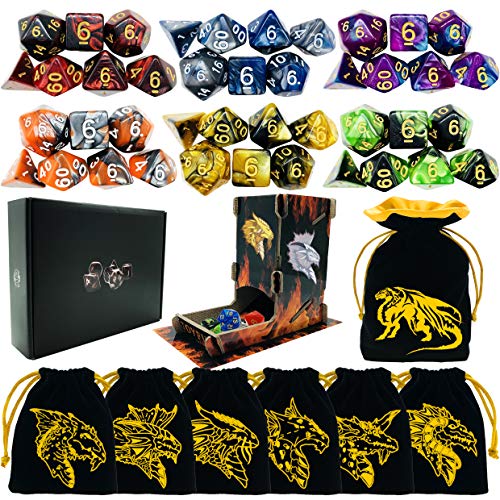
What I like best about Toyful Dice is that you could literally buy this set for your entire D&D gaming group. Do that, and everyone has their own dice set, their own dice bag to carry everything, with cool dragon graphics, and a dragon-themed dice tower you can share. This set is also not very expensive, and is pretty good quality.
best dice for D&D

What D&D Dice You’ll Need

In case you aren’t familiar, or you’re new to D&D, you will need the following dice to play a typical game:


  • D4 (4 sided die)
  • D6 (6 sided die)
  • D8 (8 sided die)
  • D10 (10 sided die)
  • D12 (12 sided die)
  • D20 (20 sided die)


Honestly, you’ll really want multiple dice of each kind when playing D&D. The reason being that many checks, attacks, and damage types require players to roll multiple dice at a time. When dealing damage, you might, for example, roll 3d6 + 1d4 (which would be three 6-sided dice, plus one 4-sided dice). If you don’t have multiple dice, you could end up rolling a single dice multiple times, which can get annoying.


In D&D, d20’s are the most-often used dice in your arsenal. You use it for determining if attacks hit, skill and knowledge checks, and virtually everything else that happens on a macro scale. All other dice sizes are primarily used for determining damage (or healing) from attacks, spells, and other effects.


Some other TTRPGs – of which there are many – use 2d10’s (two 10-sided dice) as “percentile dice.” One d10 acts as a 1-10, while the other acts as 10-100. Combine the two, and you’ll get numbers like 37, for example. Another example of commonly-used dice in other tabletop RPGs is to simply use all d6’s, or to primarily use d8’s.


Eternity TTRPG (obviously, my favorite) only uses d20’s, to keep the game very simple and quick-paced.


Are Metal D&D Dice Better?

With the increasing popularity of metal dice, many people ask if metal D&D dice are better for gaming. There are pros and cons to metal dice, plastic dice, and specialty dice. Preference is really more important for choosing your material than what’s objectively “better.”


Dice Material – Pros

Metal: metal dice are much weightier than other materials of dice. They aren’t as likely to roll off your table, since they don’t roll as far. They also tend to have a more consistent center of balance, making for slightly more randomized rolls.


Plastic: of all dice options, plastic is the least expensive. You can even get fairly aesthetically impressive dice without spending much. Another benefit is that since plastic dice are so common. You can easily get almost any kind of plastic set you’d like by just going to your local gaming store.


Specialty: specialty dice includes materials like glass, bone, wood, and gemstone. The biggest benefit to these dice is that they are unique, often flashy, and look fantastic. 


Dice Material – Cons

Metal: metal dice are often fairly expensive, at least in comparison to plastic dice. You can certainly find good deals, but you should definitely expect to pay more for a metal set. Also, because metal dice are much heavier than plastic dice, it’s worth mentioning that when rolled, they can cause damage. You may consider getting a dice tray, dice tower, or rolling your metal dice onto a battle mat, as opposed to rolling metal dice directly onto a table’s surface.


Plastic: plastic dice really require high quality precision. Because the weight is less, they’re more prone to imperfections that make one side of the dice weigh slightly more than others – effectively reducing randomness in rolls. Plastic dice are also less flashy than metal or specialty dice, overall.


Specialty: specialty dice includes materials like glass, bone, wood, and gemstone. These materials are more brittle than metal dice, and tend to have more wear and tear, faster, than plastic or metal dice. It’s also worth noting that of all dice options, gemstone dice are also the most expensive dice material.

Eternity TTRPG Article Shop

Matching D&D Dice Style to the Game You’re Playing

One of the reasons we ranked Skullsplitter and DnD dice so high in our list of reviewed dice companies is that we love their thematic approach. For long-time tabletop RPG players, matching the right dice style to the game you’re playing can feel pretty important. It’s kind of like writing with the right pen, or playing a video game with your favorite controller. Once you’ve played TTRPGs long enough, finding the right weight, style, material, looks, and overall vibe to your dice definitely enhances the gaming experience.


As such, you might consider the following list when deciding which style of dice to use or purchase for your next D&D campaign:


  • Game System – D&D, Vampire the Masquerade, Eternity TTRPG, etc.
  • Genre – Fantasy, Steampunk, Cyberpunk, etc.
  • Campaign Mood – High Fantasy, Dark and Gritty, etc.
  • Character Class You’re Playing – Cryomancer, Fallen Paladin, Rogue, etc.
  • Character Personality – Light and Humorous, Serious and Contemplative, Adventurous and Brash, etc.


Naturally, dice are only a small part of making an RPG campaign successful. However, they are one of the small and easy-to-implement gaming accessories that can help get a gaming group into the much-coveted flow state. Sometimes all it takes to push tabletop RPG experiences to the next level is the right dice or gaming accessory.


Measuring the Best Brand of Dice for D&D

Is there a best brand of dice for D&D? No, not really. We prefer Dice Envy because of their selection, quality, and aesthetics. But, if you follow any of our dice reviews above, you’re likely to find a dice brand that works well for you, regardless of which you go with.


When creating our reviews, we focused on the following criteria. You may think about using these same criteria for yourself, before picking your next dice set:


Overall Dice Quality

Does the dice look great, roll well, and is it made well? Is it the kind of dice that you’d want to play with at your gaming table, week after week?


Readability of the Dice

One of the key factors of great dice is how easy it is to read the numbers. This may seem like a throwaway-measurement, as most dice are easy to read. However, there are certain font types some companies use on their dice that really make reading numbers excessively difficult. “Elvish” fonts, in particular, seem to be bad for this kind of thing.


Dice Style and Aesthetics

Dice quality is not enough when considering the best D&D dice. To be the best, a dice has to have something special about its appearance. Regardless of material, we searched for dice that looked simply stunning. Something we’d be proud to roll in front of our gaming group, and that would help everyone get more into the game.


Dice Precision

Not all dice are equally random for all numbers on the dice. Basically, crafting imperfections can sometimes leave one side slightly heavier than another side, resulting in a loaded dice. For some people, this is a huge factor. For us, it is an important factor – but it’s not the most important factor. The reason being that unless you roll a dice 100 times and take careful notes, you’re unlikely to notice a single side getting more rolls (unless your 20-sided dice is always rolling 1’s or 20’s). However, if you have perfectionist tendencies, make sure that the company you’re purchasing from has a high standard on dice precision.


Uniqueness of the Dice

If dice style is tasteful, it can certainly add to any D&D adventure. Unique dice materials tend to stand out, such as glass, gemstone dice, bone, or wood. Or, dice with unique background textures. It can also sometimes be interesting to use dice that are heavily themed, like Halloween, or dice that are glow-in-the-dark.


Budget

Of course, you need to factor in budget for your dice decision-making. In general, plastic is the least expensive. Metal is a step above. And many specialty dice (especially gemstone) are a tier above that. In our book, quality is more important to budget, as you can definitely find great looking plastic dice from many companies that are very inexpensive.
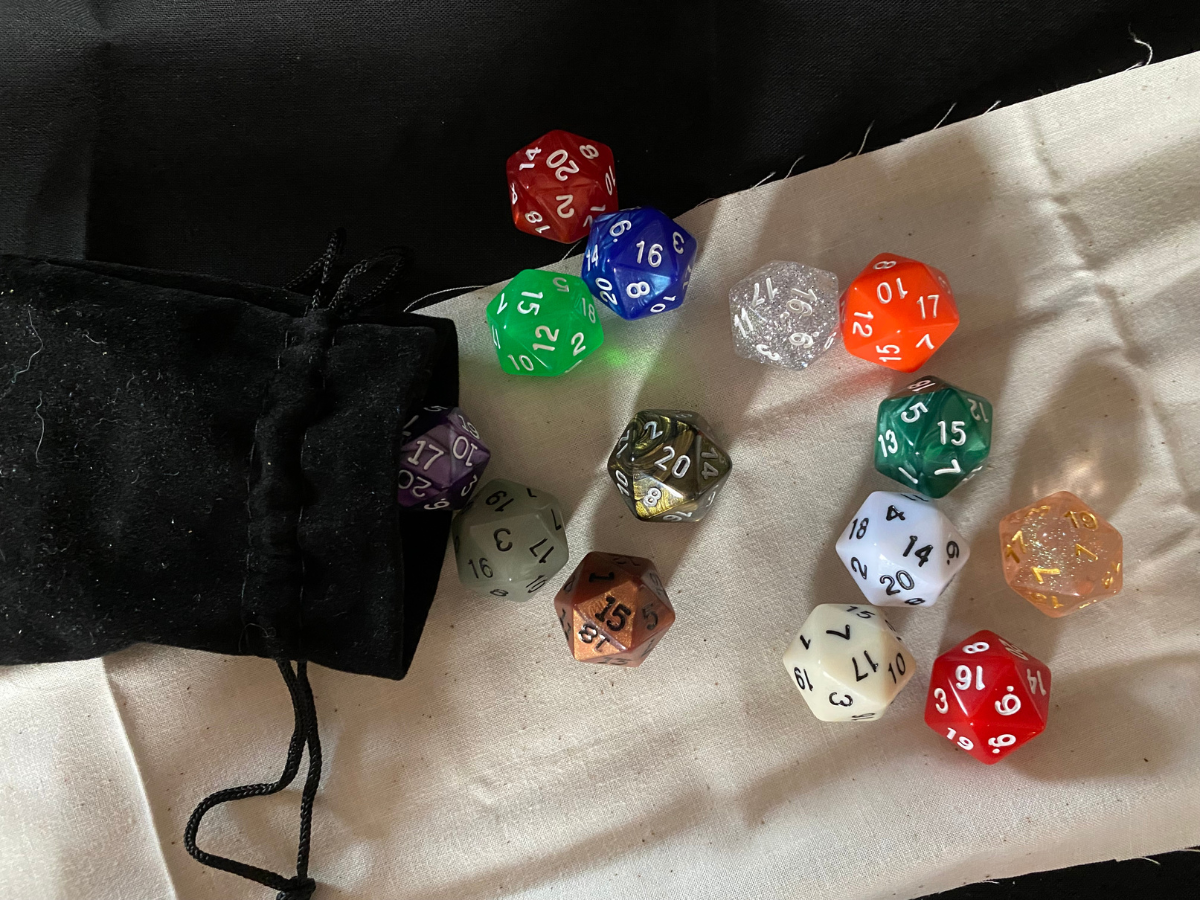
Most expensive D&D dice

How Random Is Your D&D Dice?

As a final note, if you do want to make sure your dice has a high degree of precision, here is a simple test you can try. Golfers sometimes use this same method, to see if their golf balls are well-balanced, before play. Put your dice in a glass of salt water and “spin it” around. If it continually “rolls” to the same number, in the water, then the dice is unbalanced. Here’s a YouTube video that perfectly explains this great trick for testing your dice balance.


Beyond that, simply check a company’s “About Us” page on their website, before purchasing their dice. Most companies that really do make an effort to perfectly balance their dice for true randomness make a point to talk about it on their About Pages. Dice balance really is a differentiator among dice companies. Also, in our lists above, we mentioned on each company’s review if they do prioritize dice precision, so be sure to make another scan through each, if you’re considering a purchase.


The Best D&D Dice is the Set That You Choose For Yourself

At the end of the day, whatever dice you end up choosing for your tabletop game is the dice set that’s best for you. TTRPGs are all about having fun. We hope you’ll find some value in this guide for selecting the right dice set for you. But at the end of the day, the only thing that matters is that you go to the gaming table with a set of dice that makes you proud. Find something that you love, and roll 20.

Jacob Tegtman Eternity TTRPG Creator

Jacob Tegtman

Dear reader, I hope you enjoyed my article. Tabletop gaming has been a passion of mine since I was 6 years old. I've played just about every game from Dungeons and Dragons to video games like Final Fantasy. These games have inspired me, made me laugh, made me cry, and brought me endless hours of enjoyment.


I started Eternity TTRPG - and the indie tabletop game that goes along with it (Eternity Shop) - to share my love of gaming with others. I believe that in our technology-driven age, tabletop games help bring a sense of magic and community back into our world.


If you love the site, please share it with others! I have lots of gaming-related material for you to peruse and use in your own gaming sessions. If you have any questions about the site or want to contribute, just send me a message using the "Contact" page, which you can find in the site's footer.

Jacob Tegtman Eternity TTRPG Creator

Jacob Tegtman

Dear reader, I hope you enjoyed my article. Tabletop gaming has been a passion of mine since I was 6 years old. I've played just about every game from Dungeons and Dragons to video games like Final Fantasy. These games have inspired me, made me laugh, made me cry, and brought me endless hours of enjoyment.


I started Eternity TTRPG - and the indie tabletop game that goes along with it (Eternity Shop) - to share my love of gaming with others. I believe that in our technology-driven age, tabletop games help bring a sense of magic and community back into our world.


If you love the site, please share it with others! I have lots of gaming-related material for you to peruse and use in your own gaming sessions. If you have any questions about the site or want to contribute, just send me a message using the "Contact" page, which you can find in the site's footer.

Josiah Mork: Creator of Starset RPG and Pen RPG
By Jacob Tegtman March 27, 2026
Transcribed content from our recent YouTube video: https://www.youtube.com/watch?v=9In5gaz65s8 Transcription Jacob Tegtman (00:01.848) Hey everyone, welcome back to Eternity TTRPG, where we cover really everything tabletop gaming related, Dungeons and Dragons. Now we're finally jumping into some of my favorite topics, which is game design and getting to spend some time with great game designers up and coming, people who are established. And today we're interviewing Josiah Mork, who is the owner and lead designer for Hoodwink Gaming. So welcome to the show. Thanks for being part of the channel. Josiah (00:33.142) Thanks, it's my pleasure. Yeah, it's been great working with you on eternity and getting to swap ideas. So I'm really looking forward to being able to talk through some of that process with you. Jacob Tegtman (00:44.478) Awesome, Ben. Yeah, I've been looking forward to talking with you. We always have a lot of fun when we catch up. I think this will be a really good conversation. There's so many parts of your mini games that I've wanted to ask you about for really such a long time. And it always felt like we were working on some project or discussing something. But now I have a really good excuse to just nail you down for maybe about an hour-ish and hopefully die. Josiah (00:50.028) for sure. Josiah (01:04.972) There's always something. Jacob Tegtman (01:14.352) dive into what you've been doing and why you've made some of the decisions you've made, which I think are really interesting. I'm sure, yeah. So do you just want to maybe start by introducing yourself more, know, who you are, what you've done, and yeah, where you're going? Josiah (01:20.968) Yeah, well, hopefully I've got good answers for you. We'll see. Josiah (01:32.756) Yeah, absolutely. yeah, like you said, I'm Josiah. I'm from Michigan, living just out of DC now. I've been designing and playing board games since my early teen years, I guess I would say. I love creative writing and storytelling. That's just been an amazing way that I've found to connect with people. My actually my undergrad and my grad degrees were in communication and looking at how communication connects us and strategies and stuff behind it. And so I find a storytelling a really compelling way to do that. But before I had gotten into school and whatnot, you know, I was homeschooled. I was in late middle school and I was reading this cartoon. Maybe you are some of your viewers have seen it. Foxtrot comics. And there are some. Have you seen it? Highly recommend, highly recommend. It's really funny. But there are these two characters, they're really nerdy middle schoolers and they were playing Dungeons and Dragons in the comic. And I just thought that was the coolest thing. But my parents, know, I'm a Christian, my family's Christian, fairly conservative. And so my parents were more familiar with like the 80s, like D &D scare, very like Stranger Things season four. And so they were not really like, yeah, not really D &D fans. And so I was like, well, okay, I'll create my own. And that's how it all got started, you know? And then it was a great way to make friends in my Boy Scout troop. You know, we would play, would swap ideas, we would... Jacob Tegtman (02:51.202) Yeah. Jacob Tegtman (02:55.042) Not too far ahead. Sure. Yeah, that's awesome. Jacob Tegtman (03:08.12) time. Josiah (03:09.972) you know, go on crazy adventures with rules that didn't quite work. And then over time, you know, I just realized that there were all of these cool avenues to explore and storytelling that D &D didn't necessarily do. And so I just felt really passionate that this is my way to connect with people and connect people with each other is through writing games. Jacob Tegtman (03:30.508) That's amazing, man. Yeah, it's funny, like the ways that we get into gaming too. Like you mentioned those comics. you ever see Dexter's Lab? Okay. Okay. Yeah, was probably a little bit before. Yeah. There was like an episode that was kind of based on Dungeons and Dragons and I saw it when I was like six and that's what got me into it as well. yeah. Josiah (03:39.616) Yeah, well, I've heard of it. Yeah, I've seen clips from it, yeah. Josiah (03:52.972) It's so funny how it seems like every show, know, Community, Gravity Falls, like, there are all these shows of every different genre, and they all have like a D &D episode for some reason. And I love it, you know, but it's so random. Jacob Tegtman (03:58.679) Yeah. Jacob Tegtman (04:05.302) Yeah, like all of them. Me too. Yeah, it is. Yeah. I also like the takes that different shows have on like nerdy board games. I think was like Parks and Rec had, I forget what the game was called. Yeah, you remember it. Yeah. Yeah. That's so cool, man. Josiah (04:20.81) The Cones of Dunshire, yeah. Love that, love those episodes. Jacob Tegtman (04:29.646) So I want to dive into really all of those things more, but what games do you currently have available then? And your website will post it in the show notes as well, but it is hoodwinkgaming.com for anybody who's interested. But yeah, tell us about some of your games. And again, I feel like I want to go into all of these in more detail, but yeah, give us the summary version at least for now. Josiah (04:55.05) Yeah, so it's a little deceptive at the moment. My original titles and kind of most of the games that I do are under the pen brand. So play easily now is the acronym. We have war game and role playing game. But actually neither of those are on the market at the moment. If you go to my website. Yeah, we've got a landing page for the war game and we've got a preview for the RPG. And I've actually I've got. Jacob Tegtman (05:12.95) really? I was actually, yeah, I was checking it out like yesterday, so. Josiah (05:24.422) know, prototypes of both of those here. But they are still in development because of various different reasons of wanting to refine some ideas or just kind of ended up having to move to other projects. So they're almost launch ready. But those are the ones that they're working on for the longest, just the newest editions aren't quite together yet. Jacob Tegtman (05:29.506) Yeah. Jacob Tegtman (05:39.96) Yeah, nice. Jacob Tegtman (05:46.04) Very cool. Josiah (05:46.164) And then the one that I've been working on most recently, and that we actually have a new project launching next month for, is Star Set. So that's a grimdark survival-oriented tabletop role-playing game that we launched initially a couple years ago, and then just did a relaunch for the second edition for, which is much more crunchy, much more mechanical, and much more narrative-based. So really looking forward to building that out. Jacob Tegtman (06:14.542) That's exciting. Yeah, I can attest that game is great. I really enjoyed reading through it. Everything from the design of the book to the art to the way that you have, especially character building in that, I find super fascinating. You can just tell, yeah, the amount of attention to detail in there is like out of this world. It really feels like you guys... Josiah (06:27.148) Well, thank you. Josiah (06:34.966) haha Jacob Tegtman (06:38.478) You took the lore of the game and you baked it into every part of the game. Whereas I think a lot of games like, you know, we'll talk about D &D later. D &D is like the game that's everything. So it's like if it's in a fantasy book or movie or anything, like we'll just jam it into D &D somehow. And, you know, that kind of has its place, but for building characters and stuff, you know, like you don't, I don't know. It's supposed to be able to fit many different genres and you're Josiah (06:42.72) Mm-hmm. Jacob Tegtman (07:08.612) I think what's so cool about is that when you're playing Star set you're playing Star set Because from the very first thing you do with your character and their background and their skills even it's all based on the lore of this whole universe so Josiah (07:19.902) Mm-hmm. Well, I really appreciate that. mean, that's really the heart behind it when we were working on it is, we had a story that we wanted to tell and really created the universe to tell that story. And one of the things, you know, that I picked up studying communication is that, you know, we are attracted to details. And even if it's details that, we haven't necessarily experienced in our own lives. Jacob Tegtman (07:24.963) Yeah. Jacob Tegtman (07:33.324) Yeah. Josiah (07:45.324) hearing vivid details or strong emotions in other people's stories lead us to be more connected with them. And so that was something that we really trying to flesh out in Star Set. hopefully, from the sound of it, it hopefully worked pretty well. Jacob Tegtman (08:00.352) I think so, yeah, absolutely. So, what do we talk about first, man? Like, what do you want to talk about first? Josiah (08:01.452) Thank you. Josiah (08:11.672) man, I could talk about games for hours and hours, so I better let you guide that conversation. Jacob Tegtman (08:14.944) You Okay, I just want to make sure we cover like the big things before we dive into the nitty gritty here. Yeah. Yeah. Josiah (08:24.332) Oh yeah, I mean, I kind of touched on, I guess I'll throw it out there. I'll throw it out there because it's really important to me and kind of the company into my story. you know, I really do, we're about to, you know, dig into the nitty gritty, like you said, and Dungeons and Dragons and all the different games that are out there. And I just think, you know, before whether you're a designer or a player, whenever you kind of step into a game, I think the most important thing and what's in the mission kind of a hoodwink that we try and do differently is that Jacob Tegtman (08:33.379) Yeah. Josiah (08:53.446) The games are just kind of an excuse. Really, the games are just an excuse to get together with people and to have FaceTime with people. And if working in social media has taught me anything, it's that people need that more than anything. And that's why we call it Hoodwink Games, because we kind of have all these substitutions. get hoodwinked into thinking that socializing is something that it's not. And really, it's just fellowshipping with people and joining community and FaceTime with people. and talking about the things that matter with people. And the way to do that from going from stranger to best friend is in my experience games. And so that's kind of the heart behind it. Jacob Tegtman (09:30.658) That's been a cool one. Yeah. You know, it's interesting you bring that up too, because this is something I've been thinking a lot about recently, especially as everybody's been seeing more AI come into their work, into their lives. And I feel that more than ever, people are wanting that human, real human interaction. And so as good as video games are looking nowadays and as fun as MMOs are and stuff like that, and I like all of those, I don't think I've Josiah (09:43.628) Mm-hmm. Josiah (09:53.004) Mm-hmm. Jacob Tegtman (10:03.53) found anything that's as fun is sitting around playing a tabletop role-playing game, especially in person. mean, even, you over FaceTime like this is fun, but something in person about it just makes it one of the best experiences. Josiah (10:09.729) video. Josiah (10:13.142) Mm-hmm. Josiah (10:18.686) It really does. It's those shared memories and those shared jokes. And, you know, I work in politics, doing social media for politics. And the thing that just aggravates me the most about politics, but also religion, people say don't talk about politics or religion because people care about it so much. And it's like those are things that we care about the most. So we should be able to share those with people. But you can't because as soon as you bring them up, you know, there are all these walls. Jacob Tegtman (10:39.48) Sure. Josiah (10:48.062) and games when you've played for a couple hours with somebody and slayed the dragon and made a couple jokes, then it's like, well, okay, now your opinion isn't the thing that I'm defining you on. The thing I'm defining you on is that, you know, you're a half drunk elf paladin or something like, and it just makes it easier. Jacob Tegtman (10:48.416) I guess. Jacob Tegtman (11:04.014) Yeah, that's so true. That's so true. Yeah, it definitely does break down those walls and give you that sense of shared history, even if it's like a shared mental history, theater of the mind. So, yeah. Josiah (11:17.27) Mm-hmm. Mm-hmm. It's great. Jacob Tegtman (11:21.428) I agree, man. Especially when you're doing... So I haven't read through all of the lore of Starseq. There's just so much in there. I've read through a good deal of it. But I think one of the things that also stands out about at least that game, because I know Penn's still in the work in progress... Josiah (11:38.599) the Jacob Tegtman (11:39.446) that, you know, it does cover a lot of political things and it covers a lot of religious things and you aren't like pushing a view on anybody, but just inherent to human life is politics and religion. so games let you approach these topics like in ways that allow you to explore what could be, but in a safe way and have conversations about what could be without feeling like you're being attacked or told. Josiah (11:53.856) Mm-hmm. Josiah (12:01.6) Thank you. Josiah (12:05.836) Mm-hmm. Yeah, that's really the, again, I'm really glad that you feel that way about the game, because that was one of the number one priorities of it, is there are just really hard conversations that should be had. And that game kind of came out of COVID, where there were a ton of hard conversations people were having. And I think you could spend every day, every minute of every day with people. Jacob Tegtman (12:14.306) Yeah, for sure. Jacob Tegtman (12:23.394) That's right. That's right. Yeah. Josiah (12:33.664) but if they're not people that you feel like you can have hard conversations with, then you haven't really been in community at all. And so having a medium like that, where, like you said, I don't wanna tell anybody what they should believe. There are things that I believe are true about God and about the world and about politics and stuff, but those things have to exist relationally for them to mean anything to you. so... Jacob Tegtman (12:39.788) Yeah. Jacob Tegtman (12:50.542) Sure. Josiah (12:58.954) to have that space to kind of explore and talk and then role play through just makes it fun for one thing, but also makes it so much more personal and so much more impactful, I think. Jacob Tegtman (12:59.374) Yeah. Jacob Tegtman (13:10.772) I agree. So what is the next thing that you said you're working on with StarCert? I think I missed that when you mentioned earlier. Yeah. Josiah (13:16.436) Yeah, so my co-writer, Emily, and her husband Ryan, who did some of the art for Star Set, they have actually written and illustrated the first campaign for it. It's called Echoes on Mars, and that's going to be launching on Kickstarter next month. Jacob Tegtman (13:31.822) Okay. Okay, cool. That's exciting, man. So what number of Kickstarter will this be for you? Josiah (13:38.092) Thank Josiah (13:42.294) That's Josiah (13:46.806) seven maybe six or seven. I'm doing this one well I should say the plan is to do it on Kickstarter but changing a lot of things. I'm still talking to them. My wife is behind me. I still want to talk through some of them with her because it had a lot of very negative Kickstarter experiences and learned a lot. So we're to do this one if we end up doing it on Kickstarter very slim down and very different than some of the other ones. So it's a constant learning experience. Jacob Tegtman (13:48.43) Sort of. Yeah. Jacob Tegtman (13:54.094) Sure. Jacob Tegtman (14:16.43) Yeah, I just remember I feel like every year or so I feel like you're launching something on Kickstarter successfully. So at least from the outsider's view looking in, it's like man Josiah just knows what he's doing with selling games. Josiah (14:30.208) You Well, I know a little bit more than I did last time and that's the goal. Yeah.
An anime-style character with long white hair
By Jacob Tegtman March 25, 2026
Transcribed content from our recent YouTube video: https://www.youtube.com/watch?v=si26EW5kj4Q Transcription Summary Final Fantasy Legend Edition TTRPG discussion covered the game's high customization and free distribution via mythos inspiration and iterative research. Final Fantasy Legend Edition Origin Legend Edition is a medium-complexity TTRPG developed over 4 years to emulate the entire Final Fantasy mythos, avoiding a focus only on the SNES era. The core goal was to create a neutral sandbox emphasizing high customization that supports high fantasy, steampunk, and futuristic settings. Design Philosophy and Research The game is distributed for free to continue the tradition of high-quality, free fan-created content within the TTRPG community. Extensive research was conducted on the IP, including cut content and Ultimania books, which led to the design pillars of iteration and experimentation. Customization and Unique Features Character creation allows hybrid archetypes via the selection of 3 classes from over 50 available options with variable progression speeds. Unique Legend Edition features include row-based combat and active defenses, creating a tactical risk-reward system. Details Introduction to Final Fantasy Legend Edition Project : Jacob Tegtman welcomed Mildra The Monk, the lead designer and spearhead of the Final Fantasy Legend Edition project, to the Eternity TTRPG channel for their first interview of this kind. Mildra The Monk expressed appreciation for being hosted and agreed to begin by discussing their background and the nature of the project (00:00:00). Mildra The Monk's Background and TTRPG Contributions : Mildra The Monk introduced themself as a content creator who has reviewed games, run playtests, and conducted over a thousand interviews in the last five years. They cover third-party D\&D material, indie games, and fan games such as Naruto 5e and Dungeons of the Dragoning, the latter of which started as an April Fool's joke that combined five different RPGs (00:01:03). Most recently, they served as the lead designer and project lead for the Final Fantasy Legend Edition TTRPG (00:02:26). Running a Final Fantasy Legend Edition One-Shot : Mildra The Monk mentioned they had been running a one-shot using the Legend Edition for the past few weeks with rotating party members and ran one for Jacob Tegtman as they were planning content on the game (00:02:26). They noted that a community member has been developing a work-in-progress Roll20 sheet for the game, which had recently received a significant update (00:03:26). Virtual Tabletop Support for Legend Edition : When addressing the question of virtual tabletop support, Mildra The Monk stated that they have not done any real coding in at least ten years and lack the skill set to build a custom sheet from scratch for platforms like Roll20 or Foundry. They acknowledged the community's support, noting that people are using their own time to support the game with tools like the Roll20 sheet (00:03:26). Summary of Final Fantasy Legend Edition : Legend Edition is a medium-complexity TTRPG that took about four years to create, aimed at emulating the Final Fantasy mythos. The project originated from Mildra The Monk's pet peeve that previous tabletop versions of Final Fantasy heavily skewed toward the SNES era (IV, V, and VI), neglecting entries like VII, XIV, and XVI which appeal to newer generations of fans (00:04:21). The goal of Legend Edition is to use the recurring Final Fantasy mythos as a neutral sandbox for tables to build campaigns in any direction, prioritizing customization (00:06:43). Game Design Flexibility and High Customization : The game was designed to be equally viable in high fantasy settings, like Final Fantasy III or IV, as it is in steampunk settings, such as Final Fantasy VI or XIV, and futuristic entries, such as Final Fantasy VIII or XIII. Jacob Tegtman noted that playing the game demonstrated that the number of classes and intricate character details allow players to create characters fitting any Final Fantasy experience they desire (00:06:43). Reasoning Behind Free Distribution of Legend Edition : Mildra The Monk explained that the game is available for free because they came up as a tabletop player seeing high-quality fan games that were just as good as paid games, and they wanted to pass along that torch to the community (00:09:44). They expressed the desire for someone to take their work, hack it, and put up their own version, continuing the chain of free content (00:11:02). Research and Design Philosophy for Legend Edition : A major focus of the project was capturing the soul of Final Fantasy, which involved extensive research, including reviewing existing games, cut content from games, behind-the-scenes interviews, and Ultimania books (00:11:02). The core philosophy derived from this research was "iteration and experimentation," which led to the game's foundational design pillars (00:12:16). The Inspiration to Focus on Final Fantasy : Mildra The Monk is a devoted Final Fantasy fan, but other factors drove the project, including a desire to carry on the lineage of prior Final Fantasy TTRPG fan projects like the mid-90s Returners project (00:12:16). A core motivation was bridging the gap between video games and tabletop gaming, using Final Fantasy because its consistent mythology allows for adaptation that goes beyond merely replicating the video games (00:14:29). Avoiding the Trap of Literal IP Adaptation : Mildra The Monk highlighted a common problem with tabletop adaptations of existing IPs, where designers attempt to adapt the source material wholesale, citing the early TSR run of Indiana Jones as an example where they only allowed players to play as movie characters. Instead, people generally prefer to create their own character within the world, such as being a student at Xavier Academy rather than playing as the X-Men (00:15:49). Emulating the Mythos Over One Game : Mildra The Monk emphasized that designers should emulate the overall mythos of a franchise rather than hyperfocusing on one game or one era (00:17:00). For Final Fantasy, this is supported by recurring elements such as job names, play styles, spell names, summons, and abilities that maintain a consistent theme (00:18:09). Classes, Character Creation, and Flexibility : The customization in Legend Edition is demonstrated by the character creation system where players select three classes with different progression speeds, allowing for a unique hybrid character from over 50 classes (00:21:27). This approach is a compromise that provides the strong thematic elements of the job system without restricting player choices, such as customizing weapon lists to be setting-agnostic and avoid favoring one style of fantasy (00:20:06) (00:22:24). Key Design Pillars of Final Fantasy Legend Edition : Mildra The Monk outlined the three major pillars of the game's design: "mythos not setting," "customization is king," and the **phase structure** (00:24:24). The phase structure involves four acts—preparation, exploration, encounter, and downtime—which is loosely inspired by the Asian four-act format (kishōtenketsu) and the Town-Field-Dungeon trinity pioneered by Dragon Quest (00:25:34). The Research Process as a Favorite Part of the Project : Mildra The Monk stated that the research phase was one of their favorite parts, which allowed them to discover early concepts for the video games that were eventually cut (00:27:50). Examples included the early name for Materia being "spheres," which was later revisited for Final Fantasy X, and a puzzle tattoo mechanic for Final Fantasy X's sphere grid, which was cut (00:28:33). Inspirations and Creative Liberties in Design : The research led to design inspirations such as an unused Chocobo Lancer concept art from Final Fantasy XI resulting in the Chocobo Knight class in Legend Edition, addressing the long-desired idea of Chocobo cavalry (00:29:32). The team took certain liberties, like creating the speed-based Dervish to serve as an answer to the Berserker class, and the Ravager as a spell-spamming class, drawing from inspirations like Final Fantasy XIII (00:31:48). Development of the Yo-kai Class : The Yo-kai class began as an idea for a controllable summon, similar to the Aeons in Final Fantasy X, but was changed to avoid replicating one game (00:31:48). The final concept for the Yo-kai, as avatars for Eidolons, was inspired by the design of Yoko in Bravely Second and the concept of the rider or shioal spiritualist in Voodoo (00:32:43). Impact of Extensive Research on Project Quality : Jacob Tegtman acknowledged that the depth of research, spanning Final Fantasy lore, mythology, and diverse concepts like Voodoo, enabled Mildra The Monk to create over 50 classes, each with up to seven tiers of abilities, amounting to hundreds of unique mechanics that synergize well (00:33:58). Mildra The Monk affirmed that this extensive research, modeled after the preparation of Star Trek producer Harve Bennett before producing *Wrath of Khan*, was a necessary baseline (00:36:10). Historical Context of Final Fantasy Combat System : Mildra The Monk highlighted Hiroyuki Itto, the pioneer of the job system and the Active Time Battle (ATB) system, noting that he cited American football and Formula 1 as inspirations for ATB (00:39:09). Mildra The Monk asserted that the shift toward action-based combat, seen in games like Final Fantasy XV and XVI, was an evolution building on foundations laid decades ago by Itto, not a radical shift (00:40:15). Snapshot of Unique Legend Edition Features : For those unfamiliar with Legend Edition, Mildra The Monk listed key differentiators, including high customizability in the job system, easy creation of hybrid archetypes, fewer but more impactful skills, and multiple character creation/advancement methods (00:41:59). Jacob Tegtman added the unique row-based combat and active defenses, such as parrying and evading, which create a tactical, risk-reward philosophy in the design (00:43:17). Future Vision and Upcoming Projects for Mildra The Monk : Immediate future plans include overseeing support elements like new Excel and HTML solo-play sheets, as well as writing world book guides, which are lighter books focused on emulating individual Final Fantasy entries like FFIII or FFVIII (00:45:13). They are also considering TTRPGs based on 2D fighting games, aiming for a defined setting like a fighting game version of Night City, and they intend to create a fantasy-themed mech game and a Wuxia-themed RPG (00:46:24). Ongoing Efforts to Promote the TTRPG Community : Mildra The Monk is continuing their mission to showcase the totality of tabletop role-playing games by highlighting the international scene, including content from Brazil, Germany, and Sweden (00:50:01) (00:52:17). They mentioned forthcoming streams covering the Spanish Anima Universe, Sword World, and *We's Blade*, a game compared to *Panzer Dragoon* (00:51:15). Availability and Support for Mildra The Monk : Mildra The Monk can be found streaming regularly on YouTube and Twitch, on Twitter where they highlight artists and indie games, and in their personal Discord (00:55:07). While Legend Edition remains free, they have set up support mechanisms like Ko-fi for those who wish to leave a tip (00:56:19).
A gnarled, dark tree stands in a misty forest under a pale moon.
By Jacob Tegtman March 22, 2026
Transcribed content from our recent YouTube video: https://www.youtube.com/watch?v=AuryVcZdp4Y Transcription There are kind two ends of the spectrum for D&D races. There’s Story-specific races: These come with a strong, built-in narrative that fits specific campaign worlds or settings, that almost tells you how to play them. Then there’s more Flexible races. These are much easier to slot anywhere because they don’t necessarily come with an expected tone or backstory. You can sort of fit them into any campaign with ease – like playing a human. Some D&D player races feel like they’re built for a specific kind of story. Others feel flexible enough to drop into almost any campaign. Gnarlborn from Crooked Moon… sit somewhere in between—and that’s kind of what makes them interesting. They have strong flavor, but they aren’t restrictive for your campaign. They come with built-in lore that gives you instant roleplay direction, but they aren’t so specific that you can only play them in your Crooked Moon campaign. Welcome back to Eternity TTRPG.  As you can already tell, today we’re looking at a lesser-known player option for playable races, which is the Gnarlborn from Crooked Moon. If you’ve seen my other videos on the topic, Crooked Moon has become one of my favorite D&D settings of all-time. We’re going through each of the races presented in Crooked Moon, and today getting to the treant-like Gnarlborn. Starting with the basics, Gnarlborn are – well, born – from the soil of a region called Ardengloom, a forest that’s less “peaceful woodland,” and more “haunted, thinking ecosystem.” The forest itself is filled with these massive trees called Elderwoods—each one housing lingering Fey spirits. Gnarlborn commune with these spirts and Elderwoods, forming an intricate and well-connected forest community. So yeah, you’re playing basically “a tree person.” But you’re also playing something that exists in a constant, low-level conversation with ancient, possibly unreliable spirits. That alone gives you a strong roleplay hook without needing a complicated backstory, as your tie to those spirits, and who/ what they are could gain any level of depth that you’d like, over the course of a campaign – or even a few adventures. Visually, Gnarlborn are humanoid, but like the trees in your yard, everything about them is asymmetrical—branches, moss instead of clothing accents, glowing hollows where a face might be. No two look the same. Some might feel ancient and slow, while others might come across as curious or even a little disconnected—like they’re only partially focused on the present. And since they can live for hundreds—sometimes thousands—of years, you can decide how much that actually affects your character. Are they wise because of their age, or are they just... slow? Ok, when it comes to core mechanics, let’s talk about what you actually get—because this is where Gnarlborn become very usable. First, we have: Deep Roots You get advantage on checks and saves to avoid being moved or knocked prone. This is simple, but it can be very useful against certain enemies. Next is: Elderwood Whispers After every long rest, you can pick up a new skill, tool proficiency, or even a language. Temporarily. This is probably the most interesting trait the Gnarlborn have. It’s not flashy, but it gives you day-to-day adaptability, which can be nice. It rewards players who like planning ahead—or improvising, based on expected challenges for the day. Third, we have what may be the Gnarlborn’s most *potentially powerful effect, which is: Grasping Branches As a Bonus action, you restrain a creature if they fail a Strength save. Or slow them if they succeed. The main issue here is the saving DC isn’t very high (it’s 8, plus your Constitution modifier, plus your proficiency bonus). But! Even on a successful save, the creature has half speed for a turn. So, grasping branches can be decent battlefield control without requiring you to be a spellcaster. And because this effect recharges on a short rest, you may just actually use it. It’s not overwhelming—but it’s consistently useful. Root Sense gives you tremorsense out to 60 feet. So, the ability to find Invisible enemies, Creatures behind walls, etc. And lastly, you have: Towering Size Which gives you advantage to end being grappled, and – if your group actually tracks carrying capacity, you can in fact carry more stuff. Nothing flashy—but admittedly, very practical. Playing a Gnarlborn definitely isn’t for every player. They don’t provide anything to spike damage, or even do anything unpredictable, really. But you are resisting disruption, controlling space, and adapting between sessions. They fit really well in parties that need consistency rather than specialization. From the roleplaying side, Gnarlborn also work really well in campaigns that lean into: Fey themes, Haunted environments, or Long timelines with ancient histories since they naturally connect to all of those. Gnarlborn feel connected to something bigger: whether that’s the Elderwoods, nature, fey-touched spirits, or an ancient grove deep in the dark woods. So, if you were to play a Gnarlborn, what direction would you take your character? Would you pick them for their subtle combat control, or more to explore their connection with the wilds? Whether you’ve played them in a campaign already, or you have ideas for what you might like to try, let me know in the comments. Thanks for watching, and I’ll catch you in my next Crooked Moon race guide.
Show More