Zweihander RPG Review

This Zweihander RPG Review is part of my “Best Tabletop RPGs of All Time” article. If you want to check out more TTRPGs and see how other top-tier tabletop RPGs are ranked, visit that page.

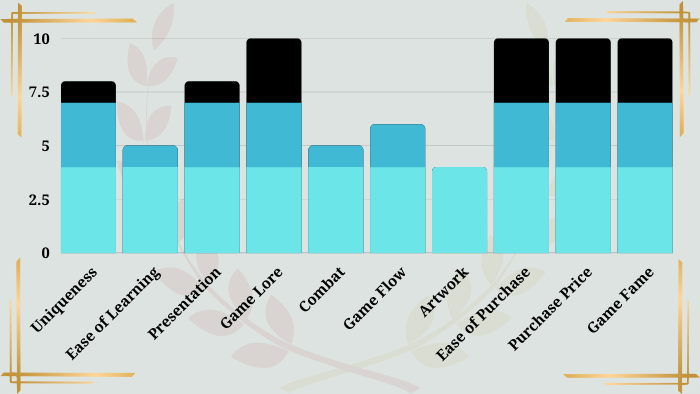
My Review – 76 / 100
Zweihander RPG Review

Zweihander is a game that you either love playing and you would rate it a perfect 100/100, or you don’t hardly like at all, and may note even rate it among the best TTRPGs of all time. This game is that polarizing, which as you’ll see in this review, is part of why so many people flat out love the game.


To be very forthright with you though if you’ve never before heard of or played Zweihander, in my experience, most people would never play more than 1-2 sessions of this RPG before calling it quits.


I think that so long as you and your gaming group know what type of game you’re all getting into, if you start playing Zweihander, you should have a good shot of getting a long-term RPG campaign rolling.


Zweihander’s Uniqueness: (8/10)

There’s lots to talk about when it comes to unique aspects of Zweihander, but I’ll start with a few unique points when it comes to dice and rolling that I generally like:


  • Zweihander uses percentile dice, which I always think is interesting for tabletop RPGs as it provides a framework which can contain a great deal of both simplicity and complexity.
  • The game has “Fury” and “Chaos” dice, which are “wild dice” for damage and random effects when casting magic.
  • There’s also a “fortune pool” for players to re-roll dice, and a “misfortune pool,” for the dungeon master to do the same. These things I generally like.


On an entirely different note, Zweihander has the largest collection of tables for randomly-generating character traits of any game I’ve ever seen. You can generate your gender (…why?). Randomly generate your race (pretty cool). Races have randomly generated racial traits. There are also randomly generated character names, based on race and gender (ok, also pretty cool, I suppose). On and on it goes. You can’t fathom the number of randomly generated tables in this game, which I have to say, is pretty unique.


Zweihander is a multiclass sort of RPG. There are some class based RPG elements, but as your spend Reward Points (Exp), you improve your character however you see fit. To “Tier Up,” you need to reach certain milestones of character development, but doing so allows you a second, and finally, a third, “Profession” (class).


Of all the tabletop RPGs on this list, Zweihander is the most realistic, dark, grim, and gritty. If I had to summarize it into one aspect, I’d say that the amount of realism in Zweihander is the reason people either love or loathe this game.


Ease of Learning Zweihander: (5/10)

Character creation in Zweihander is very in-depth. I mentioned the tables for randomly-generating your character, above. A few more tables I didn’t mention, already: there are random tables for your character’s height, weight, build, and social class. This sounds really cool at first, but just think about it. It’s the kind of thing that’s really neat in a video game, but details like that in a TTRPG are a bit (way too) much.


The rules are also confusing when it comes to character creation in the following way: it seems like you must roll randomly for your character’s gender, archetype, and profession. There is some language in the rulebook that suggests players have the power to choose important details of your character, but it’s just that if you want to play the game exactly as-written, it’s really not clear what you should do.

When it comes to character classes, the game is still pretty confusing. I counted twice to make sure: there are 72 basic professions in Zweihander. There are also 46 elite professions. One important thing to note though, that is really good, is that just in the classes alone, there is literally an entire world of lore. You could easily build entire campaigns just by reading through the professions section in this book.


Is Zweihander realistic? Yes. Accessible? No, not really. If you really want to learn the game, you’re in for 672 pages (one of the largest among any tabletop RPG). I love the immersion and realism in Zweihander – it’s just too much for me, even as a hardcore tabletop gamer. I feel like Zweihander is a little bit like a novel and RPG rolled into one (again, a positive and negative trait).


I spend a lot of time playing with people new to tabletop RPGs. I love introducing the genre. It’s a passion of mine to help people find passion in tabletop gaming. The bottom line for me when it comes to Zweihander is that due to its complexity, it’s just not the game I would ever introduce to a first-time tabletop gamer.


I think doing so would easily overwhelm someone, and maybe even turn them off from the RPG genre if they thought every game was like this one.


Zweihander Presentation: (8/10)

Zweihander’s rulebook has nice coloring to show separate sections, along with easily-distinguishable headers.


The game is all about promoting roleplaying, as the designers feel that the act of roleplaying gets lost in many other tabletop RPGs. I agree with that sentiment. Also, the emphasis on roleplaying improves the overall presentation of Zweihander as everything in the book is customized for players to better roleplay their characters.


Zweihander Lore: (10/10)

When you’re talking Zweihander, you’re talking gritty Viking lore. Overall, the game is very realistic, in terms of being a low-fantasy setting. However, there is also a hint of Viking/ Norse magic (there are ogre races, dwarves, elves, etc. for instance).


In my humble opinion, everything about every aspect of the lore in this game is incredible. Zweihander is one of the absolute best games at creating realism, immersion, and getting players into the game’s lore – all of which makes roleplaying substantially easier.


As I mentioned before, consider Zweihander 50% novel, and you’ve got a good handle on proper expectations for playing the game.

Eternity TTRPG Article Shop

Combat: (5/10)

I love when games offer depth within the core mechanics, so long as learning the game is also simple. In my mind, games that have an easy entry level, where I can explore options over time as I become more familiar with the game, are ideal.


Unfortunately, in Zweihander there are lots of options in combat from the very beginning, which is a problem. On the other hand, player skill plays a big factor in how battles unravel, which I really like. But since there is no “introductory course” in combat, as a player, you sort of have to learn all the available combat maneuvers and increase your skill in battle, all before you feel like you’re much use when it comes to combat. Basically, just a steep learning curve.


Another big problem with combat in Zweihander is the complexity of resolving attacks. With any given attack, players must resolve the follwing 8+ steps:


  • Chance to hit
  • Chance to dodge
  • Weapon stats
  • Damage
  • Damage threshold
  • Condition
  • Injury
  • Sacrificing fate points
  • And more


Obviously, the more that’s involved with calculating the resolutions to any given action of play in a tabletop RPG, the slower that game goes. For your reference, there are 6 total pages that explain a single attack action and how to resolve it. That’s a LOT.


Zweihander does not have fast-paced combat. It’s gritty. It’s cool. But it’s complex, extremely dangerous for your character’s lifespan, and doesn’t move fast at all. When it comes down to it, I think it’s the snail’s pace of the “immersive hard-core combat” that really makes the game boring for me.


Game “Flow”: (6/10)

The lore in Zweihander is great, which contributes to game flow. However, combat is slow. Plus, this is overall the most realistic TTRPG that I’ve ever seen. The real question is whether the realism is a positive or negative for game flow. Your personal answer to that question might just decide whether or not this game is for you and your gaming group.


Consider the following before you decide:


  • When playing a campaign, you have to account for your character’s injuries, disease, disorders that require psychosurgery, extreme weather, effects from intoxication, sleep deprivation, starvation, infection, blood loss, and much more.
  • You track your character’s carrying capacity based on your their strength score, for things like equipment and necessities. You also track things like arrows, food, rope, and other survival necessities.


For me, it’s too much. Too realistic.


I understand that Zweihander aims to be a roleplay game where people actually roleplay. But I normally find that people select their own desired level of roleplaying, no matter how many cues a TTRPG provides. There’s also nothing wrong with players selecting their own level of roleplaying for a game they play in their free time.


To give you an idea of how hardcore game realism tends to play out with a gaming group – and what I’d do were to play an entire campaign of Zweihander – is that most in-depth rules like those mentioned above (character injuries, carrying capacity, etc.) simple get ignored.


I like games better when the group glazes over details that are non-important to the game’s actual story – what I’m there to engage with in the first place.


Artwork: (4/10)

There’s plenty of black-and white-art in this game, which honestly fits the mood quite well. It’s dark, gritty, and medieval. In this regard, there’s some sense of satisfaction even from the art present in Zweihander that isn’t colored, or top-quality.


From a buyer’s perspective, however, I have to say that I’ve come to enjoy plenty of top-quality art with my tabletop RPGs. When it comes to Zweihander, I would’ve liked to see more fully finished and colored artwork. Even if there was more artwork that captured the gloomy aspects of the lore, and the colors were subdued to match, I think that would’ve been a great addition to the game’s rulebook.


Ease of Purchase: (10/10)

It’s easy to find Zweihander’s core rulebook on both Amazon and the Andrews McMell website.


Price & How Many Books Do You Need to Play: (10/10)

You can purchase Zweihander as an ebook for only $20. Kindle for only $11.49. Even the hardcover printed version isn’t bad. I have to say that I truly appreciate the accessibility of this game.


Fame & Availability of Supplemental Material: (10/10)

Zweihander has lots of supplemental gaming material. It is very famous as it’s one of DriveThru RPGs top-selling games ever at over 90,000 copies. If you wanted to start a Zweihander campaign though, as I mentioned before, there’s so much lore in the core rulebook alone that you’d probably never even need supplemental books to keep a great story going.


The only challenge with finding a group to play Zweihander would be connecting with gamers who like this realistic style. But, go to your local gaming store, and you’re bound to find someone who’s heard of the game, and is willing to play.


Zweihander is Produced By:

Andrews McMeel Publishing


Jacob Tegtman Eternity TTRPG Creator

Jacob Tegtman

Dear reader, I hope you enjoyed my article. Tabletop gaming has been a passion of mine since I was 6 years old. I've played just about every game from Dungeons and Dragons to video games like Final Fantasy. These games have inspired me, made me laugh, made me cry, and brought me endless hours of enjoyment.


I started Eternity TTRPG - and the indie tabletop game that goes along with it (Eternity Shop) - to share my love of gaming with others. I believe that in our technology-driven age, tabletop games help bring a sense of magic and community back into our world.


If you love the site, please share it with others! I have lots of gaming-related material for you to peruse and use in your own gaming sessions. If you have any questions about the site or want to contribute, just send me a message using the "Contact" page, which you can find in the site's footer.

Jacob Tegtman Eternity TTRPG Creator

Jacob Tegtman

Dear reader, I hope you enjoyed my article. Tabletop gaming has been a passion of mine since I was 6 years old. I've played just about every game from Dungeons and Dragons to video games like Final Fantasy. These games have inspired me, made me laugh, made me cry, and brought me endless hours of enjoyment.


I started Eternity TTRPG - and the indie tabletop game that goes along with it (Eternity Shop) - to share my love of gaming with others. I believe that in our technology-driven age, tabletop games help bring a sense of magic and community back into our world.


If you love the site, please share it with others! I have lots of gaming-related material for you to peruse and use in your own gaming sessions. If you have any questions about the site or want to contribute, just send me a message using the "Contact" page, which you can find in the site's footer.

Logo for
By Jacob Tegtman December 12, 2025
Transcribed content from our recent YouTube video: https://www.youtube.com/watch?v=1GBbHsUFBR8 Transcription Visit the Final Fantasy Tabletop Roleplaying Legend Edition Website . Final Fantasy fans… it’s finally happening. A brand-new tabletop RPG built specifically to capture the tactical, job-swapping, limit-breaking chaos we love from the Final Fantasy series. But… for those of you who are familiar with Final Fantasy d20, and other predecessors to this Legend Edition, why make a whole new system when Final Fantasy Tabletop RPGs have already existed in the past? And what makes the Final Fantasy Legend Edition so special? Today, we’re diving in to the game that aims to become the definitive way to play in Ivalice—or any Final Fantasy world—at your table. Oh, and did I mention that this is a professionally-designed game book and PDF assets for every conceivable part of your game – and it’s all 100% free? That’s right, free. This is a passion project brought to you by Mildra the Monk and his amazing team that they’ve been working on for years. It’s absolutely incredible what they’ve put together, and you can get it for your table today – at no cost. Hey everyone, welcome back to ETTRPG—your home for tabletop news, deep dives, and world-building inspiration. If you love Final Fantasy, Tactics-style combat, or job systems with way too many builds to ever be able to properly enjoy it all, today’s video is for you. So, Final Fantasy TRPG: Legend Edition is a spiritual successor to the long-running Returners’ Final Fantasy RPG and its offshoots like Final Fantasy 4e and Omega Fantasy. But this isn’t just a rehash—this is a completely modernized, research-driven rebuild of the whole system. The devs, among them Mildra the Monk, who has been a big supporter of us at Eternity TTRPG for years, spent three years dissecting the games, the lore, the combat, and all the unique systems that Final Fantasy fans love. The result? An intermediate-complexity tabletop RPG laser-focused on recreating the true Final Fantasy experience – at the table—without any confusing crunch, or decade-old legacy rules. Ok, as I mentioned, there are other Final Fantasy tabletop systems already. But here’s what it boils down to for why it was worth it for Mildra and his team to create this new system. Number one: Simplicity None of the previous games fully capture the mythos of Final Fantasy while still giving players complete setting freedom . Where earlier systems often tied you to a specific world, tone, or era, Legend Edition was built around a single core design principle, which is: “Mythos over setting.” This means the rules capture the soul of Final Fantasy—Summons, Jobs, elemental affinities, cinematic abilities—but they don’t lock you to Ivalice, Gaia, Spira, or any one timeline. Using this game system, you can: Recreate your favorite Final Fantasy world. Mash up multiple games. Or build your own world entirely from scratch. This is FF energy, but not FF rails , that makes it such a big deal. So, moving on, What Makes Legend Edition Stand Out? The first piece is: Ridiculously Modular Character Building. In the future, I plan to do more videos on Final Fantasy Legend Edition. But let’s content ourselves today by summarizing – at least for this section – that there’s 50+ Jobs drawn from across the franchise. Included are fan favorites and long-time classics such as Dragoon, Black Mage, Thief, Time Mage, Gunbreaker, and dozens more. Using these 50+ Jobs, you do in fact have over 25,000 job combinations available to you, as a player. And these aren't “same-y” class splashes. The track-based advancement system makes each mix feel meaningful, distinct, and highly customizable. Oh—and there are 14 playable races taken from the Final Fantasy universe , each with their own unique ability. This is one of the most flexible JRPG-inspired character engines out there. The second big item that makes the Legend Edition Stand Out is Streamlined, Row-Based Combat, like your favorite Final Fantasy games from back in the day. Legend Edition offers an easy-to-learn row-based combat system that keeps the spirit of classic Final Fantasy battles while speeding everything up. You still get things like: Elemental affinities, Status effects, Skills with cinematic alt uses, And powerful Limit break moments. But, the math is way smoother than you’d expect. You won’t need a calculator, like if you took Final Fantasy I directly to your table. Next up is that the book provide you with Mythos-Driven Campaign Systems. Final Fantasy stories, across all games even back to the originals, are political. Big factions, world tension, and meaningful alliances are core to the franchise. Legend Edition builds this directly into play with: A Reputation & Affiliation system . You also have what’s called “The Holdings system” to build your very own base. The game comes with expanded NPC creation rules, and a robust Skill Game system for non-combat set pieces. This is the stuff that makes your campaign feel like a Final Fantasy game, not just another “game like D&D,” but with a “Final Fantasy” sticker slapped on their for flavor. As if all of the core game’s features are not enough, The Expansion Books Are pretty Wild. The Ultimania Expansion adds: 28 new races , 4 new jobs , 300+ sample items , Airship & Mecha creation systems , plus More Skill Games and Affiliations. Meanwhile, the Enemy Intel Field Guide brings you 200 full NPC stat blocks , a Fully detailed bestiary, and Drop-in encounter prep tools. Basically, everything you need as a Dungeon Master to prep your game with maximum Final Fantasy feel, and minimal effort. Additionally, if you want to run FF Tactics, FFIX, FFX, or even a fully original world—these books give you all the toys for each of those specific settings. Wrapping it all up, Legend Edition emulates the cinematic spirit of Final Fantasy with its Big narrative beats, Cutscene-worthy skill moments, Dramatic faction politics, Summons that feel truly mythic, and Job classes that are meaningful extensions of character identity. If you’ve ever said “I wish Final Fantasy had a premier tabletop version,” this is the game you need to try out at your table, next. So, if you’ve made it this far, I think you and I both know it’s time for you to download your free copy of Final Fantasy Legends Edition. I’ve got that link in the video description below. But I want to hear from you: what do you think? Does Legend Edition finally deliver that top-quality Final Fantasy tabletop experience we’ve all been waiting for? And if so, what will be the first Job class you’ll try out? Let me know in the comments. Hit like, subscribe, and share this video with your party. Let’s get Mildra and his team the recognition on this masterpiece that they truly deserve. Until next time—may your crits be big, and your summons be even bigger.
Undead figures in a city at night, with one playing a stringed instrument under a large, crescent moon.
By Jacob Tegtman December 6, 2025
Transcribed content from our recent YouTube video: https://www.youtube.com/watch?v=RwDiy7u-wUo Transcription In Kalero, the canyon walls sing.  Not literally — but if you listen closely, as the desert wind slips through the stone crypts and carved tombs, you’ll hear something. A rhythm. A pulse. A beat. And when the Crooked Moon dips behind the cliffs, figures begin to emerge — their bones glowing with blue light, their skulls crowned with curls or braids, their steps half-dance, half-swagger. These are the Relicborn — the living memories of Kalero. Dressed in vibrant fabrics, lacquered patterns, and sometimes… a flashy swashbuckler’s cape or rapier at their side. Today on Eternity TTRPG, we’re diving into one of the most joyful, most soulful, and most stylish ancestries in all of Druskenvald. Crooked Moon continues to be one of my favorite adventure supplements of all time, and you can pick it up on D&D Beyond. Whether you’re a player wanting a character with flair, you’re a DM craving new cultural flavor for your campaign, or you’re just a lore-nerd who loves stylish undead — this one’s for you. The Relicborn are a species native to Kalero, a province lined with towering canyon walls carved into catacombs and mausoleums. But despite being born from tombs, they are anything but gloomy. These are living skeletons , decorated with any number of colors, hand-painted motifs, and glowing patterns. Their bones are encased in a translucent magical substance that gives them full humanoid shape. And if your Relicborn wants big curly swashbuckler hair? Yes. They can actually grow it from their skulls. Where they come from is unique: they’re formed in the crypts of Kalero, rising from ancestral memory and celebratory magic rather than necromancy. Theirs is not a culture of undeath — it’s a culture of joy , reflection , and honoring the past through celebration. Every Relicborn is essentially a walking festival — a living memory kept alive through music, dance, and stories. Relicborn society is built on a delicate balance: the energy of a vibrant celebration and the quiet reflection of ancestral remembrance. Imagine communities built along canyons, with lantern-lit walkways leading into ancient tomb-shrines. Families gather at night to play music, tell stories, and dance under blue and purple moonlight — while their ancestors' spirits look on. Their festivals can last days. Their moments of silence last just as long. They thrive in community — in the stories of who came before, and who they themselves will become. Relicborn live roughly 250 years , and when their time ends… they simply collapse gracefully into a pile of bones, returning to the crypts that first birthed them. All of the fun roleplaying stuff aside, let’s break down how their mechanics reflect their culture, starting with the most signature ability: Dance of Death As a bonus action, you make a DC 15 Charisma Performance or Instrument check. If you succeed, your next attack roll this turn has advantage . If you succeed by 5 or more? You roll one of your Hit Dice (without spending it!) and gain temporary hit points . This is perfect for swashbucklers, bards, rogues — anyone who wants to flavor combat like a deadly dance. Next, they have: Eternal Party Relicborn don’t sleep. Instead, they complete a long rest in four hours so long as they spend it in revelry — music, storytelling, gentle dancing, or shared celebrations. Imagine your party taking a rest and your Relicborn swashbuckler quietly jamming with a bone flute while keeping watch. This one’s pretty good: Moment of Remembrance When a creature you see within 30 feet fails a d20 test, you can use your reaction to add 1d4 to their roll. Once you turn a failure into a success, you can’t use it again until a rest. Relicborn are bursting with character potential. They have Incredible aesthetics. From glowing bones to swashbuckler outfits — you can lean into a Day-of-the-Dead style undead, a pirate, a festival style, or something Gothic. If you were to play a Relicborn… What would your glowing bones look like when you’re afraid, happy, or angry? And when your long life ends — what do you hope those you care about remember about you? Drop your ideas in the comments. And if you enjoyed this deep dive into the Relicborn, hit like, subscribe, ring the bell, and join me next time as we explore another Crooked Moon ancestry. Until then — Keep the music playing. Keep the celebrations bright. And may every memory lead you to your next dance.
Dark illustration of a crooked, spooky house under a full moon. Title
By Jacob Tegtman December 2, 2025
Transcribed content from our recent YouTube video: https://www.youtube.com/watch?v=Kl3c6djcgbo Transcription Imagine your character in a folk-horror saga — not just another adventurer, but someone with a personal fate, a hidden thread that drags them deeper into shadows and tragedy… or redemption. That’s exactly what Fateweaving brings to Druskenvald in The Crooked Moon. The Crooked Moon isn’t just another D&D book. It’s a 600-plus-page folk-horror campaign that plops players into a sun-starved realm of nightmares, rituals, and haunted rails. Welcome back to Eternity TTRPG, your home for deep-dive D&D news breakdowns, world-building insights, and tools to level up your tabletop storytelling. Whether you’re a forever-DM, a lore-monster, or someone who appreciates a well-crafted adventure, we tackle the big ideas behind the games you love. And today, as with many videos I’ve created over the past several months, The Crooked Moon gives us plenty to sink our teeth into. What sets Crooked Moon’s System apart from the standard “roll dice, then fight monsters” is the optional system called Fateweaving — a way to bind each character’s past, motivations, and desires directly into the core of the campaign. Fateweaving gives each character a Thread of Fate — one of 13 possible personal arcs. At character creation (or early on), each player picks a Thread that defines a personal goal: lost memories, cursed lineage, spiritual duty, monstrous ambition — you name it. Then, throughout the campaign’s story, the GM weaves in six Narrative Touchpoints specific to that Thread. These form a full character arc , culminating in a personal climax and catharsis that runs parallel to the main story – they’re something much greater than just “side quests.” The first touchpoint, Incitement , ties a character’s personal quest to the campaign’s opening (often aboard the spectral Ghostlight Express or within the Crooked House). As the story progresses, the character meets allies or NPCs connected to their fate, uncovers secrets, faces a personal trial, then pushes through to their own climax — all while the main horror unfolds. In the end, during the epilogue, each character receives Catharsis — the emotional and narrative payoff for their arc. This means every player is actively living their own horror-tale inside the larger one of your full campaign. You might ask: why bother with all this Fate Weaving stuff? It does add potential complexity to your campaign, after all. So why not just run a normal campaign? It’s because Fateweaving transforms The Crooked Moon – or, any campaign you’re running –into a deeply personal story, for the players. It gives each character agency and meaning — their choices and their backstories matter. It increases emotional engagement for players : horror, hope, tragedy — when stakes are personal, every failure and every success resonates. It helps GMs balance player spotlight : with distinct Threads, you can weave in scenes tailored to each player without derailing the main plot. For players who love roleplay and character development — this is the sweet spot. Let’s pick an example Fateweaving Thread — say the Thread of Deliverance – and run through it really quick, just to give you an idea for how this works. The character begins lost, ejected from the spectral train, given only a broken compass. (this is the “Incitement” step) Later, at a trading post, a shady merchant hints he knows of strange artifacts. (this then, is the “Connection” step) On a creepy riverboat, the character recovers the first piece of a broken family heirloom. (with the “Discovery” step) In a haunted cemetery sanctuary, they wrestle the second piece from a statue’s grasp. (the “Confrontation” step) After the final boss — the Crooked Queen — they reclaim the last piece, reforge the heirloom, and choose either to become a ferryman of souls… or walk away free. (culminating in the “Climax + Catharsis” step) Suddenly, your campaign isn’t just “we stopped the big bad.” It’s the players’ story. Their redemption. Their choices. And in this case – even their soul. If you want to try out Crooked Moon’s Fateweaving system, here’s some very easy ways to get started: L et your players pick Threads early in the campaign – or, if you’re already running one, let them pick at your next session – then collaborate to weave their backstories into the world you’re running. Keep the Touchpoints flexible: treat them as narrative prompts — adapt to what your players do rather than forcing them. Be generous with spotlight time: Fateweaving only works if each character actually plays their arc, and gets to express their character through each important moment. Use Touchpoint rewards to drive engagement: use boons, stat bonuses, and narrative closure — they reinforce the importance of the arc. Don’t be afraid to deviate: mix endings, merge threads, or create custom ones — Crooked Moon’s Fateweaving system is meant as building blocks for you, not a cage you have to live in. If you run your next horror campaign in Druskenvald — or any other world where Crooked Moon’s spooky setting fits — consider using Fateweaving. It’s not just good for story… it’s the kind of DM fuel that turns players into protagonists, and campaigns into personal sagas . That’s it for today! If you enjoyed this breakdown, don’t forget to hit like, subscribe, and ring the bell for more RPG-craft content. And hey — maybe share in the comments which Threads of Fate you’d gravitate toward first. Thanks for watching.
Show More