3,024 Amazing DnD Quest Ideas and DnD Side Quests
Need some quick DnD quest ideas or DnD side quests? I've got you covered with 20 great places to get your creativity rolling.
This article contains 20 amazing DnD quest ideas and DnD side quests. I hope you find something that you love, and add to your next game! They're all very easy-to-implement quest ideas that should fit within just about any game or ongoing story in your campaign.
Artifact Quest Ideas
- Fang of Lanias
- Helm of the High Prophet
- Lava Core
- Ranroth’s Fragments
- Shadow Orb
Boss Fight Quest Ideas
- Champion of the Commoners
- Nether Knight
- Three Sisters
- Reverse
- Ultimate Vampire
Dungeon Delve Quest Ideas
- Crypt of the Plaguebringers
- Fiery Sanctum
- Kleitengraas’ Tomb
- Ruins of the Tree of Life
- The Jester’s Court
DnD Side Quests
- A Brother Saved
- Den of Spies
- Future Disaster
- Lady Ritonbell
- Unicorn Meat
- Dungeon a Day
- 4 D&D-Specific Spell Side Quests
Some of these DnD quest ideas are best used as main quests, while others are best used for DnD side quests. Adjust them as needed to your particular story or campaign. Also, even if you're only going to play a dnd one shot adventure, I'd recommend picking up a dnd campaign planner as a way to organize your notes and get the most from your quests and encounters.
You may also find value in the following resources for you D&D game as they all relate to either quest ideas, adventures, encounters, or even entire campaigns. Between this list of quest ideas and the following articles I've created, you should have no problem running any length of D&D game that you'd like:
- DnD Campaign Ideas: use this for a longterm gaming campaign.
- DnD Character Ideas: use this for NPC ideas in your quests.
- Dungeon Master Tools: this article contains pretty much everything you could ever need as a dungeon master.
- How to Start a DnD Campaign: if you're new to being a DM, check out this article for advice.
- How to Write a DnD Campaign: want to create an entire gaming world of your own? Start here!
DnD Quest Ideas: Artifacts
Artifact quests all involve a long-forgotten or immensely powerful item. Many would consider these artifacts to be treasures of near-immeasurable worth.
1. Fang of Lanias
The players must recover a magical dragon fang that allows them to see the ghost of the fallen golden dragon, named Lanias.
The ancient spire in which the spirit of Lanias resides is an important location for the realm to use as a defense outpost, as it once was during ancient times of war. Unless banished, Lanias’ ghost will attack whomever enters the spire.
The fang itself is located in the frozen north. The spire to which it must be brought is located in the southern desert. If Lanias’ ghost is defeated without being banished from his fang, his ghost continues to resurrect at the spire’s location at every midnight.
2. Helm of the High Prophet
The high prophet was known for being incredibly powerful, yet slightly crazed. He possessed the rare power of oracles – that of seeing into the future. But one morning, his quarters in the high temple were found empty, and he was never heard from again.
The party finds his remains in a forest far from town. His decorative helm lies in a crevice nearby, as if thrown. Should anyone place this helm upon their head, they can see glimpses of the future. But the longer it’s worn, the more symptoms of insanity the person shows.
It turns out that seeing the future may be too much for most mortals.




3. Lava Core
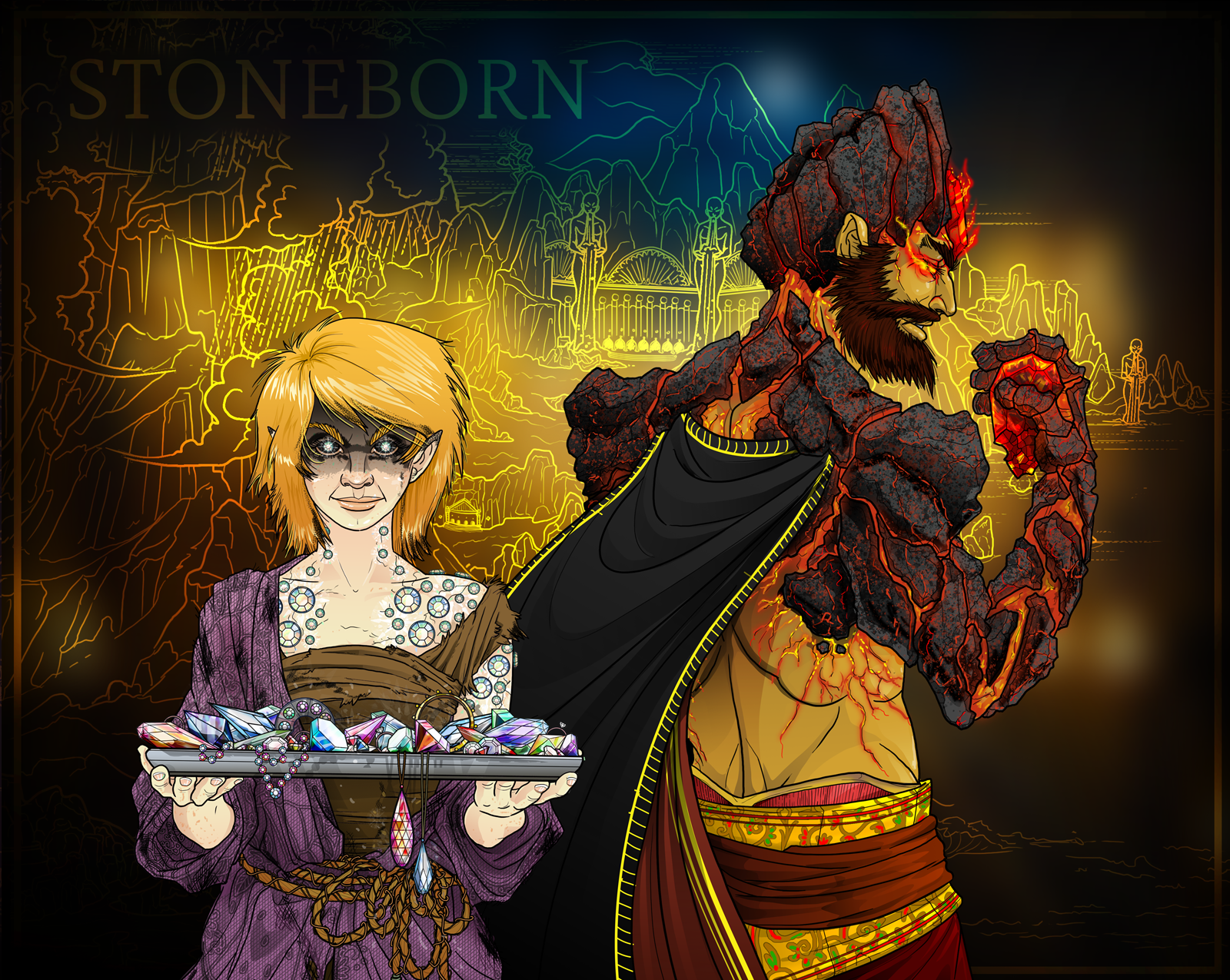
A merchant assigns the heroes on what they may consider a side quest to deliver supplies and merchandise to a nearby town. He’s short-handed and needs someone to take one of his wagon’s, pulled by one of his worn-down and aging horses.
Once delivered and the party has left the area, the goods explode, along with the town, in a fiery burst of pure lava. Turns out the “merchant” wanted an important organization, secret within the town, completely annihilated. He used the party’s ignorance about his “wares” to hide an artifact known as the “lava core” to complete his assassination mission.
4. Ranroth’s Fragments
A collection of tomes from Ranroth the Betrayer are located deep within a cavern Ranroth once used, many decades ago, to store all his relics.
The relics have mostly all been pilfered and the only remaining high-value items within are his “Fragments” – his collection of writings. These writings contain a history of the destruction of the Tree of Life, and exactly what made Ranroth a “Betrayer” to the realm. They also may give a clue as to the whereabouts of the aging elf, and how he might be held accountable for his crimes.
No one has been able to gather Ranroth’s Fragments because of all his relics, these are the most heavily guarded. And by undead, no less.

The Ultimate RPG Guide Boxed Set
Sometimes, the best way to get ideas for your adventures is to take a look at some professionally-published material from expert game designers and dungeon masters. This RPG Guide Boxed Set is - first off, just really cool. I always love when I find something like this online or at a local book or gaming store. It's awesome to see such high-quality gaming materials becoming more and more available today.
This set has great adventure ideas, campaign ideas, character backstory ideas, roleplaying tips and tricks, and much more. There's actually 3-full length books in this set, and you can get the whole thing for like $25. It's practically a steal. If you get a chance, I recommend that you check it out!
5. Shadow Orb
An orb long-forgotten to the world is rediscovered by the party. They can use the stone to teleport to the shadow realm – a dark mirror of reality.
In the shadow realm, the party can travel with immense speed to any location they’d like. However, the first time they enter the shadow realm, they are entrapped by a local demon, whom they must slay or negotiate with, before being allowed to re-enter the mortal realm.
No matter where the party goes within the realm of shadows, they cannot escape the demon. Their only choice is to slay him, or to pay a toll of magic items for every use of the shadow orb.
DnD Quest Ideas: Boss Fights
Oftentimes, great “boss fights” come about as the result of facing a long-time villain of the adventuring group. However, every now and then (especially if you’re playing games set up for it, like Eternity TTRPG), it’s fun to simply have a huge fight for no other reason than the pleasure of it.
In any case, great boss fights often make for a legendary DnD quest ideas.
6. Champion of the Commoners
A champion is perhaps the most straightforward boss fight.
Choose any common monster type. The idea is that it’s a type of monster the party wouldn’t normally be too worried about. Then, give the monster x4 HP, +50% more hit chance, +50% damage dealt, and additional damage resistance (double, if they have any to begin with).
The main difficulty of this fight is the sheer unexpectedness of it. If the party goes into a fight thinking it will be easy, but then the monster starts hitting very hard, and is quite hard to kill, it creates a moment of definite panic.
If you choose this type of monster, try giving your party some indication of the monster’s above-average strength. But… don’t make it too obvious!

The Book of 10-d100 Quest Tables
First off, this book is only $8 as a paperback. Second, it contains random tables for D&D quest ideas - ten of them, to be exact. And each table has 100 ideas on it. So, for $8, you get literally 1,000 D&D quest ideas, which you absolutely can't beat. I promise you that you won't find that much value anywhere on the web. It's actually kind of insane that you can find 1,000 adventure ideas for such a low price anywhere, actually.
Now, for the real question: are the ideas in this book actually any "good?" Well, I promise you that with the sheer volume, you'll absolutely find quest ideas in here that you will consider good. Hands down, no question about it.

Need More Quests? Check Out Book 2
As if the first book of 1,000 quests wasn't enough, the author actually has a second book available with another 1,000 DnD quest ideas - and as you'll soon see below - there's a third book in the series, as well. The quests in this book are based on the following topics: curses, deserts, disasters, dragons, dwarves, fighter guilds, ghosts, halflings, mountains, and war.
7. Nether Knight
As in Eternity TTRPG, the Nether Knight can create copies of himself. Perhaps the copies are simply illusions, and distract enemies while the real version attacks, unhampered.
However, a truly powerful version of this boss fight would allow the Nether Knight to use turns to summon copies of himself. The difficulty of this fight lies in stopping the original from endlessly summoning mobs. This type of enemy is so strong, in fact, that even a low-level, “mook” -type enemy could create major problems for an adventuring group.
Imagine a kobold that can summon more kobolds just like him every turn. So long as that first kobold can take a couple hits, all he has to do is keep running and summoning.
8. Three Sisters
In this boss fight there are three of the same kind of enemy, but who all have distinct looks. The key to winning this fight is to kill the enemies in the correct order. If the bosses are killed in an incorrect order, the other two “sisters” simply revive their fallen ally on their next turn.
This is a great way to turn a relatively easy looking battle into something truly desperate for the adventuring group. The key with this kind of battle is to give some clue either before the fight, or during, as to which order players must kill the three sisters.
The concept for this boss fight originated from the Final Fantasy Magus Sisters.
9. Reverse
One way to really mess with players (and get them really engaged in your game) is to alter underlying expectations.
For example, what if an enemy received healing from things that normally do damage, and instead can only take damage from healing effects?
This boss fight involves an enemy that’s entered the shadow realm (refer to the “Shadow Orb” DnD side quest, above) and has therefore had their body altered in inexplicable ways.
The only way to defeat this enemy is to heal them. Until they die from it. Dealing any kind of damage instead causes the boss monster to heal, prolonging the fight.
For this kind of fight, you absolutely have to give your players some indication of what they’re facing, or they’ll assume your boss monster has a crazy amount of HP. One fun way to run this fight is to give the boss a relatively low amount of HP, meaning the fight is relatively easy once the “secret” of killing them is discovered.
10. Ultimate Vampire
Vampires are a classic in DnD quests. Among undead, they are one of the great kings, and inspire great stories. What if your adventuring group had to face a vampire that could drain more than just blood, though?
This “ultimate” vampire can steal not only HP directly, but at the start of the fight, drains 1 Level from all party members, granting them to himself. He also steals each party member’s most powerful magic item, weapon, or armor piece – whichever is most disadvantageous for them to lose. He does so using dark magic that makes the item float around him, granting him its stats and powers.
DnD Quest Ideas: Dungeon Delves
Dungeon-delves account for some of the most beloved DnD quest ideas. Everyone loves getting into a dungeon with traps, tricks, mysteries, and difficult fights. Especially if the dungeon involves some especially nice rewards.
11. Crypt of the Plaguebringers
Reports have been circulating among the realm’s clerics and healers that a plague is breaking out. Unfortunately, this plague is somewhat resistant to divine magic, leading many to suspect that something’s causing the outbreak.
Follow up investigation by the adventuring party leads them to discover that a cult is behind the plague. If they aren’t stopped within 30 days, they’ll complete a ritual that will manifest the plague all across the realm.
To compound the situation, members of the party have been having dreams of a crypt’s location where the cult is most active. The spirits of the crypt, which the cult is using to fuel their plague, want vengeance. Through dreams, they offer the party members powers and rewards for freeing them from the cult’s grasp.
12. Fiery Sanctum
The Fiery Sanctum is a ruined and cursed Dwarf fortress at the edge of the realm. The name comes from the many rivers of magma within that provide lighting and warmth to the fortress. However, the Fiery Sanctum has long-since fallen into disuse from the many years of the realm’s decline.
The king, in efforts to reclaim his people’s past glory, has recently become concerned about the extent and nature of the Sanctum’s curse. One of his key advisors has thus sent the adventuring group to investigate.
Rumors abound in villages nearby the Sanctum regarding mortal sacrifices carried out in the fortress by Fallen Paladins who had many years before been on diplomatic missions to the kingdom. Many now call the place accursed. As much as possible, this place is avoided.
Any who delve too deep into the Sanctum discover that the Fallen Paladins never left, but rather have used the Sanctum as a staging point to soon begin an assault upon the realm.

Fantasy Art for your DnD Quest Idea Inspiration
One of my favorite ways to get inspiration for unique quest ideas is by looking at high-quality fantasy art books. There's something about seeing a dramatic scene through an artist's eyes that often helps me come up with encounters that really grab player's interest.
This art book is great because it actually covers the history of fantasy art, and provides 180-full page, full-color illustrations. I think the art offered from both modern and historical artists is also a big help in creating unique adventure ideas, as you get to see the fantasy genre as it was imagined from even the Victorian era.
13. Kleitengraas’ Tomb
The realm is under a coup. The current king was placed on the throne as a puppet, as a boy, and has remained so even into his elder years. Even further, he was not of noble birth, having taken the throne after the previous monarch died, and his son was banished.
Now, the grandson of that passed lineage has come to reclaim his throne, and is choosing to do so by force. After all, the noble houses who now rule the kingdom, behind the puppet king, do not want to lose the power they’ve held for so many decades.
While the coup takes place above ground, and armies clash, the adventuring group finds themselves within the tomb of Kleitengraas, resting place of the former king and his lineage. This is where the heads of the nobles houses have gathered, assembling traps, monsters, and heroes to protect them.
They know that a group of elite heroes, “aces of the realm,” have come to end their reign. The only question left: will the adventuring group defend the nobles, within the tomb? Or are they in fact the “aces of the realm,” come to pass judgment?
14. Ruins of the Tree of Life
The tree of life was destroyed many decades ago by Ranroth the Betrayer (refer to the “Ranroth’s Fragments” DnD side quest, above). Ruins of the mile-tall tree still remain, and an entire “dungeon” awaits within its roots, trunk, and limbs.
Many believe that Ranroth never paid for his crimes. That he killed the world’s greatest source of life and healing, with no punishment. However, there’s a secret resting within the decayed tree’s upper branches.
Should the adventuring group survive long enough to ascend through the tree’s wooden and decayed caverns, now filled with pestilence, undead, and demons, they find a black crystalline structure near the top.
Within the dark crystal is Ranroth the Betrayer, captured for all time by some powerful mage’s spell. Only, it appears that the crystal has cracks all over its surface. And when viewed more closely, it shatters.
Once again, the greatest enemy of the mortal realm walks free…
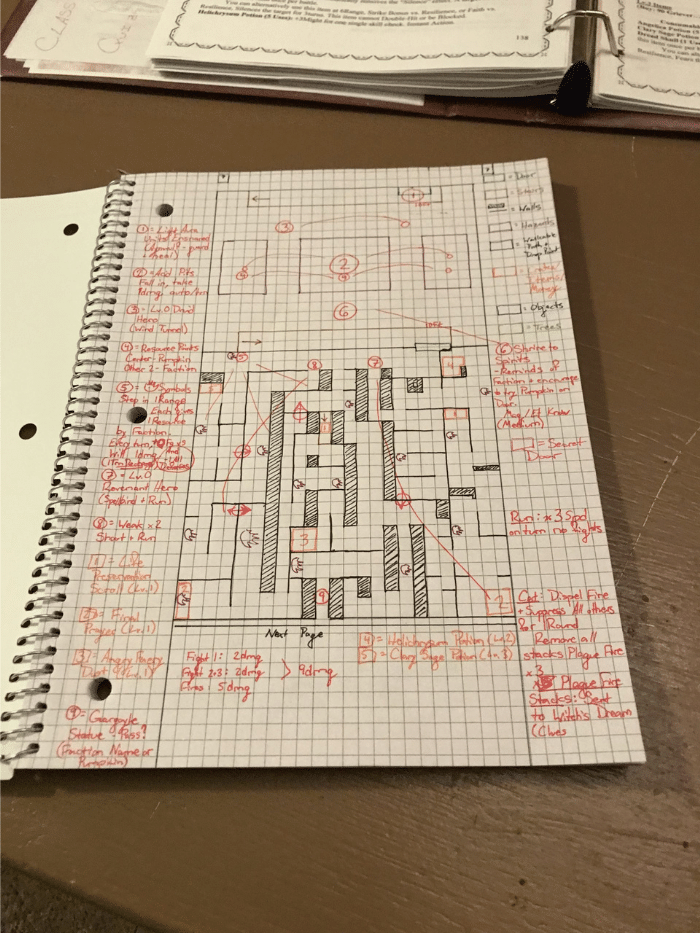
15. The Jester’s Court
In the frozen tundra of the far southwestern island, an insane demi-god gathers followers. He desires for all “monsters” to have a kingdom of their own, which he will rule.
Though creating a kingdom of beasts, undead, and monsters seems kind of laughable, “the Jester” is accomplishing that very thing. He seems to have gained powers that allow him to control creatures of all kinds to do his bidding.
The Jester’s powers have grown so much that he has begun invading kingdoms across the sea. In small amounts at first, but ever increasing. His powers seem to be growing.
The adventuring group has been tasked with traveling to the frozen island, entering the Jester’s castle, known as “The Jester’s Court,” and slaying or stopping the demi-god. This is, as all know, not only a task for the most powerful heroes of the realm. But also one that is probably akin to suicide.
DnD Side Quests
Sometimes what you really need is a quick way to distract players while you come up with the next stage of your adventure, or a way to handle the fact that they just derailed your plan.
In any case, these DnD side quests are a quick way to give your players something to do in between the next step in the main storyline.
16. A Brother Saved
After defeating an enemy or monster, the adventuring group discovers that their foe had a hostage. This individual identifies himself as Thorin Glass, brother to a famed blacksmith in the next town.
Should the heroes return with him to his brother, he’s sure they’ll be rewarded. If his captor was human, the only reason he can imagine why he was taken is because of his brother’s renown.
In any case, Thorin is not so sure that he will be able to return to home without someone to protect him. Who knows what else might be lurking about with a motive to capture him again?
17. Den of Spies
A rather common looking man approaches the adventuring group, away from the ears of others. He’s noticed that they do a great deal of travelling, and has need of someone with eyes and ears throughout the realm.
He offers payment for whatever news they gather during any of their adventures or travels of growing unrest among the people. He mentions there’s been word of a potential coup against the crown (refer to the “Kleitengraas’ Tomb” DnD quest idea, above), and is simply in need of information.
No need to get involved, do anything risky, or make your task known. Just report on anything heard, while in taverns, towns, or resting between adventures.
If you don’t hear anything, no big deal. But if you do, he’s got a reward for you with each piece of information you deign to share.

18. Future Disaster
A young child wants to learn the ways of magic. He or she shows promising aptitude, and simply needs a teacher. The child’s parents aren’t wealthy by any means, but have enough set aside that they can pay for an occasional tutor.
The adventuring group hears of this family’s wishes, and if they have a spellcaster in the group, is offered the position. Between adventures, or whenever the hero is available, they’d simply love to have their child taught in the ways of magic.
Over the years of a lengthy campaign, the child grows into a teenage prodigy, possessing magic equal to or in excess of the adventuring group. And after years of seeing their mentor use their powers to sway the world to their will, the prodigy has decided to do the same.
The adventuring party returns one day to find that they have created the next generation of their greatest enemies, led by the young child they once loved. Apparently the prodigy took to heart the lessons of magic, but not the lessons of philosophy and morals.
19. Lady Ritonbell
Within the realm is a well-known lady whom many admire. She is young, wealthy, charming, and cunning. She inherited a large estate from her deceased parents, and several thriving business ventures. She wants to find a prospect worthy of marriage, but has deep concerns that prevent her from doing so.
Though she appears to manage her assets well, she has reported numerous thefts to her property and places of business. All of them within the city.
She asks any adventurers, guards, or anyone else in the city to investigate the matter, and offers a handsome reward to any who can stop the serial thefts.
To only the most astute adventures does it finally become clear that Lady Ritonbell is actually robbing her own properties and companies. A little excitement in life, a way to test herself? Definitely, it appears, a way to avoid suitors.
20. Unicorn Meat
A vendor loudly proclaims that he’s now selling – yes, you heard right – unicorn meat! Indeed, the meet is rainbow-colored and smells of fresh fields and summer roses.
Is it ethical to kill such a pure creature as a unicorn, you may ask? “No problem if it’s found dead!” Will there be more, you ask? “Definitely!”
The butcher tells the adventuring group that business has never been so good. He’s got orders coming in so fast that he’ll be fresh out of unicorn meat within the day. Even the nobles have put in for their share.
Thus, his proposal: find him more dead unicorns, bring their meat, and he’ll give you a cut. A substantial cut. He can now afford that kind of thing, after all.
There may not be a lot of unicorns in the area, and your chances of finding a dead one may not be high, but if something’s out there killing them… well, each pound of unicorn meat is worth its weight in gold.
21. Dungeon a Day
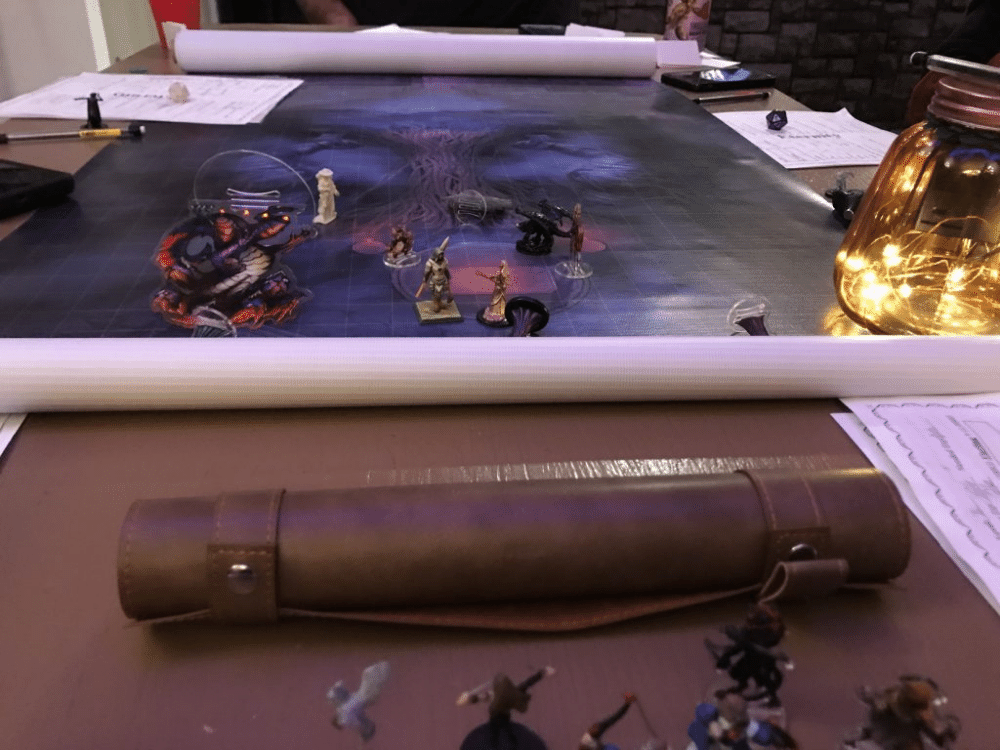
If you haven't seen yet, the Eternity TTRPG site is now home to Dungeon a Day. Every day (that we're running the event), you can check out the Dungeon a Day page for a new, unique dungeon room that our team's created. Each month, the "theme" for the dungeon is updated, so if you keep checking back, you're certain to find quest ideas that you can use in your own game.
The Value of DnD Quest Ideas and DnD Side Quests
Having extra DnD quest ideas available for immediate use is basically a staple for running a long-term rpg campaign. It’s how – as a DM – you keep your party’s adventure going through whatever choices they make. It’s not uncommon, after all, for a gaming group to derail your entire campaign’s story.
Part of the job of a great DM is to keep the story progressing, while feeling natural. As such, it’s always good to have extra DnD quest ideas on-hand. You never know when your gaming group might decide to veer off the main story and want some side quests. It’s also helpful as a DM to have extra source material when putting together the next creative step in your campaign’s main story. Whatever your needs, we hope you’ve found at least a couple good DnD quest ideas or DnD side quests from our list!
If you need some additional DnD inspiration, check out the 12 Best DnD Podcasts of 2021 (Dice, Camera, Actions! a particularly good one). You can almost always find some good quest ideas by listening to live DnD gaming.
Single Player Gaming
I'd also like to note that one fun quest idea is to actually try out single player DnD. If you've always been the dungeon master for your group, it can sometimes be a great experience, and even pretty enlightening, to sort of see what it's like to game as a player. No matter what quest you play out, single player gaming is really a great twist for any adventure idea.
D&D-Specific Spells & Topics
Sometimes, you can make an entire side quest out of a single spell or topic in the D&D 5e rulebooks. Especially if you let your players stretch the rules a bit, you can come up with some really interesting encounters. For example:
- Silence: build a quest around silencing a guard and then using Magic Mouth to make them "say" whatever you want.
- Cause Fear: a villain uses fear spells as their bread and butter. The fallout from the wizard's mental anguish is ruining towns.
- Charm Person: a sorcerer has created their own particularly powerful charm person spell, which works like the unforgivable imperius curse in the Harry Potter series, sowing confusion and discord across the realm.
- Bonus Action: think about fighting an epic boss monster that gets to use 3-5 bonus actions per turn, instead of just the usual 1, and the surprise that'll show on your player's faces from the very first round of combat.
There's lots of info contained in the strategy guides for the D&D-specific spells and topics above, so dig in whenever you have time.
The Best Way to Come Up With Great Quest Ideas
Hands down, the best way to get new quest and side quest ideas is from your gaming group. There are no sources of inspiration as inexhaustible as a dedicated group of roleplayers.
To bring out the best in your gaming group, try out a group DM game like Eternity TTRPG. In Eternity, every player contributes to the story line, game world, NPCs, and more – all while roleplaying their own characters. Most people only know about D&D, but when it comes to tabletop roleplay games, there are tons of games like DnD out there.
Most group DM games usually devolve into chaos, which is why they aren’t common. But Eternity TTRPG is different. I’ve made the game so that any number of people can dungeon master as a team, while still retaining all the plot twists, drama, and creativity. Give it a try, and let me know just how many great quest ideas your entire gaming group creates.
Dice, Dungeons, Games & More - Eternity TTRPG
Share This Article

Author - Jacob Tegtman
Dear reader, I hope you enjoyed this article. Tabletop gaming has been a passion of mine since I was 6 years old. I've played just about every game from Dungeons and Dragons to video games like Final Fantasy. These games have inspired me, made me laugh, made me cry, and brought me endless hours of enjoyment.
I started Eternity TTRPG - and the indie tabletop game that goes along with it (Eternity Shop) - to share my love of gaming with others. I believe that in our technology-driven age, tabletop games help bring a sense of magic and community back into our world.
If you love the site, please share it with others! I have lots of gaming-related material for you to peruse and use in your own gaming sessions. If you have any questions about the site or want to contribute, just send me a message using the "Contact" page, which you can find in the site's footer.