
6 Keys to Maximize Your RPG Campaign

Playing in an ongoing RPG campaign takes tabletop RPG experiences to the next level. If - that is - you can keep the game going, and find ways to make the most of the experience for all players at the table.

Few gaming experiences can compare to the sense of epic destiny that envelops ongoing TTRPG (tabletop RPG) adventures. There’s a sort of threshold that’s reached once a gaming group has played multiple sessions together. Once the threshold is crossed, it pushes the story from something merely fun, to something that’s truly compelling. Once a game has gone from something your players are showing up to try out, to something they can’t wait to experience each week, you know you’re in the “flow” of a great RPG campaign.
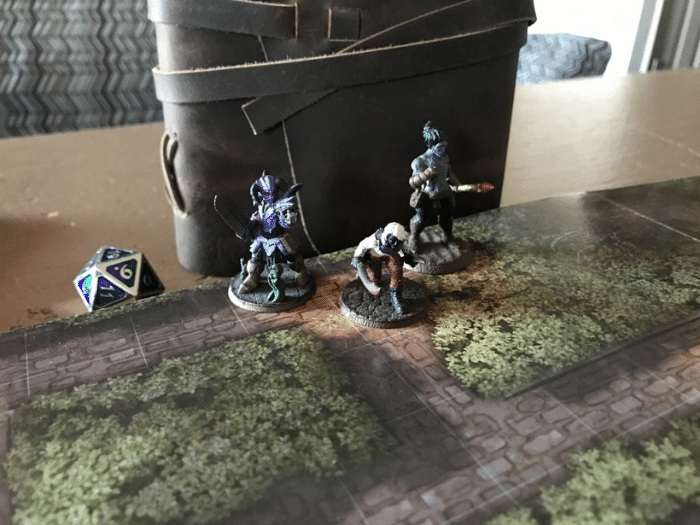
RPG Campaign Party

How to Make An Entire RPG Campaign Successful

Creating the right environment for an RPG campaign to develop is key for its success. Here are my top recommendations to help you finish an entire campaign with your gaming group (more details on each bullet point provided, below):


  1. Focus on Fun
  2. Make Sure Everyone Gets to Participate
  3. Create a Cohesive Story
  4. Keep Games Consistent
  5. Ask Yourself: Do You Really Want A Full Campaign?
  6. Utilize an RPG Planner


Now that you know the benefits of playing a full campaign, and also that most gaming groups don’t get that full experience, you might be interested in some tools to increase your odds.

Eternity TTRPG Article Shop

1. Focus on Fun

The best way for you to have a campaign succeed is to remember that the purpose of gaming is to have fun. Prioritize fun over having a successful campaign, and your campaign is more likely to endure.


2. Make Sure Everyone Gets to Participate

One of the main ways to keep games fun for everyone is to ensure each person at the table gets to participate in the game in the way they want. Some people will inevitably contribute more to the game than others, and that’s ok. Just so long as no one feels excluded, or unheard.


3. Create a Cohesive Story

If you are running the game’s story, or contributing to it in any way, do your best to make the story logical. It doesn’t have to be a masterpiece, at the start. Simply create objectives for the group, conflicts to oppose those objectives, and interesting pacing. Ultimately, there are many skills that can be mastered in telling a story. The important thing to remember is that you don’t need to become an expert. Your gaming group will benefit, however, from intentionality on your part, between games, in creating story cohesion and flow.


4. Keep Games Consistent

Try to game at the same time of day, at the same location, with a similar gaming environment, as much as you can. This isn’t a hard-and-fast rule. However, people do respond well to consistency, since they learn what to expect. This also helps with scheduling, as people can block off the same time and day each week (for example) for gaming.


5. Do You Really Want A Full Campaign?

Before telling a group of people that you want to play an entire RPG campaign, make sure it’s what you really want. As great as TTRPG campaigns are, there is a real time investment to them. If you, as the person who gets people excited about a new RPG campaign, decides part way through that you’re not interested in continuing, chances are high that the group will fall apart. If you’re unsure from the beginning, it’s often better to simply play a one-shot adventure, or perhaps a few adventures, rather than committing to an entire campaign.


6. Get an RPG Campaign Planner

Our final tip for keeping a campaign going successfully is to utilize an RPG campaign planner. Once a story develops enough, it takes on a life of its own. And it can become difficult, over time, to keep track of all the characters, locations, unique items, and side stories that emerge. Thankfully, experienced gamers have created all kinds of templates, and if you prefer to invest, products, that can be used to organize everything. RPG campaign planners make it easier to track notes of all kinds, develop storylines, and create consistency and cohesion in ongoing adventures.


Basically, you have four options when it comes to RPG campaign planners. All options are just varied combinations of either physical or digital, and free or paid:


  1. Physical – Unpaid
  2. Digital – Unpaid
  3. Physical – Paid
  4. Digital – Paid
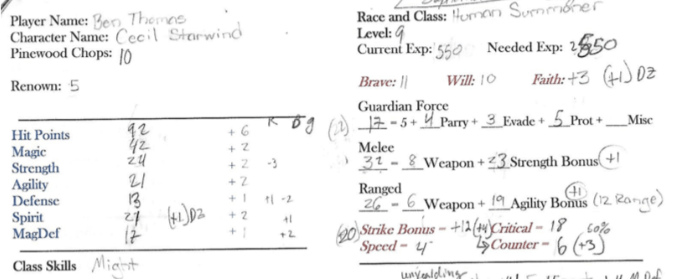
RPG Campaign Character Sheet

Physical and Unpaid RPG Campaign Planner

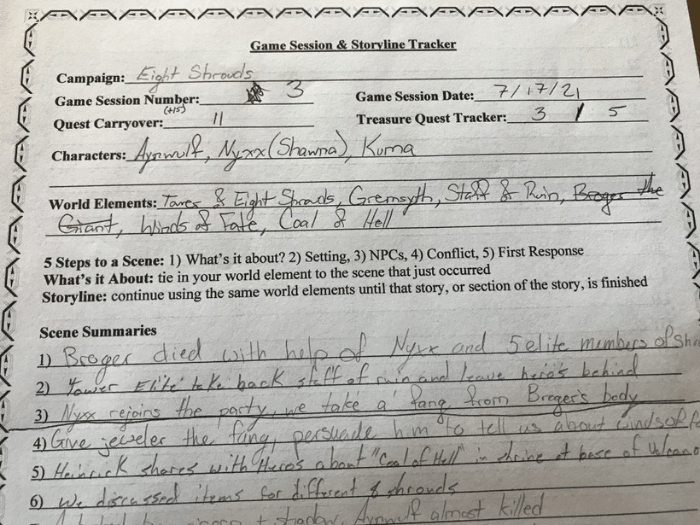
A physical and unpaid RPG campaign planner would be something like an rpg campaign template you can find, online. It doesn’t need to be fancy, at all. To be honest, even a notebook will suffice. In fact, when it comes down to it, really anything that you can write on and take notes with, will do. Whether you search for online templates, or create your own, make sure it has space to track the following key elements:


  • Major Player Characters (PCs)
  • Major Non-Playable Characters (NPC)
  • Villains
  • Goals, Oppositions, and Inner Conflicts of All Important Characters
  • Unique Items
  • important Locations
  • Important Backstory/ Background Notes for Any of the Above
  • Side Quest Ideas from Any of the Above
  • Major Plot Points, both Past and Future
  • Opportunities for Plot Twists
  • Clues Given to Players that May Foreshadow Plot Points or Twists
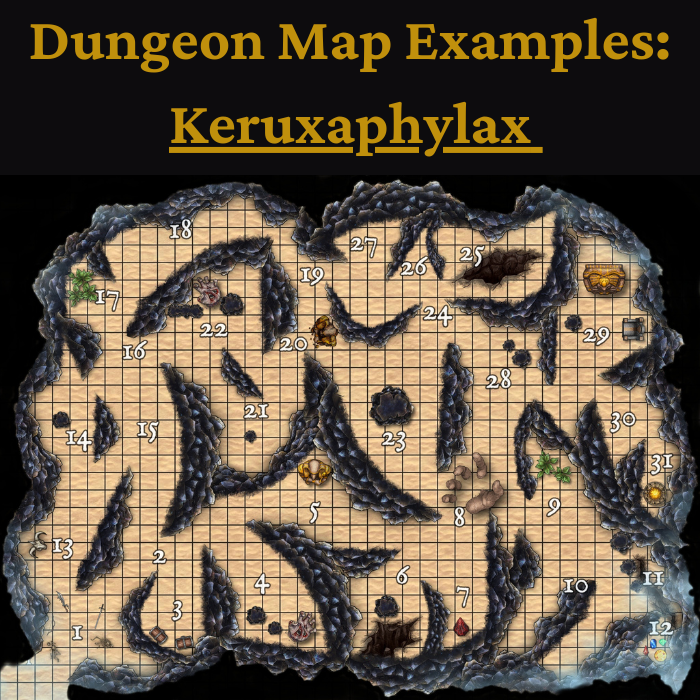
  • Maps and Other Campaign Handouts


Digital and Unpaid RPG Campaign Planner

There are many digital and unpaid RPG campaign planners available online, today. Many of them take care of all the points listed, above, and even offer more tools than those. Many of these websites also offer options for paid subscriptions, but can be great resources even without. If you don’t mind having a computer or tablet at your gaming table, and don’t mind if the rest of your gaming group does as well, tech can be a great way to go. Some gaming groups find it cumbersome to have computers take up space at the gaming table, or find the technology distracting. However, this is really just a matter of preference.


Physical and Paid RPG Campaign Planner

A physical and paid RPG campaign planner would be something like a put-together book for rpg campaigns. It usually comes with artwork, interesting ideas, a high-quality cover and inside pages, and can certainly be worth the money. If one thing is true about TTRPGs, it’s that you get out what you put in. Sometimes it’s worth investing a few dollars to purchase something that helps the game session feel more “magical” to you. If you find things like artwork, nice covers, and quality notebooks to be helpful for your creativity, you may consider buying a nice RPG campaign planner. Or, even simply buying a nice leather-bound notebook.


Digital and Paid RPG Campaign Planner

Digital and paid RPG campaign planner websites, as mentioned above, often have a free version. Before paying for anything, you might first try out a site’s unpaid option. Usually, all the advanced features that come from a paid subscription aren’t especially useful until a campaign reaches a certain stage of complexity, anyways. However, once a campaign becomes pretty big, with numerous interweaving plots and characters, having an online RPG campaign planner can be very useful. Technology certainly has its place at the gaming table, as it can convey large amounts of visuals and text very simply. If you’re interested in utilizing software at your gaming table, you might check out one of the following online RPG campaign planners for yourself:


  • World Anvil
  • Obsidian Portal
  • Kanka
  • Scabard
  • DnD Campaign Planner


RPG Campaign Planner Example

Benefits of a Long-Term RPG Campaign

There are serious benefits to playing in a long-term game. For most people (in my experience), nearly all the best moments you’ll ever have while playing tabletop RPGs will come from playing in lengthy campaigns. If you know anyone who’s played some long-term RPG campaigns, ask them – they’re likely to confirm.


This means that if you’ve never played in a long-term game, you’re probably missing out on the types of experiences you’ve always guessed TTRPGs are capable of providing (more details on each bullet point provided, below):


  • Connection to your Character
  • Connection to Locations
  • Connection to Villains
  • Connection to the Story
  • Epic Moments
  • Mastery of the Game
  • Comfortability Roleplaying
  • Increased Creativity
  • A Story You Look Forward To


Connection to Your Character

It takes a number of game sessions for your character’s backstory to come forward in the game, and become applicable for the current story. Once it does, though, you’ll see parts of your character come to life in ways you probably couldn’t imagine, beforehand.


Connection to Locations

Troea, the city your gaming group started in, probably doesn’t mean much the first few gaming sessions. Only after you realize the “guardian” of the city – for whom you’ve been completing important tasks – is a lich, does the city really mean something to you.


Connection to Villains

The first time you meet a villain in a story, you really don’t know if they’re going to be all that important to your character’s story. After all, they could just be a minor villain, or be overthrown by one of their own henchmen, in coming weeks or months. It’s only after you’ve faced a villain, won or lost, then had to face them again, that you see something build. Repetition of gaming sessions with the same villain creates the kind of connection where you love to hate them. Or, hate that you love them.
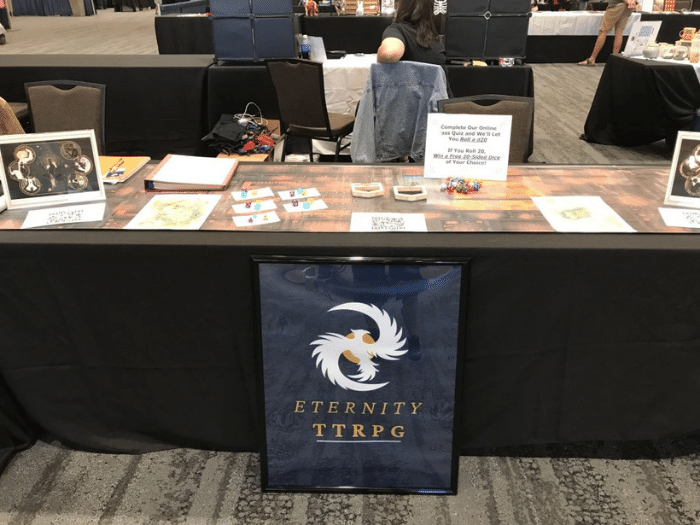
Eternity TTRPG RPG Campaign

Connection to the Story

The results of connecting more to your character, locations in the game, villains, and everything related, is that you connect to the story. The game goes from being something merely fun and social, to something meaningful. When you connect to your game’s story, you can’t wait to see what happens next. That’s when things start getting intense.


Epic Moments

Buildup of the gaming group’s connection to the ongoing story inevitably results in emotional investment. No matter the moment – a ring falling into a volcano, the death of a demi-god, or the coronation of a king – an event is only made “epic” because of catharsis. Only players who have gamed long hours together unlock within themselves the capacity to experience epic tabletop RPG moments.


Mastery of the Game

Many things in life become more fun when we develop more skill in the activity. It might be weird to think that you can become “better” at a TTRPG, but it’s true. You can. And when you do get better at roleplaying, and better at your combat tactics, the game does feel more rewarding.


Comfortability Roleplaying

On the topic of roleplaying, if you’re someone who likes the idea of getting into character but has some difficulty finding your rhythm, long campaigns definitely help. Regular play with the same group of people tends to lower inhibition a bit. Also, the more you get invested in the campaign’s story, the easier it becomes to connect your character to the gaming world. And from there, it’s almost only natural to fall into roleplaying.


Increased Creativity

Similarly, spending more time – and becoming more invested – in a gaming world allows for creative ideas to flow more freely. Great campaigns and stories in a TTRPG group don’t just come from the game master. Instead, the best campaigns come from every member of the group creatively contributing to what happens, or what should happen, next.


A Story You Look Forward To

The biggest benefit of an ongoing RPG campaign is that the game becomes something you look forward to each time you play. There’s nothing wrong with casual games, of course. There is a difference between casual games, and deeply meaningful ongoing campaigns, however. Consider the difference between a watching a YouTube video and watching the season finale to your favorite show. No comparison, right? There’s just not the same emotional build up and intensity, until you’ve invested the time required to cross the threshold of greatness.
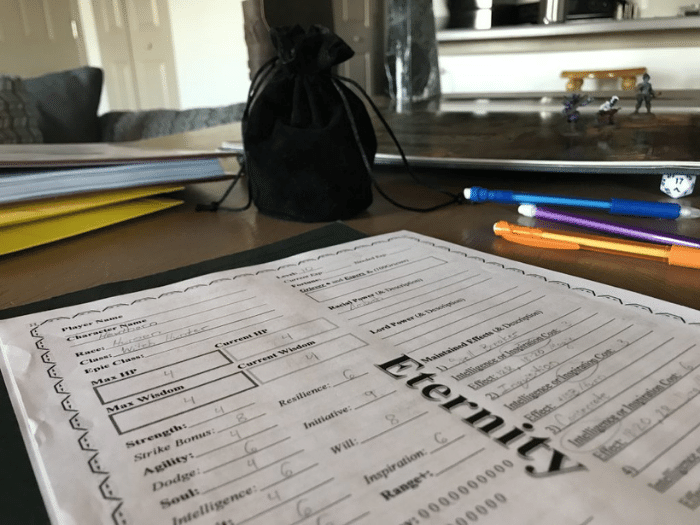
RPG Campaign Gaming Table Setup

Is It Difficult to Keep an RPG Campaign Going?

Unfortunately, even with the many great benefits of an ongoing tabletop gaming campaign, it can be difficult to get one off the ground. Many gaming groups start out with the idea of playing an entire RPG campaign. There’s usually one person, or a couple, who becomes the driving force for getting the group together, and consistently playing.


In many cases (maybe even in most cases), however, an “RPG campaign” turns into a single one-shot adventure. Or, perhaps a few gaming sessions strung together, loosely. Then, interest in the game burns out, people get busy, or any number of life-related events take place to derail the budding storyline.


For a little context, I’ve been playing TTRPGs for about 20 years. In all my tabletop RPG experiences, I’ve played in five full-length campaigns. Besides those, I’ve played in maybe eight more partial-length “campaigns,” and began another dozen or so “campaign attempts.” The campaign I’m playing in now, if it makes the distance, will only be my sixth. It’s not easy to get a group of people together, consistently, for any length of time. It was certainly easier when I was in college. Now, as an adult, with real responsibilities, it takes a bit more effort to keep things rolling.


Try Out a New Kind of TTRPG

Sometimes, the best way to make a TTRPG campaign succeed is to try out a new game. If you’ve never played a group GM RPG before, check out Eternity TTRPG.


Campaigns in Eternity TTRPG have immense longevity to them since everyone at the table contributes to the creativity of the gaming world, NPCs, villains, storylines, and more. It’s also set up so that there’s a lot of cohesion amongst the group in the development of stories.


Have Fun With Your Next RPG Campaign

Hopefully, this article has given you some reason to try out an RPG campaign, tips to make it endure, and ideas for planning it out. The last piece of advice for you is to have fun with it. Nothing matters more, in tabletop roleplaying.

Share This Article

Jacob Tegtman Eternity TTRPG Creator

Author - Jacob Tegtman

Dear reader, I hope you enjoyed this article. Tabletop gaming has been a passion of mine since I was 6 years old. I've played just about every game from Dungeons and Dragons to video games like Final Fantasy. These games have inspired me, made me laugh, made me cry, and brought me endless hours of enjoyment.


I started Eternity TTRPG - and the indie tabletop game that goes along with it (Eternity Shop) - to share my love of gaming with others. I believe that in our technology-driven age, tabletop games help bring a sense of magic and community back into our world.


If you love the site, please share it with others! I have lots of gaming-related material for you to peruse and use in your own gaming sessions. If you have any questions about the site or want to contribute, just send me a message using the "Contact" page, which you can find in the site's footer.
“New Path of the Lich”
By Jacob Tegtman April 29, 2026
Transcribed content from our recent YouTube video: https://www.youtube.com/watch?v=an8LlwVXGns Transcription Becoming a lich in D&D has – usually – been something reserved for villains. But in one of the latest Unearthed Arcana from early April, that line gets a little blurrier.  Really cool way that they approached this: there’s now a feat-based system that allows players to work toward lichdom for their characters, over time. So today, we’re going to walk through what becoming a Lich officially looks like—and whether it’s something you’d realistically use in a campaign. Because... you know... with the new D&D seasons releases, and Spring time being about the “horror genre,” nothing says “become a lich” like green trees and budding flowers. So, here we are! Welcome back to Eternity TTRPG—your go-to place for Dungeons & Dragons content, news, games, and updates. Today we’re looking at the Path of the Lich from the new Villainous Options playtest. To understand the system, it helps to start with the lore. A lich in D&D is a spellcaster who avoids death by binding their soul to an object—commonly called a phylactery, or in this case, a spirit jar. The process is intentionally grim. It involves creating that phylactery vessel, performing a ritual, and effectively dying—only to return as an undead being sustained by magic. Mechanically and narratively, liches are defined by two things: Their detachment from mortality And their dependence on that external object . Kind of like a horcrux, from Harry Potter. That phylactery is what makes a Lich difficult to destroy, and why they’ve historically been used as long-term antagonists, such as during one of my personal favorite adventures of all times: the original Tomb of Horrors. The Path of the Lich is part of a broader Unearthed Arcana release focused on “villainous” character options. Instead of a subclass, as a very interesting take on things, this is structured as a sequence of feats. Keeping the Lich path separate from any class means that no matter what you play as, you can make a Lich out of it! This means that your fighter, for example, could be a Lich, or your rogue (not that you’d ever play a rogue), and you can have that “undead character” without tying yourself to the traditional “Lich-as-a-spellcaster” archetype. The Lich progression looks like this: You begin by defining a Lich Rite , at any level, which is mostly narrative At level 4, you take Lich Initiate Between levels 5 and 11, you select at least one additional related feat, from the options of arcane restoration, transfer life, or undead grasp And then at level 12 or higher, you take Lich Ascension , to officially become a Lich So rather than a single transformation, your character goes through a gradual shift in both mechanics and tone, which is very based in D&D lore. The Lich Rite feat is worth discussing in some detail, even though it doesn’t have strict mechanical weight. This first feat in the Lich chain sets the narrative expectation for becoming a full-blown Lich, by providing the character with a sort of quest they must first complete, such as: Consuming a large number of souls Using magic to conceal yourself from the gods of death Brewing potions from slain foes Or severing your connection to any afterlife, entirely These aren’t small story beats. They really do imply a campaign where moral boundaries are actively being crossed—or at the very least, being questioned. So, before mechanics even come into play, there’s already a conversation to have at the table. Next, is the Lich Initiate feat. This is the foundation. You create your spirit jar , which functions as your anchor, the basis for your phylactery. You also gain Soul Siphon , allowing you to consume the soul of a defeated humanoid for a small damage boost. There’s also a risk component—if your spirit jar is destroyed, you suffer penalties until it’s replaced. You then choose how to build on your lich path with a third feat that improves soul siphon: Arcane Restoration lets you convert soul siphon uses into spell slot recovery Transfer Life turns soul siphon uses into temporary hit point bonuses for allies Undead Grasp adds a control option through paralysis These are fairly modular feats. They don’t radically change your role, such as by forcing you into becoming a full-fledged Lich spell caster, but they do add magical efficiency and utility depending on your build. Finally, at level 12, the transformation to Lichdom completes. You: Become Undead Gain resistance to necrotic and poison damage Get access to Fear without expending spell slots And gain a form of rejuvenation tied to your spirit jar That last point is the most significant mechanically. It introduces a conditional form of returning after death, assuming your phylactery remains intact. So, is the Path of the Lich actually worth taking? Mechanically, it’s solid. You’re getting: Incremental power increases Some resource flexibility And a strong late-game feature tied to survival But the bigger consideration isn’t mechanical—it’s contextual. This kind of progression assumes: A campaign that supports darker character arcs A group that’s comfortable with those themes And a DM willing to integrate the consequences of these morally very-dark-gray life choices In a more traditional heroic campaign, it may not fit at all. The path of the Lich feels less like a standard player option, and more like a tool for specific types of stories. If used carefully, it could support a long-term character arc focused on ambition, cost, and transformation. It allows players to experience some really interesting game mechanics that have long been reserved mainly for monsters or main campaign villains. If this feat path is used casually, it does risk feeling out of place—or undercutting the tone of the game. And let’s just remember, since it’s still Unearthed Arcana, parts of this entire path are also likely to change based on feedback. So the real question is: are you going to play a lich in your next campaign? Or do you think lichdom works better as something players confront… rather than become? Let me know in the comments. And if you want more D&D news and breakdowns like this, consider liking and subscribing. Thanks for watching!
“New Dark D&D Subclasses: for Bard, Druid, & Warlock” Blog
By Jacob Tegtman April 28, 2026
Transcribed content from our recent YouTube video: https://www.youtube.com/watch?v=k_DQ3rc0Xes Transcription Wizards of the Coast has released three new subclasses in their latest Unearthed Arcana, focusing on darker themes like death magic and corruption mechanics. They’re free to access and already generating a lot of discussion in the community. Welcome back to Eternity TTRPG—your go-to source for D&D and tabletop RPG news. Let’s take a look at what’s included in this latest release, and how these classes might fit into your game. If you aren’t familiar, Unearthed Arcana is Wizards of the Coast’s official playtest material, where new subclasses, rules, or mechanics are released for public feedback before possible full publication. New Unearthed Arcana releases don’t follow a strict schedule of new subclass releases, but they tend to appear a few times a year depending on development cycles. There’s also no fixed order for which classes get new subclasses—design choices are usually driven by current design goals, themes, or upcoming products rather than a rotation system. This could in part be driven by the “D&D Seasons” that we’re now seeing from Wizards of the Coast with their planned product release schedule, this year. Getting right into things though, the subclasses this round are: College of Mourning (Bard) Circle of the Primeval (Druid) A revised Fiend Patron (Warlock) The College of Mourning focuses on death-related magic. Instead of traditional inspiration, it blends necrotic damage with support abilities, allowing bards to deal damage while also healing allies. Community reactions have noted the strong thematic direction. One Reddit user described it as a good fit for darker character concepts, though some DMs may need to consider how it fits their campaign tone. Mechanically, early impressions suggest it’s relatively balanced, with its healing and damage requiring positioning and timing. The Circle of the Primeval explores a more ancient and unfamiliar side of nature. Instead of typical beasts, their Wild Shape options include more unusual, sometimes unsettling forms—drawing on prehistoric or aberrant inspirations. At 6th level, their “Primordial Awakening” feature allows additional effects like resistance to psychic damage and abilities that can disrupt enemies mentally. Some players like the new, darker style of this subclass as a change of pace, while others worry it might not fit the tone or gameplay balance of more classic, heroic D&D campaigns. This subclass may work best in settings where the implied, dark themes of the subclass are already established and agreed upon by the group. The updated Fiend Patron introduces a more structured approach to corruption mechanics. The new “Infernal Bargain” system allows warlocks to gain temporary power in exchange for accumulating “Corruption Points.” As corruption points increase, characters gain benefits—but also drawbacks, including possible DM influence over certain decisions at higher levels. To be clear, Corruption Points are gained each time the warlock uses their Infernal Bargain feature to gain their temporary power increases. This system has sparked discussion around player agency. Some players appreciate the mechanical representation of risk and consequence, while others are cautious about how it might be implemented at the table. Overall, it adds a clearer framework for storytelling, but likely requires strong communication between players and DMs. Community discussion around these subclasses has been active, particularly among DMs considering how to integrate them. Some concerns focus on tone—especially in campaigns that already have a defined setting or theme. Others are more mechanical, particularly around balance and player agency. Wizards of the Coast has included guidance in the document, including suggestions for implementation and reminders to use session zero discussions and safety tools when introducing darker themes. If you’d like to play these subclasses at your table, You can download and learn more about them for free on D&D Beyond or through official Wizards of the Coast Unearthed Arcana posts. I’ll include links in this video’s notes, below. Quick episode today, but that about wraps things up! So, what are your thoughts on these new subclasses? Would you include them in your campaign, or do they feel too specific in tone? Let me know in the comments. And if you enjoyed this breakdown, consider liking the video and subscribing for more weekly D&D news. Until next time my friends—keep rolling those 20’s.
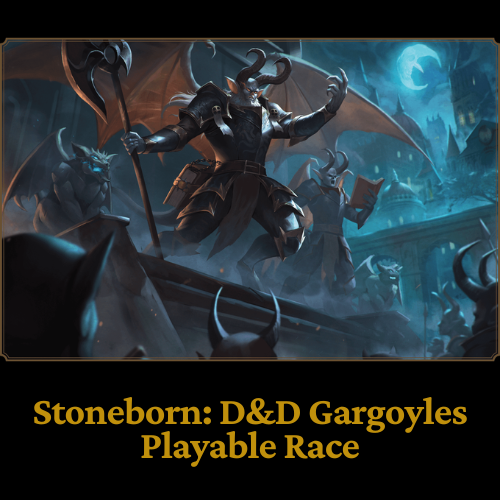
Gargoyles in armor stand on a stone roof at night under a blue moon
By Jacob Tegtman April 13, 2026
Transcribed content from our recent YouTube video: https://www.youtube.com/watch?v=OMnHDV9p7hk Transcription What if your next D&D character was carved instead of being born? And what if their entire purpose was decided the moment they were made? Welcome back to Eternity TTRPG. Today, we’re returning to Crooked Moon to explore the playable monstrous races that this awesome campaign setting provides. Next on list are the Stoneborn from Pholsense – I hope you’re ready, as this race is really fun.  Stoneborn are carved from – well, from stone – by the ruler of their land—and they’re brought to life through a divine force called the Silver Path. In Pholsense, Stoneborn don’t come from families. They literally start as blocks of stone. The ruler of the province, Archbishop Danton Alexandre Renault (a name you may have heard from some of my other Crooked Moon videos – particularly the ones based on specific adventures), oversees their creation. A body is carefully carved into shape—usually with wings and a humanoid form. So, think gargoyle statue. At some point during this process, the Silver Path—a divine power—brings that body to life. Based on the lore of Crooked Moon, we don’t really know exactly what “the Silver Path” is. It’s not like buried somewhere obscure, later on in the campaign book. I think it’s left open-ended so your group, or DM, can sort of play it up as they’d like. Mystery is, after all, a big part of the Crooked Moon setting. It’s worth starting here with the Stoneborn though because the Silver Path is the process of how this carved statue of stone awakens. The Silver Path is clearly stated in the lore as A divine force or guiding power associated with order, light, and purpose. In the Crooked Moon setting, whether you’re playing a Stoneborn or want to highlight them as a DM, the Silver Path functions as: A religious belief system (what people worship) – as the whole process of Stoneborn creation is either overseen, or even performed, directly by the Archbishop A real source of power (it actually does things, like awaken inanimate stone) And is a standard for morality (what’s considered “good” and “right” in the lands of Crooked Moon) In short, the Silver Path is the god-like force that defines “order and good” specifically within the lands of Pholsense. It’s also worth noting that the Silver Path is not described as a spell, and it’s clearly not some form of hidden technology. It is like a divine power. So, moving on, the Stoneborn are made of whatever stone they were carved from. That determines their color and texture. Their shapes can vary a lot, depending on their creator’s artistic choices. This means that your Stoneborn could be a gargoyle, like I mentioned before. But, they could also have features similar to animals, dragons, or angels. You can also have a lot of fun with it and mix different traits rather than having just one clear form. All Stoneborn do have wings, but they’re heavy. And they can fly—but just not quickly or easily. When it comes to the land of Pholsense it’s a strict and orderly place. Rules are taken seriously, and roles are clearly defined. Stoneborn are usually created to actually serve a very specific function within their society. Common roles include: Guards Enforcers of the law Or protectors of important places, such as religious buildings (perhaps even locations where the Silver Path takes place) Because they are created rather than raised, many Stoneborn strongly believe in following their assigned purpose. But – and this makes for great roleplay opportunities – not all of them agree with their assigned paths, forever. Some eventually start to question: Why they were made Whether their role in life is fair And whether the Archbishop—or the Silver Path—is always right Mechanically, Stoneborn are durable and flexible. They’re classified as Constructs. You can choose to be Small or Medium-sized. They also have a flying speed equal to half their normal movement. When it comes to abilities, Stoneborn come with: Argent Gleam Once per long rest, you can use a bonus action to choose one of two effects: 1) Path’s Grace You cast Bless without needing components. 2) Zealous Charge You take the Dash action, and your next attack deals an extra 2d6 radiant damage—even if the attack misses. Next, they have Silver Bulwark When you take bludgeoning, piercing, or slashing damage, You can use your reaction to gain resistance to those damage types until your next turn. And then lastly, Watchful Senses gives you proficiency in either: Insight Perception or Survival When it comes to roleplaying, Stoneborn characters are mainly about purpose. You might think about: Why your character was created Whether they still believe in their assigned purpose now And how they feel about the person who made them Some Stoneborn fully trust the system they come from. Others might not. You can also explore their relationship with the Silver Path: Do they see it as a real guiding force? Or just something they were told to believe in? Finally, Stoneborn don’t die of old age, in quite the same way as most creatures. After a long life—around 300 years—they physically break down and return to rubble. Personally, I think it would be kind of cool if they just permanently petrified, returning to their state before the Silver Path – almost like every Stoneborn graveyard isn’t just filled with creepy gargoyle statues like in most fantasy games... but the graveyard is the gargoyles... providing a glimpse into each stoneborn’s life, and what mattered to them. So what do you think? Would you play a Stoneborn, or have you played one already? And more importantly—Would you follow the Silver Path… no matter where it leads, or what it asks of you? Or would you be a black sheep among the gargoyles? Drop your thoughts in the comments below. I think next up I have planned to cover the Plagueborn. But if you have another Crooked Moon race on your mind that you want me to dive into, let me know. See you guys next time!
Show More