Star Wars Tabletop RPG PDF Review

This Star Wars tabletop RPG PDF review is part of my “Best Tabletop RPGs of All Time” article. If you want to check out more TTRPGs and see how other top-tier tabletop RPGs are ranked, visit that page.

My Review – 78 / 100
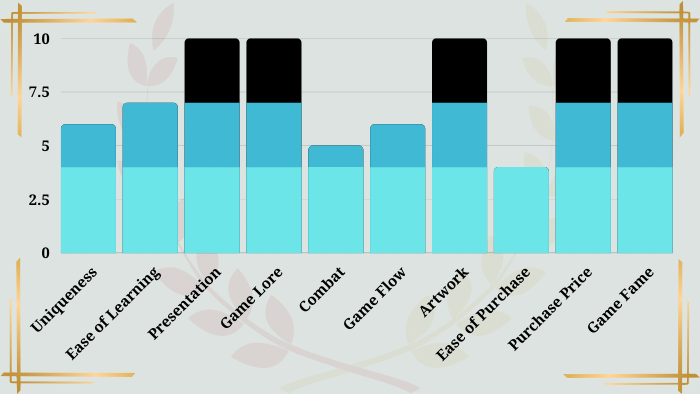
Star Wars Tabletop RPG PDF Review

Just to get everyone on the same page, when I say that this is a Star Wars tabletop RPG PDF review, what I’m talking about this version of the game: Star Wars Roleplaying Game: Revised, Expanded, Updated.


One of the first things to note about Star Wars when it comes to its tabletop RPGs is that there are a lot of them, and they are all slightly different. This can create quite a bit of confusion for groups looking to get into this particular game.


If you do want to play Star Wars, I recommend the version I just mentioned immediately above. It’s easy to find, enjoyable, balanced, and has high production value.

Uniqueness of the Game: (6/10)

Star Wars as a franchise is unique in and of itself, so the tabletop RPG gets extra points just for being Star Wars.


I love all the force powers in Star Wars. If you play a Jedi, you get access to everything that’s cool about the game. Honestly, I can’t imagine why anyone wouldn’t play a Jedi, unless you’ve already played a Jedi so many times that you’re sick of it already. 


Without all of the Jedi powers, this game becomes something very basic. “Equip gear, have stats, roll dice.” Jedi powers have all the “magic” of the game, which leads me to the conclusion that Jedi really “are the game.” Take them away, and you take away almost everything that’s unique about the game.


This RPG does feature “Wild Dice,” which is interesting. The Wild Dice creates additional complications to the story when you roll a “1” and allows you to roll again when you roll a “6,” meaning that, in theory, anything can happen.


Ease of Learning Star Wars RPG: (7/10)

Character creation in Star Wars tabletop RPG is neither easy nor extremely difficult compared to other TTRPGs.


But let me emphasize that it’s not easy. Usually, you need someone who understands the game to walk you through. Otherwise, you’ll spend hours (at least 1-2 hours if you’re new to tabletop RPGs) just creating your character.


Character creation is usually when tabletop RPG campaigns fall apart. With some games, it takes so long to create a character that people get overwhelmed, intimidated, and never show up for the first actual gaming session. Because of the time it can take to create a character from scratch, Star Wars RPG is in real danger of collapsing entire RPG campaigns before the actual game ever begins. There’s a high level of entry just to get started.


The saving grace is that we’re talking about Star Wars, here. Some people love Star Wars enough that no rulebook can ever push them away from playing their Jedi (or other types of characters, I suppose).


If you’re dedicated enough to playing a campaign, there’s no reason that character building should intimidate you away from playing this game.

Eternity TTRPG Top Sellers


Star Wars RPG Presentation: (10/10)

The Star Wars rulebook is very high quality. The artwork, graphics, font, colors, and helpful tables located throughout the book create a great experience.


In every section of the rulebook there are also loads of examples that help illustrate the rules. I like the extra examples as they help new players. Also… I hate the extra examples because there are a lot of them, and they are sometimes pages long.


However, the way these examples are done throughout the book does make the game more accessible, so it’s an overall plus. The in-depth examples (for example) leave little doubt as to how the game is supposed to be played.


Star Wars Lore: (10/10)

The game’s designers nailed everything in this book from Jedi force powers to space travel, and even in-depth ship details. Star Wars fans of all kinds will be thrilled to play this game. From everything I can tell, the game is 100% in line with Star Wars canon, and represents all the great parts of the Star Wars universe extremely well.


Combat in Star Wars RPG: (5/10)

The combat I’ve experienced in Star Wars is reasonably fun, but fights often take 45 minutes or more, each. Usually, within a few minutes or so, you can see advantages start to accrue on one side or another. Once those advantages accrue, you more or less know what the end result is going to be., it just then takes forever for that end result to actually happen.


I don’t mind this game’s combat system. I just think it’s a little slow-paced. There’s a lot of dice rolling, adding up results, and comparing tables, etc. Basically, there’s a lot of things that are “related to combat,” but in my mind, aren’t really “combat,” itself. I usually enjoy games where combat makes me feel like something is happening and I need to pay close attention to make sure my character survives.


There also aren’t really any unique systems to combat in Star Wars, surprisingly. You essentially just aim, attack, roll, and then see what happens. Even as a Jedi, aside from your force powers (of which you may not have many) you only have a few lightsaber techniques to use.

Fights are a little anticlimactic because everything comes down to rolls. When gaming, I didn’t ever feel like my tactical decisions mattered very much when it came to combat.


Eternity TTRPG Article Shop

Game “Flow”: (6/10)

The game flow for Star Wars RPG is amazing in some ways and bad in others:


  • From a lore perspective, the game flow is flawless.
  • From a skill check perspective, the game is reasonably fast, featuring simple resolutions.
  • In combat, there is no such things as “game flow.” Instead, things get a little boring after the first 10 minutes of each fight, in many cases.


Star Wars Artwork: (10/10)

Incredible. The Star Wars RPG art puts you into the game’s world. Honestly, this is some of the best art you can find anywhere. I like the quality of art in this game as much as I like the art in Dungeons and Dragons, which is saying a lot. There are top-quality artists, here.

The book has lots of artwork throughout, and the art style/ theme is also very consistent from start to finish.


Ease of Purchase: (4/10)

When I said earlier that there are many versions of the Star Wars tabletop RPG, it really is not clear at all which game you should play. Or, which game you should purchase.


There are so many versions of Star Wars RPG that it’s sort of a problem. Many of the games are also out-of-date or out-of-print, which adds to the confusion.


Furthermore, there are different games for different time periods in the Star Wars universe and for different types of play: Jedi vs. Sith, Rebellions, Han Solo type characters, etc. To find the right game you literally have to do research to figure out the most recent rules for the game, and for which style of game you and your friends want to play.


This score is only as high as it is because these books still sell on Amazon. Since you can get all of the Star Wars RPG options through a search on Amazon, you can simply find a book which you like the look of most, and go from there. Alternatively, I recommend looking for the “Star Wars Roleplaying Game: Revised, Expanded, Updated” and sharing that same game with your gaming group to make sure you all purchase the same version.


Price & How Many Books Do You Need to Play: (10/10)

You just need one book – the core rulebook – to play. These books also have a good price to them, or can be found as PDFs, online.


Fame & Availability of Supplemental Material: (10/10)

It’s Star Wars. Need I say more? Easily, everything you need to play a full campaign is already provided for you.


Star Wars Roleplaying Game: Revised, Expanded, Updated is Produced By

West End Games


Jacob Tegtman Eternity TTRPG Creator

Jacob Tegtman

Dear reader, I hope you enjoyed my article. Tabletop gaming has been a passion of mine since I was 6 years old. I've played just about every game from Dungeons and Dragons to video games like Final Fantasy. These games have inspired me, made me laugh, made me cry, and brought me endless hours of enjoyment.


I started Eternity TTRPG - and the indie tabletop game that goes along with it (Eternity Shop) - to share my love of gaming with others. I believe that in our technology-driven age, tabletop games help bring a sense of magic and community back into our world.


If you love the site, please share it with others! I have lots of gaming-related material for you to peruse and use in your own gaming sessions. If you have any questions about the site or want to contribute, just send me a message using the "Contact" page, which you can find in the site's footer.

Jacob Tegtman Eternity TTRPG Creator

Jacob Tegtman

Dear reader, I hope you enjoyed my article. Tabletop gaming has been a passion of mine since I was 6 years old. I've played just about every game from Dungeons and Dragons to video games like Final Fantasy. These games have inspired me, made me laugh, made me cry, and brought me endless hours of enjoyment.


I started Eternity TTRPG - and the indie tabletop game that goes along with it (Eternity Shop) - to share my love of gaming with others. I believe that in our technology-driven age, tabletop games help bring a sense of magic and community back into our world.


If you love the site, please share it with others! I have lots of gaming-related material for you to peruse and use in your own gaming sessions. If you have any questions about the site or want to contribute, just send me a message using the "Contact" page, which you can find in the site's footer.

Final Fantasy TRPG layout: Mana grid graphic
By Jacob Tegtman January 20, 2026
Transcribed content from our recent YouTube video: https://www.youtube.com/watch?v=kPQfDB2cKSI Transcription Every Final Fantasy hero starts with a choice. Sword or spell. Raw power, or skill. But in Final Fantasy TRPG: Legend Edition, that choice doesn’t stop at your Class — it’s defined by the Jobs you choose from your class, the Circles you unlock, and the Limit Breaks that change the tide of battle. Today, we’re breaking down how Classes and Jobs actually work in Final Fantasy TRPG: Legend Edition — and how they shape your character from level one… to the final boss. Hey everyone, welcome back to Eternity TTRPG channel! If you caught one of my recent videos from before the holidays, we went deep into the Final Fantasy TRPG: Legend Edition core rulebook — and today we’re diving into one of the most iconic elements of any Final Fantasy system: Classes and Jobs ! Whether you’re planning your first character or optimizing a seasoned hero for this recently-released game, this guide has you covered. One of the longest-standing traditions in Final Fantasy is its Job system , and Legend Edition embraces this fully. Classes in this game are the framework or chassis of your character — they determine your character’s HP, MP, trained Skills, associated Jobs, and your Class Limit Break . Jobs are where the cool stuff really happens. Each Job is a set of abilities on a progression track, granting new Features at specific levels — these are called Circles . And you don’t just pick one — your character ends up with three Jobs (or four with optional full buy-in), each advancing at a different speed to give you abilities every level. There are four broad Classes you’ll choose from. Each class has what you could consider as subclasses – in Legend Edition, these are the “Jobs.” So, for example, some of the Warrior Jobs are berserker, dervish, dragoon, fighter, monk, samurai, and so on. So, let’s dive into the four classes: Number 1 - Warrior Masters of physical combat, Warriors excel in strength, endurance, and frontline fighting. Their Limit Break — Action Surge — lets them make extra attacks during an encounter, perfect for dealing burst damage. 2. Expert Battlefield manipulators and support roles go here. Experts rely on their wits and skill versatility, and their Limit Break — Savant — adds bonus dice to Skill rolls based on their level. 3. Mage If magic is your playstyle, Mages are your go-to. They lean into Spellcasting and area of effect mechanics. Their Turbo MP Limit Break doubles the effectiveness of MP spent on magical abilities during an encounter. And number four is Adept The hybrid class — versatile, adaptable, and capable of mixing physical and magical roles. Adepts don’t have a unique Limit Break; instead, they choose one from the other three classes, based on their job build. Now here’s where Legend Edition gets fun. Across the system are 50+ Jobs drawing inspiration from classic Final Fantasy favorites — think Black Mage , Dragoon , Thief , and more — giving you a huge palette of archetypes to mix and match. Each Job grants seven Features – called Circles – over its progression, spaced across levels based on whether the Job is on a Fast, Medium, or Slow advancement track — meaning strategic choices shape how your character evolves through the campaign. So, for example, you may choose the Warrior class because you like its HP, MP, and Skill point advancement numbers, you like its limit break, and you enjoy playing that overall archetype for your character. Then, you pick three Jobs to fill out your character. Say that you want a full warrior build, so you choose your three jobs to be: Dragoon, Knight, and Monk. From here, you’d decide which of those three jobs would be on your Fast advancement track, which should go on your Medium track, and which will be on your slow advancement. Important note here though: only one of your Jobs needs to be associated with your Class. That means the rest can actually be totally outside that box — so yes, you can be a Mage-warrior hybrid if it fits your concept! You could be a warrior class, with the Dragoon, Black Mage, and Chemist jobs. So, here’s the quick breakdown of Job progression: Fast Progression: Abilities at levels 1, 3, and every 3 levels thereafter Medium Progression: Abilities at levels 1, 4, and every 3 levels thereafter Slow Progression: Abilities at 2, 5, and every 3 levels thereafter This staggering system means every level feels like a growth moment. You get new Abilities (“Circles”) from all three of your jobs at the same cadence. But at the same time, you get Circles from the Jobs that are most important to you, at earlier levels. The rule book mentions this too, but if you do want to try out this awesome system, I’d recommend that you don’t stress too much about your first Job choices. There’s a ton of options here, which is great for replayability, and experimenting with side campaigns. But, there’s also too many Jobs to really nail down what you want to ideally play, the first time you try out this game. Probably instead, just pick classes that sound fun, and give it a whirl. To wrap up this video, I’m going to cover my personal favorite Job from each of the first three Classes. Since there’s over 50-jobs, there’s too many for me to dive into – at least today. But hopefully these quick snapshots give you a picture of how Jobs work, what kind of Abilities each provides, and some inspiration for your upcoming game: If I was to play a Warrior Job, I’d start with Dragoon: As you probably know, Dragoons are also often known as Dragon Knights . Dragoons are aerial combat specialists who use momentum for power. Originally trained to pierce the hides of massive foes like dragons, their style revolves around leaping high above the battlefield and crashing down with overwhelming force. Depending on the setting, Dragoons may hunt dragons, fight alongside them, or carry on their legacy after their extinction — but they’re almost always portrayed as guardians who stand against towering threats . In play, Dragoons are defined by the Jump and Blood of the Dragon Circles . Jump removes them from the battlefield for a round before returning with an automatic, high-impact strike. Meanwhile, critical hits generate Blood of the Dragon to fuel powerful Dragon Arts , which are the Dragoon’s situational combat techniques that modify your attacks, defenses, or Jump actions, for additional benefits. Next up, for the expert class, I’d probably start with Squire – I just have so many good memories from playing Final Fantasy Tactics: Instead of perfecting a single discipline, Squires develop adaptability through experience and improvisation. That flexibility makes Squires exceptional team players , able to step into gaps and support allies in many situation. Mechanically, the Squire revolves around Fundaments — where they grant short-term bonuses to allies based on that ally’s Class. Warriors hit harder, Experts perform better at skills, Mages cast more effectively, and Adepts can receive whichever boost fits the moment. As the Squire advances through their Circles, they can grant Fundaments to multiple allies at once, add secondary effects like increased damage or longer debuffs. I’m not always a team buffer kind of guy, but I do like the way Squires here make everyone else better , turning party coordination into a great strength. For my third Job, I’ll choose from the Mage class. This one’s really hard for me as I could see myself actually going like 3/3 mage, or maybe 2/3, at least. But, if I had to pick just one for my remaining Job slot, I’d go with Necromancer: Necromancers are reclusive magic-users whose art is inseparably tied to death and the Shadow. Often misunderstood or feared, they’re immediately recognizable by their Bone Commander — an undead construct that serves as both assistant and bodyguard. While some Necromancers lean into darker reputations, others act as shamans or intermediaries, communing with spirits to resolve unfinished business or bring peace to the dead. Their morality isn’t defined by their magic, but by how they choose to wield it. In play, Necromancers are spellcasters with access to the Necromancy spell list and a powerful Companion system . Their Bone Commander acts on their shared action economy, providing combat presence without needing its own stats or hit points. Their Limit Break, Friends on the Other Side , allows damage from the party to count as Shadow damage, supercharging Necromancer features and reinforcing their role as battlefield controllers who blur the line between ally and undead asset. So! There you have it. From adaptable Squires and sky-shattering Dragoons to shadow-touched Necromancers and beyond, Legend Edition’s Classes and Jobs are all about expression through choice . Your Class sets the foundation, but your Jobs — and how you progress them — define how your character actually plays at the table. Legend Edition feels... unmistakably Final Fantasy. What I really want to know is... from the 50+ jobs available in Legend Edition, what three Jobs would best define your Character? List your Jobs in the comments. Otherwise, thanks for watching! If you enjoyed this breakdown of Classes and Jobs in Final Fantasy TRPG: Legend Edition, hit that like button, subscribe for more content, and ring the bell so you don’t miss our next video.
By Jacob Tegtman January 15, 2026
Transcribed content from our recent YouTube video: https://www.youtube.com/watch?v=QQLN8bvlo-Q Transcription If you’re like me, you just watched Stranger Things Season 5, and it was amazing. Personally, I felt like it really hit similarly to the first season – they did a great job. But you're watching Stranger Things, getting hyped about seeing D&D represented in mainstream media, when suddenly Mike declares he's casting a spell, as a paladin... at first level. And you're sitting there thinking, "Wait, that's not how that works." Well, you're not alone. Today we're diving deep into three quick, but glaring D&D mistakes – or, perhaps intentional and fun D&D alternations – that Stranger Things has made throughout its run. I love Stranger Things, so this is by no means a criticism of the show. If anything, some of these mistakes just makes me like it more. Because, let’s get real – most D&D games fudge something in the rules anyways. It’s part of the fun. And no one really wants to be a rules lawyer all the time. What's up, dice rollers! Welcome back to Eternity TTRPG where we explore everything that makes tabletop RPGs amazing. I'm your host, and today we're taking a critical but loving look at how Stranger Things – arguably the biggest mainstream representation of D&D we've ever had – got some pretty fundamental (and sometimes funny) things wrong about our favorite hobby. Now, before we dive in, let me be clear: I absolutely love that Stranger Things brought D&D into the spotlight. The show has introduced countless people to our hobby, and that's incredible. As D&D enthusiasts, we can appreciate the show while also having some fun pointing out where the Duffer Brothers maybe should have consulted their Player's Handbook a bit more carefully. So grab your dice, settle in, and let's explore three quick strange things that Stranger Things got wrong about D&D. Mistake #1: The Demogorgon Campaign Confusion I’m gonna call this “Mistake #1,” by the way, and you’ll find out why in just a minute. But let's start with this big one from Season 1. In the very first episode, we see the boys playing D&D, and Will's character encounters the Demogorgon. Now, the show treats this like it's some kind of final boss encounter, but here's the problem: a Demogorgon in D&D is a CR 26 creature. Basically, a Lv.26 monster. That's endgame content for level 20 characters. These kids are clearly playing low-level characters – probably somewhere between levels 1-5 based on their abilities and the campaign Mike’s describing. A real Demogorgon would obliterate their entire party in a single round without breaking a sweat. It would be like sending a group of mall security guards to fight Godzilla. What the show probably meant to use was a lesser demon or maybe just called it a "demogorgon" as a generic monster name. But for D&D players, it's like watching someone try to drive a car with a boat steering wheel – technically it's transportation equipment, but it's completely wrong for the situation. Is this really a mistake though? I’d say yes, technically. But also, we all know how kids get when playing games. Mike was probably like, “hey, you know what would be cool for my party of Lv.5 adventurers? Give them something that inspires them. Like this CR26 literal god.” It’s the type of move that every DM has done at some point – just go way, wayyy overboard. And again, that’s part of the fun with games like D&D. Mistake #2: The Paladin Spell Situation This one is really funny to me because it happens multiple times throughout the series. Mike's primarily the dungeon master for his group. But when he plays, his character is consistently referred to as a paladin, and we see him attempting to cast spells at what appears to be first level. Here's the issue: in every edition of D&D that would have been available when Stranger Things is set – we're talking late 70s to early 80s – paladins don't get spells until much higher levels. In AD&D (Advanced dungeons and dragons), paladins don't get their first spell until 9th level. Even in modern 5th Edition, paladins don't get spells until 2nd level. But the show has Mike casting spells right from the start. It's a small detail, but it shows a fundamental misunderstanding of how the class works. It would be like showing a wizard swinging a two-handed sword as their primary weapon – technically possible in some circumstances, but it misses the point of the class – for that level, at least – entirely. It’s another “mistake” though that many groups would make, probably especially kids. You want to play a character who can do cool things, at any level. So maybe this was another intentional move on the Duffer brothers’ part, showing not just the rules for D&D, but how people actually play. Mistake #3: The Dice Rolling Drama This one’s more about dramatic license. Throughout the series, we see characters making single dice rolls for incredibly complex situations, and the entire outcome hinges on that one roll. Real D&D involves a lot more dice rolling and a lot more back-and-forth between players and the DM. Combat isn't usually resolved with a single dramatic roll – it's a series of attack rolls, damage rolls, saving throws, and tactical decisions. The show makes it look like D&D is just "roll a d20 and see what happens," when the reality, as we all know, is much more nuanced. The most egregious example is in Season 1 when Will's fate seems to hinge entirely on a single d20 roll. While dramatic moments like this can happen in D&D, they're usually the culmination of a longer sequence of events, not the entire encounter. Of course, filming four kids rolling dozens of dice over and over doesn’t make for great visual episodes, I assume. This one is really more to point out that anyone who isn’t familiar with D&D may be a bit surprised walking into a real gaming session at how many dice really do get rolled. On platforms like Reddit, the D&D community's reaction to these inaccuracies has been... interesting. Players have been discussing these since the show premiered. One user pointed out in a popular thread: "I love that Stranger Things brought D&D to the mainstream, but I wish they'd gotten a consultant who actually understood the game mechanics. It's like they researched D&D by reading about it rather than playing it." Another user noted: "The show gets the emotional core of D&D right – the friendship, the collaborative storytelling, the escapism. But the mechanical details are so wrong that it's distracting for anyone who actually plays." Now, do these mistakes matter? I would argue they don't – Stranger Things is a TV show, not a D&D tutorial. People may come into the hobby with incorrect assumptions on how things work. But, if more people are getting into the hobby, then that's positive. And D&D – or let’s at least say tabletop roleplay games – have experienced unprecedented growth partly thanks to Stranger Things, and that's amazing for our community. So here's what I want to know from you: is there anything else fun or silly that I missed from Stranger Thing’s D&D inaccuracies? I’m sure there has to be more than just these three, so please hit me up in the comments and let me know what you’ve found! And that wraps up our dive into Stranger Things, for today. Remember, this comes from a place of love – both for the show and for D&D. If you enjoyed this quick video, make sure to hit that like button and subscribe for more D&D content. Whether you're fighting demogorgons in the Upside Down or just trying to survive your first dungeon crawl, keep those dice rolling!
Dragonlance
By Jacob Tegtman December 17, 2025
Transcribed content from our recent YouTube video: https://www.youtube.com/watch?v=257fKzW8yzA Transcription Before there was Game of Thrones, Baldur’s Gate, and Critical Role.… there was Dragonlance .  A fantasy saga that defined an entire generation of D&D players — epic wars, tragic heroes, and dragons that actually felt like dragons. But if you aren’t familiar, what is Dragonlance — and why are we still talking about it in 2026? Well to answer that last question, the new “Legends Edition” which is the second Trilogy of Dragonlance is coming to Amazon in February. This is a big deal because getting new copies of the original Dragonlance Chronicles Trilogy, and now this second “Legends” Trilogy was becoming very difficult. I’m hoping these new prints rekindle the spark of one of the greatest D&D settings and novel series of all time, and introduce even more people to its magic. Welcome back to Eternity TTRPG, your home for D&D history, lore deep-dives, and the stories that shaped the game we play today. If you love tabletop RPGs, classic settings, and learning why D&D looks and plays the way it does today, you’re in the right place. So, let’s talk about one of my favorite fantasy settings – and fantasy book series of all times – Dragonlance . Dragonlance started as a bold idea from Tracy Hickman and Laura Hickman , later developed with Margaret Weis at TSR. To answer the burning question you may be having, right off the bat – yes, the Dragonlance adventures came before the book series. At the time, most D&D adventures were simple and modular. You’d kick in a dungeon door, fight some monsters, grab treasure, and move on. Dragonlance asked a very different question. What if Dungeons & Dragons could tell one long, epic story? Instead of disconnected adventures, the Dragonlance team wanted a campaign with a clear beginning, middle, and end. A single, continent-spanning war. A story that unfolded over time, not just session to session. To make that work, players wouldn’t create random characters. They’d play pre-generated heroes, each designed to fit directly into the narrative, with personal arcs baked into the plot. That idea became the original Dragonlance AD&D module series — eventually twelve linked adventures telling the story of the War of the Lance. On paper, it was revolutionary. At the table… it was complicated. The problem is simple. And honestly, you can probably pause the video here and tell me the problem, yourself, based on your own D&D games. It’s basically this: D&D games, and it’s players – are unpredictable. Dungeons & Dragons thrives on player choice, improvisation, and chaos. Dragonlance, on the other hand, needed players to be in very specific places, doing very specific things, at specific times. If the party ignored a hook, skipped a location, or made an unexpected choice, the entire story could fall apart. So the modules relied heavily on railroading — nudging, and sometimes outright forcing, players back onto the intended path. That tension made Dragonlance awkward to run as a campaign. The story was strong, but the format worked against the strengths of tabletop roleplaying. And that’s when Dragonlance found the form it was truly built for. To promote the modules, TSR (that is, the company founded by Gary Gygax and Don Kaye, to publish D&D) decided to release a trilogy of tie-in novels. That decision came late, the original author didn’t work out, and Margaret Weis and Tracy Hickman ended up writing the first book themselves — in roughly three months. The result was Dragons of Autumn Twilight, released in 1984. Which, even talking about almost brings a tear to my eye – the book was just that impactful to me in my teenage years. TSR expected modest sales. But instead, the book was a massive hit. For many readers, this wasn’t just their first Dragonlance novel — it was their first D&D novel. It introduced the idea that a D&D party could be the heart of a fantasy epic, with flawed characters, emotional arcs, and long-term consequences. This is basically why Dragonlance matters to D&D history. And not just a little bit. It matters – a LOT. Dragonlance proved that Dungeons & Dragons wasn’t just a game system — it was actually its own entire storytelling engine. If you haven’t read the novel series, I have some amazing news for you, shortly. But at its core, Dragonlance is about one idea: hope in darkness. The world of Krynn is broken. The gods are distant. War is everywhere. People are scared, tired, and cynical. But, the world of Dragonlance isn’t saved by a single chosen hero. Instead, this novel series tells you that the world can be saved when ordinary people choose to do the right thing, even when it’s hard, and even when it feels pointless. That philosophy shaped the tone of the setting. Dragonlance was darker than most TSR-era worlds, but it was never hopeless. Friendship mattered. Faith mattered. Sacrifice mattered. Umm, a lot. Those themes became incredibly influential, especially for party-focused storytelling in D&D campaigns. Dragonlance also changed how dragons were treated in D&D. Before this, dragons were often just very powerful monsters. Dangerous, sure — but still just another encounter. Dragonlance made dragons rare, mythical, and world-shaping. What becomes the mystical return of dragons isn’t just a side quest in this setting. It’s THE central event that changes the balance of power across the entire world. That idea — that dragons should feel legendary, and not just routine — stuck, and it still shapes how dragons are presented in modern D&D. After the success of the original trilogy, Weis and Hickman followed it with Dragonlance Legends, which is what I’ll be getting to more about in just a few minutes. Instead of escalating to an even bigger war, Legends zoomed in. It focused on the twins from the first trilogy: Raistlin and Caramon Majere, and on the topics of ambition, responsibility, and the cost of power. It introduced time travel – which to be honest, I don’t love – personal tragedy, and consequences that felt intimate. This trilogy, too, was a massive success, even hitting the New York Times bestseller list — a first for TSR. For a brief moment, Dragonlance wasn’t just a D&D setting. It actually became the face of D&D storytelling. But Dragonlance’s greatest strength eventually became its weakness. The setting was tightly bound to one story and one cast of characters. Once the War of the Lance was resolved, the world of Krynn felt… finished. New stories struggled to find the same weight. Bigger threats felt repetitive. New heroes had a hard time stepping out of the shadow of the originals. Unlike the Forgotten Realms, Krynn never felt like a neutral playground. It felt like a world where the most important story had already happened. And slowly, Dragonlance faded from the spotlight. Dragonlance went quiet after 2010. But in February 2026, we’re getting a new hardcover release of Dragonlance Legends — collecting the full trilogy with new behind-the-scenes material from Weis and Hickman. It’s not a full revival of the setting. It’s a reminder of an important moment in D&D history, when the game experimented with storytelling in a way that permanently changed how we think about campaigns. This trilogy about the twins: Raistlin and Caramon – is coming after the Chronicles trilogy was rereleased (I believe) just this last year – I got my copy from Margaret Weis at GenCon. These books haven’t been in print for some time. So, if you like what you’ve been hearing about Dragonlance, or you – like me – are a longtime fan, you may want to pick these up. You can get the original Chronicles Trilogy on Amazon now, and the second Trilogy – Legends – is coming out this February. Dragonlance asked a question that D&D is still trying to answer: Is this game about total freedom… or about telling powerful stories? Most tables today try to balance both. And whether you loved Dragonlance or bounced hard off its railroads, its influence is still baked into how D&D is played, written, and remembered. So I want to know — have you read Dragonlance, or played in a campaign set in Krynn? Would you run a Dragonlance campaign today, or does it feel too tied to its story? Let me know in the comments, like the video if you enjoyed it,subscribe for more D&D deep dives, and I’ll see you next time.
Show More